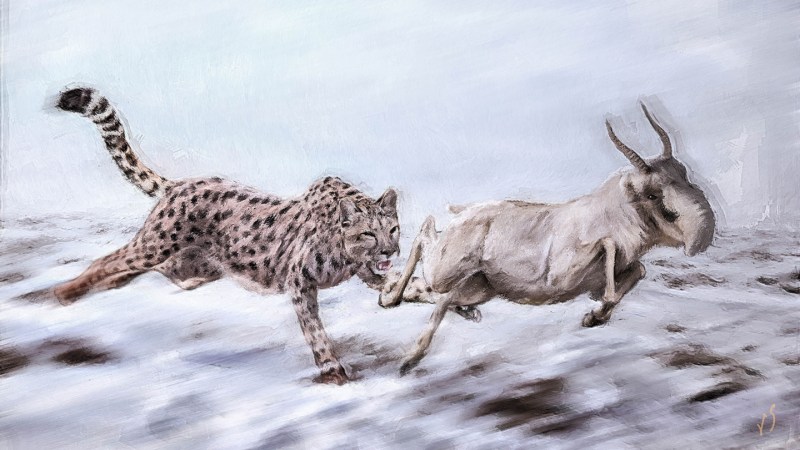
An analysis of ancient DNA reveals the “American cheetah” (Miracinonyx trumani) is more closely related to pumas than to modern cheetahs, prompting questions about its hunting style and ecological role. Researchers at the University of California, Santa Cruz, led by Molly Cassatt-Johnstone, made the discovery while analyzing fossils from Canada’s Yukon Territory and Wyoming.
The long-legged predator, which lived in North America from roughly 2.5 million to 16,000 years ago, was previously thought to be a specialized, high-speed hunter similar to the African cheetah. However, the new genetic evidence suggests *Miracinonyx trumani* was a more flexible hunter, potentially preying on a wider range of animals, including aquatic species. Fossils discovered in the Yukon Territory, expanding the known range of the animal into Canada, contained chemical clues indicating a diet that included aquatic animals.
Molly Cassatt-Johnstone, a molecular ecologist, explained that “calling it the American cheetah implies a specific behavior and ecology, which isn’t necessarily appropriate for this species.” The research began as an effort to verify the identity of 31,000-year-old Yukon fossils initially thought to be pumas. Genetic analysis ultimately identified them as *Miracinonyx trumani*, leading to the broader discovery. The team determined that *M. trumani* and pumas last shared a common ancestor around 2.6 million years ago, while *M. trumani* and cheetahs diverged approximately 4.7 million years ago. The fossils analyzed included specimens from Bluefish Caves and Upper Quartz Creek in Yukon Territory, as well as one from Natural Trap Cave in Wyoming.
Read the original coverage
💬 Comments
📜 Comment Policy