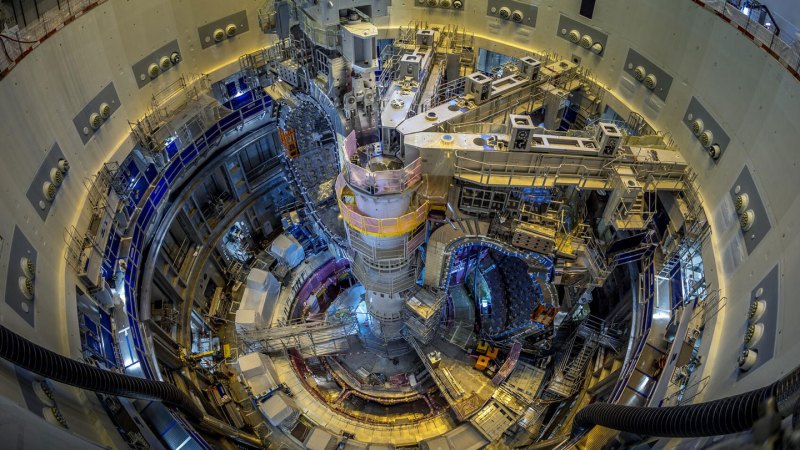
Researchers have long debated whether alpha particles in fusion reactions would help or hinder the process. Recent simulations, however, suggest that these particles may actually play a beneficial role. The findings indicate that alpha particles can dampen turbulence within fusion reactors, potentially improving their efficiency and stability.
Fusion power remains a promising but challenging energy source, as scientists work to replicate the processes that power the sun. One of the key obstacles is managing the complex behavior of plasma, the hot, ionized gas in which fusion reactions occur. Alpha particles, which are helium nuclei produced during fusion, were previously thought to either contribute to or detract from this process.
The new simulations, conducted by researchers in the field, show that alpha particles can help by reducing the turbulence that can disrupt plasma stability. This insight could lead to more effective designs for future fusion reactors. The results are a step forward in understanding how to harness fusion as a viable energy source.
The study does not provide a complete solution to the challenges of fusion power, but it does offer a new perspective on the role of alpha particles. As research continues, scientists will likely explore how to optimize the conditions in which these particles operate to maximize their beneficial effects.
We don't rate truth. We strip the spin and show you which perspectives covered the story. You decide.
Read the original coverage
💬 Comments
📜 Comment Policy