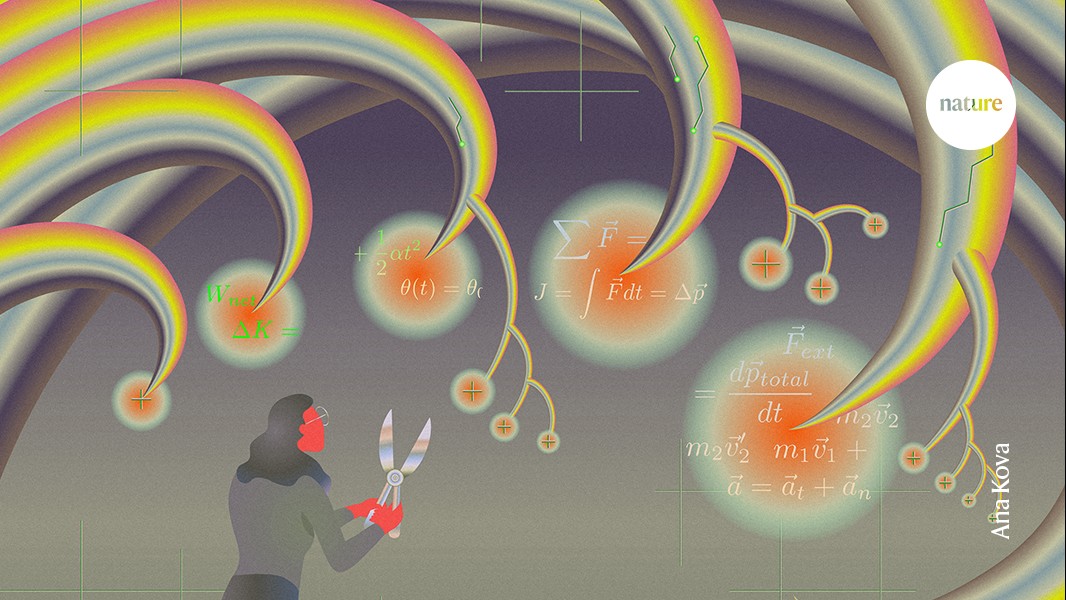
A recent article published online in Nature on 08 June 2026 examines the evolving role of artificial intelligence within mathematics and physics. The piece, identified by doi:10.1038/d41586-026-01820-1, addresses how computational tools are transforming scientific inquiry across these disciplines.
The publication emphasizes a critical distinction regarding the relationship between researchers and machines. According to the source, artificial intelligence is not replacing human intuition in these fields, but reimagining how questions are asked, explored and understood. This fundamental shift suggests that AI serves as a methodological tool rather than a substitute for scientific insight.
By altering the approach to theoretical problems, artificial intelligence enables scientists to navigate complex mathematical and physical concepts differently. The technology changes the framework through which researchers formulate hypotheses and analyze data. Instead of operating independently from human guidance, these systems are integrated into the discovery process to enhance analytical capabilities.
The article highlights that this transformation is redefining academic research methodologies. As computational models become more sophisticated, they provide new pathways for investigating long-standing theoretical challenges. Researchers are adapting their workflows to leverage these advanced algorithms while maintaining rigorous scientific standards.
Ultimately, the publication frames this technological integration as a collaborative evolution in science. The ongoing adoption of artificial intelligence in mathematics and physics demonstrates how modern tools can expand the boundaries of discovery while preserving the essential role of human creativity and analytical reasoning in academic research.
We don't rate truth. We strip the spin and show you which perspectives covered the story. You decide.
Read the original coverage
💬 Comments
📜 Comment Policy