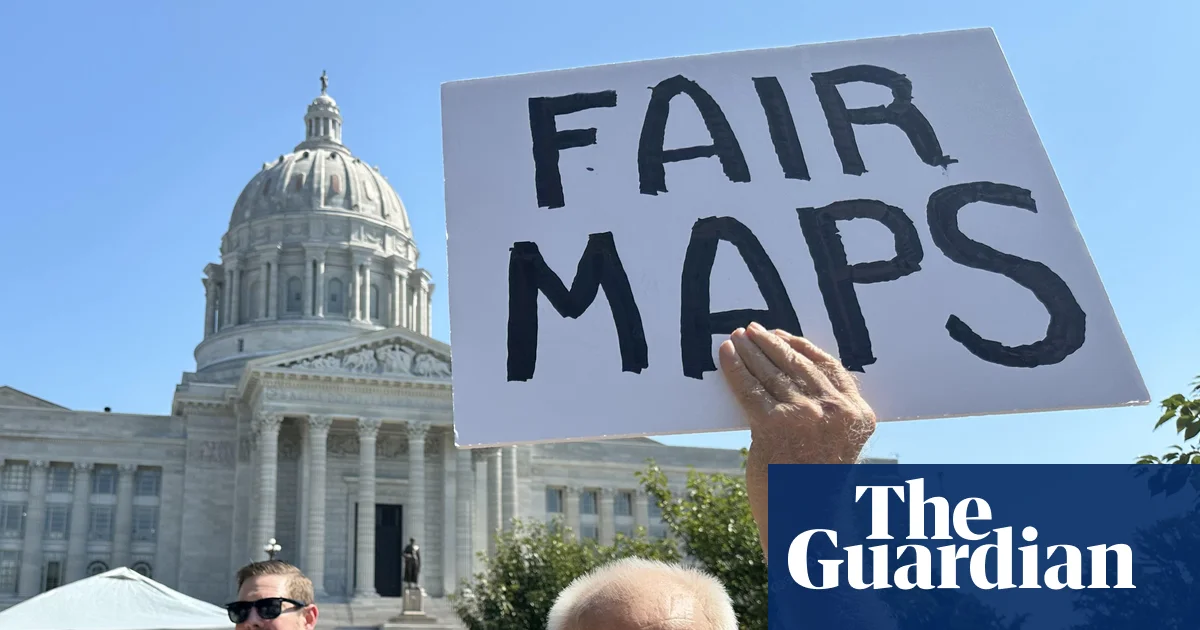
The U.S. Supreme Court, in a decision issued by Justice Brett Kavanaugh, has blocked Missouri officials’ attempt to implement a new congressional map for the November midterm elections. The map, redrawn with support from Donald Trump, was designed to give Republicans an advantage, specifically targeting the fifth congressional district held by Democratic Representative Emanuel Cleaver. The Missouri Supreme Court had previously ruled the map could not be used unless approved by voters in November, a decision upheld by the Supreme Court. However, a federal judge in Missouri then ruled in favor of two GOP congressional candidates, arguing the map should be used to avoid constitutional violations, creating a conflicting legal situation.
The state utilized the new map in its August primary elections, but last week the Missouri Supreme Court unanimously ruled that voters must approve the map in November before it can be utilized. This decision prompted Missouri Attorney General Catherine Hanaway to appeal to the Supreme Court. The state’s deadline to finalize ballots was 5 p.m. local time, with the first ballots set to go out September 19. A group, People Not Politicians Missouri, gathered signatures for a ballot initiative to veto the Legislature’s map, and the Missouri Supreme Court found that initiative to be valid.
The legal clash involves two cases raising different issues: state law, as focused on by the Missouri Supreme Court, and federal constitutional questions, raised in the federal case filed by Republican nominee Rick Brattin, Representative Bob Onder, and two voters. The 2025 Republican redistricting plan aimed to eliminate one of the state’s two Democratic-held seats. If the Missouri Supreme Court ruling stands, the 2022 map, with six Republican-held seats and two Democratic-held seats, will remain in effect for the general election. Governor Mike Kehoe called a special session last year to create the new boundaries. President Trump called the Supreme Court’s decision “horrible, ridiculous, and unConstitutional.”
The situation remains fluid, with the federal judge’s ruling potentially facing further scrutiny from the U.S. Supreme Court. The conflicting rulings have created uncertainty as the state attempts to finalize its congressional map before the November elections.
Our reading is that the Supreme Court’s decision reflects a continuation of the legal battles over congressional redistricting, complicated by conflicting rulings from state and federal courts. The involvement of Donald Trump, both in supporting the map and reacting to the ruling, highlights the politicization of the process. The differing coverage across news outlets, some emphasizing chaos, others the Republican setback, demonstrates the partisan framing of the issue.
मूल कवरेज पढ़ें
💬 टिप्पणियाँ
📜 टिप्पणी नीति