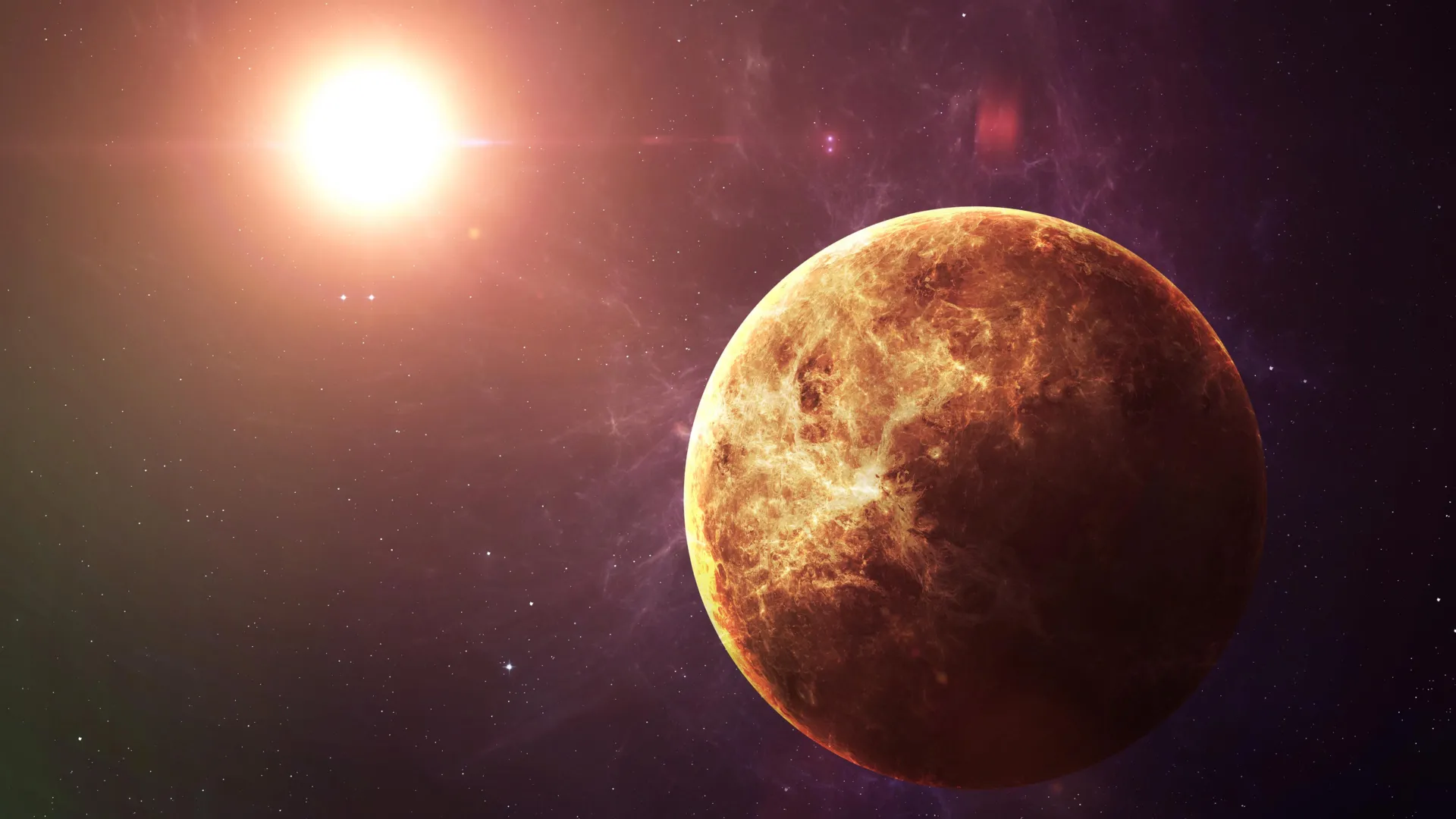
New research from the University of California, Riverside indicates Venus may have once possessed a moon that ultimately crashed into the planet. The study, published in *The Astrophysical Journal*, attributes this to Venus’s exceptionally slow rotation.
Scientists have long been puzzled by the lack of a moon orbiting Venus, despite its similarities to Earth. Previous theories proposed either a destructive impact event or that Venus never formed a moon at all. However, UCR astrophysicist and lead author Stephen Kane’s research suggests a different explanation: Venus’s gravity, combined with its slow spin, naturally caused a moon to spiral inward.
“My study shows Venus didn't require a catastrophe to arrive at what we can see today,” Kane said. “It turns out the gravity of the planet itself combined with the rate at which it spins naturally caused the moon to collapse on top of it.”
Earth’s moon, in contrast, is gradually moving away from our planet at a rate of approximately four centimeters per year. This outward drift is linked to Earth’s relatively fast rotation – completing a spin in about 24 hours – which transfers energy to the moon. Venus, however, takes 243 Earth days to complete a single rotation. This sluggish spin would not cause a moon to migrate outward; instead, the combination of gravity and slow rotation could pull a moon inward, leading to a collision.
To test this hypothesis, Kane developed computer models simulating planetary and lunar interactions. He first validated the model by accurately reproducing the known evolution of the Earth-Moon system. He then applied the model to Venus, varying the planet’s rotation rate and testing hypothetical moons of different masses.
Read the original coverage
💬 Comments
📜 Comment Policy