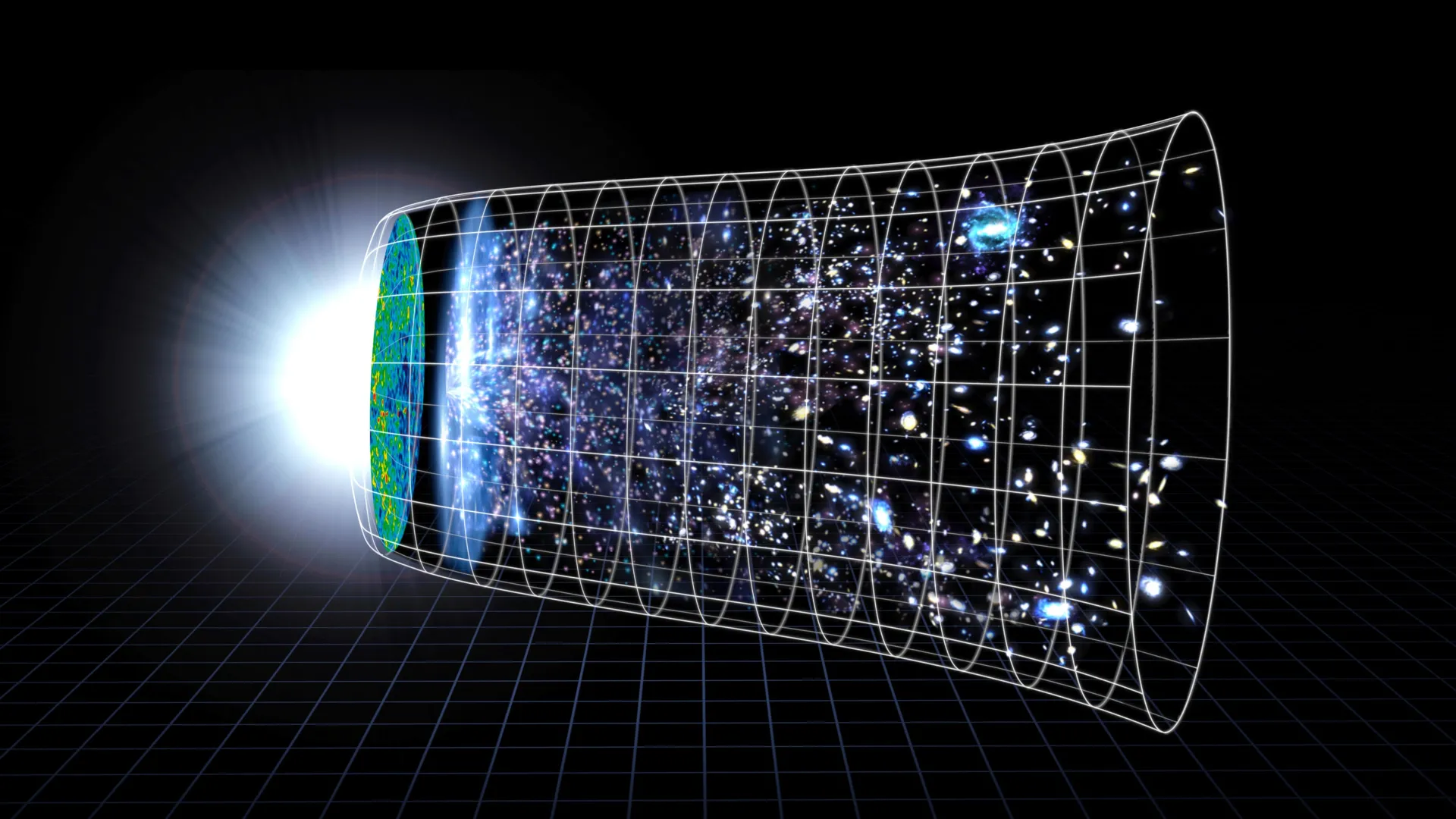
Cosmic expansion allows galaxies to recede faster than light while adhering to Einstein’s theory of relativity. This accelerating expansion will eventually render most galaxies invisible from our perspective.
The universe is expanding, and according to recent findings, this expansion enables distant galaxies to move away from us at speeds exceeding that of light. However, this does not violate the rules established by Albert Einstein. The key lies in understanding *how* this occurs: space itself is stretching, carrying galaxies along with it.
The study explains that we are still able to observe ancient light emitted by these galaxies when they were much closer. This is because the speed of light remains constant within spacetime; it’s the spacetime itself that's expanding. As a result, even though galaxies are receding faster than light can travel through space, their earlier light signals have already reached us.
Looking to the future, scientists predict that this accelerating expansion will continue to push nearly every galaxy beyond our Local Group – the cluster of galaxies we belong to – out of sight. This means that eventually, the observable universe will appear increasingly empty, as more and more galaxies become unreachable due to their extreme velocity.
We don't rate truth. We strip the spin and show you which perspectives covered the story. You decide.
Read the original coverage
💬 Comments
📜 Comment Policy