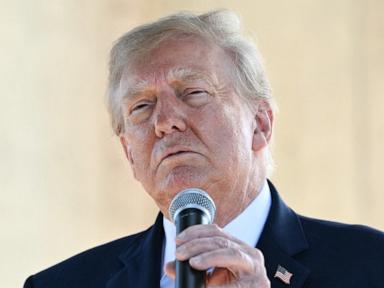
Donald Trump's attorneys are arguing for the reversal of his 2024 conviction on 34 felony counts related to a hush money payment made to adult film actress Stormy Daniels ahead of the 2016 presidential election. The case, which took place during Trump’s 2024 presidential campaign, centers on allegations that Trump falsified business records to conceal the reimbursement of a $130,000 payment made by his then-lawyer, Michael Cohen. Trump was sentenced to an unconditional discharge due to the extraordinary circumstances of his impending inauguration, and his lead defense attorney from the trial, Todd Blanche, was later appointed as the U.S. Attorney General.
Trump’s legal team, from the firm Sullivan & Cromwell, contends that the prosecution was politically motivated and unprecedented, arguing the charges should never have been brought to court. They are raising arguments including claims that the judge should have recused himself, that presidential immunity should have applied, and that prosecutors improperly targeted Trump with a convoluted legal theory. They also argue the payment should have been subject to federal election laws. Lawyers for Manhattan District Attorney Alvin Bragg maintain that Trump was convicted of a regularly prosecuted crime in New York and that presidential immunity is not applicable.
Following the conviction in May 2024, the case has seen shifts in legal representation, with Trump’s former defense attorney, Todd Blanche, now serving as Attorney General, and another, Emil Bove III, now a federal judge. A judge presiding over a parallel effort to move the case to federal court, Alvin Hellerstein, repeatedly rejected Trump’s arguments, stating that reimbursing Cohen for the hush money could not be considered a constitutional duty. Both sides anticipate the case will move to the state's highest court, the Court of Appeals, and potentially the U.S. Supreme Court.
Our reading is that Trump’s legal challenges are continuing despite recent election results that suggest a decline in his political power. The appeal of his conviction appears to center on procedural arguments and claims of political motivation, rather than a denial of the underlying events. The shifting roles of key figures, Blanche to Attorney General, Bove to a federal judgeship, highlight the complex legal and political landscape surrounding this case, and suggest a potential for further entanglement as it moves through the courts.
Read the original coverage
💬 Comments
📜 Comment Policy