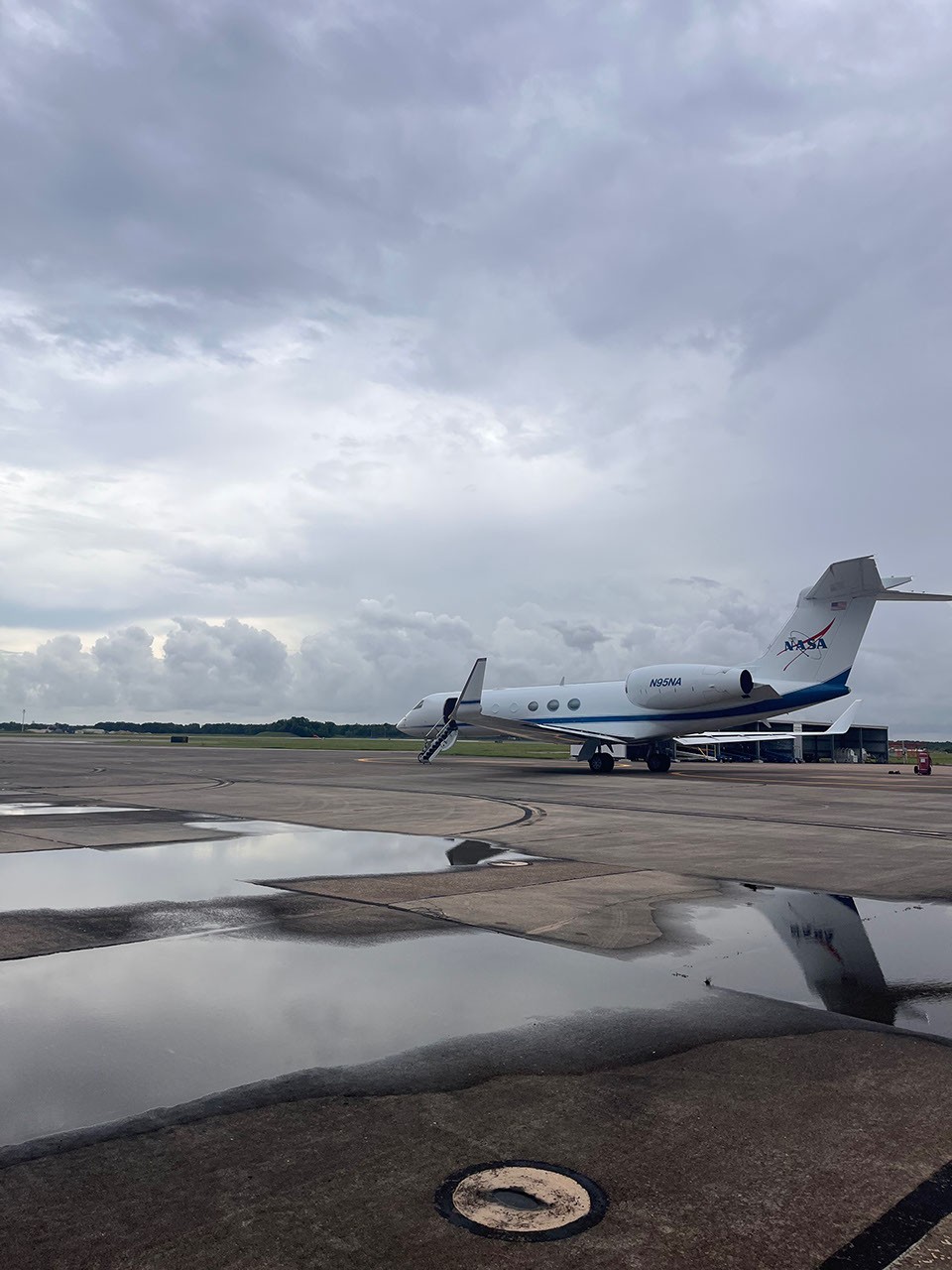
Students from NASA’s Student Airborne Research Program (SARP) recently concluded a summer session involving airborne field research along the Texas Gulf Coast. The program culminated on July 27 with students launching ozonesondes – scientific instruments designed to gather atmospheric data.
The gusty wind presented a challenge as students prepared to release an ozonesonde, a large balloon carrying scientific equipment, into the atmosphere above the Texas Gulf Coast. This activity marked the conclusion of NASA’s SARP summer session on July 27. The balloons are used for collecting data about the atmosphere.
The Student Airborne Research Program (SARP) provides students with hands-on experience in airborne research. While the source does not detail the specific goals of the research, it highlights the practical application of scientific principles through instrument deployment and atmospheric observation. Students were actively involved in launching and managing the ozonesonde as part of their program participation.
We don't rate truth. We strip the spin and show you which perspectives covered the story. You decide.
Read the original coverage
💬 Comments
📜 Comment Policy