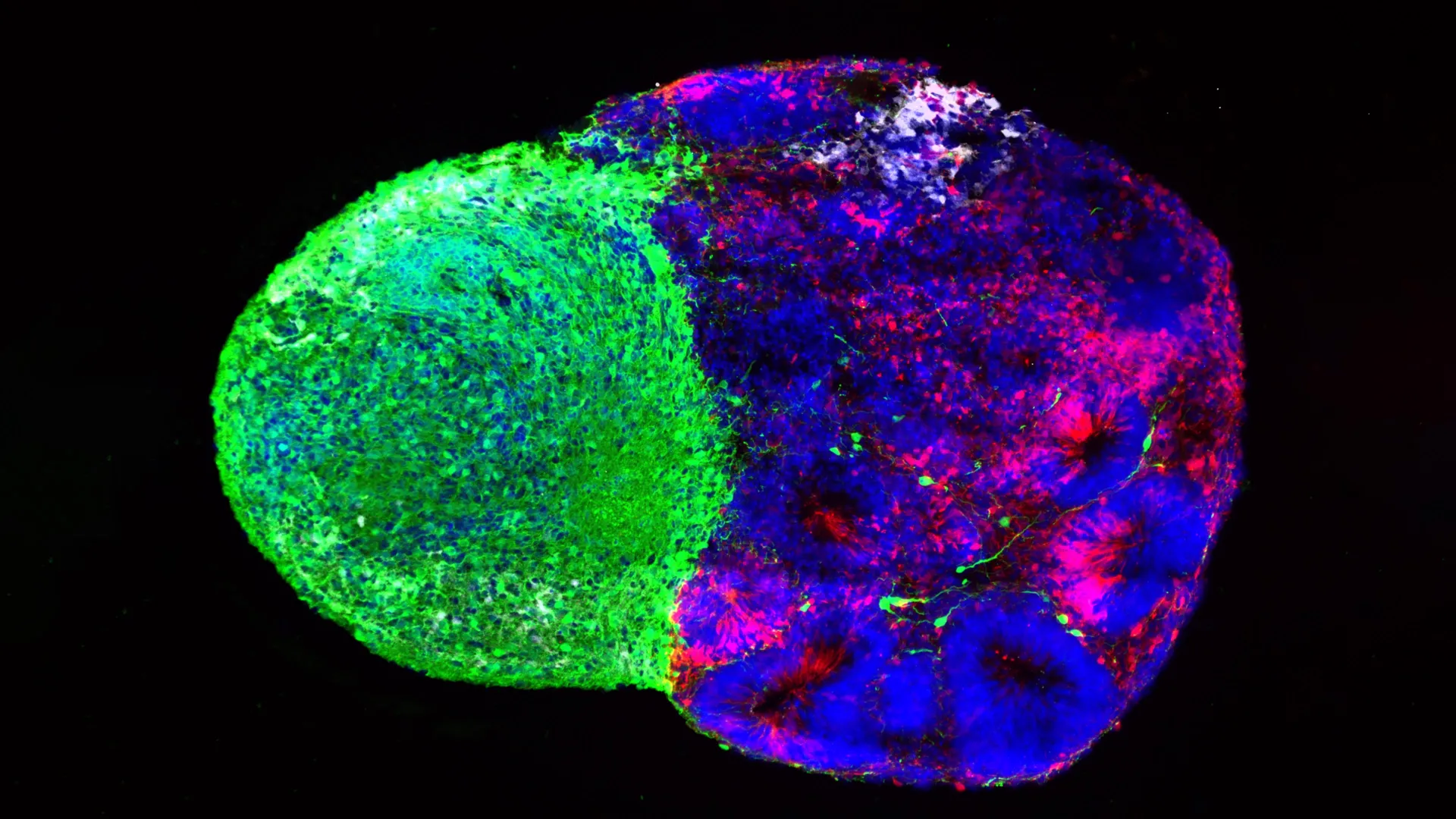
UCLA researchers have discovered how radial glia stem cells, crucial to human brain development, respond to both nutrient processing and physical signals to determine the types of brain cells they become. The findings, published in *Cell* and *Science*, offer insight into the formation of the cerebral cortex and potential links to neurodevelopmental disorders and cancer.
Aparna Bhaduri, an assistant professor of biological chemistry at the David Geffen School of Medicine at UCLA, described radial glia as “the coolest cells that have ever existed,” emphasizing their key role in what makes humans unique. Bhaduri also noted that these cells are linked to neurodevelopmental and neuropsychiatric disorders, as well as cancer, making understanding their decision-making process vital.
The research team, led by co-first authors Jessenya Mil and Jose Soto, created a detailed map of metabolism in the developing human cortex by analyzing donated human tissue and brain organoids grown from stem cells. This work, a collaboration between Bhaduri’s lab and Heather Christofk’s lab, revealed that metabolism isn’t merely supportive of brain development, but actively influences the types of cells produced.
The study found that radial glia heavily depend on the pentose phosphate pathway. Researchers also discovered that physical signals arriving from the thalamus alter which types of neurons are produced, including upper-layer neurons particularly prominent in humans. These findings offer new insight into how the human cortex achieves its remarkable variety of cell types.
Read the original coverage
💬 Comments
📜 Comment Policy