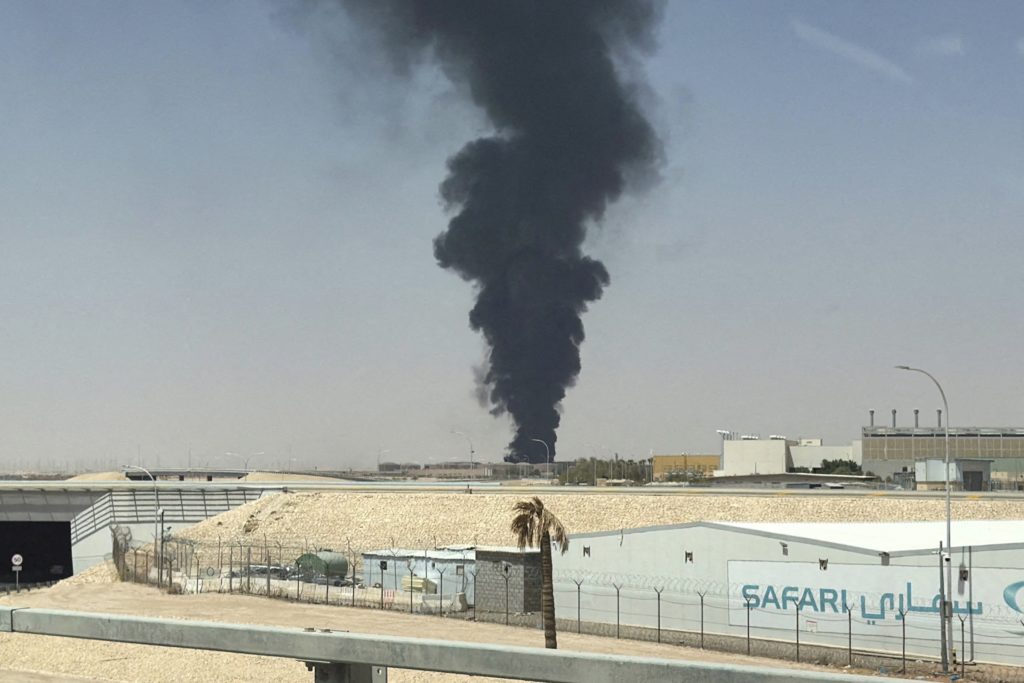
Yemen’s Houthi rebels attempted to attack Saudi Arabia’s capital, Riyadh, with a ballistic missile on Saturday, the first such attempt since a recent escalation in fighting. Saudi air defenses intercepted the missile, with no reports of casualties or damage, though residents reported hearing an explosion and seeing smoke near the airport. The Saudi-led coalition also reported thwarted attacks on infrastructure in Yanbu, Taif, Baysh, and Farasan. The Houthis claimed responsibility, alleging they targeted “sensitive sites” in Riyadh and facilities of Aramco in Yanbu, a claim Aramco has not responded to.
The attacks come as fighting surges within Yemen, with the Houthis seizing the port city of Mokha and islands in the Bab el-Mandeb Strait, improving their surveillance of ships. The Houthis claim to be targeting only Saudi vessels. On Thursday, debris from an intercepted Houthi drone killed a Yemeni resident in Saudi Arabia, the first civilian casualty reported in the recent escalation. Saudi Arabia also accused the Houthis of attempting to attack Mecca on Wednesday, an accusation the rebels deny.
The United States, a Saudi ally, has indicated it will not directly engage with the Houthis. Regional officials report Saudi Arabia is facing a shortage of missile interceptors and has requested air defense support from France, Britain, Pakistan, and Egypt. The conflict marks a return to civil war after four years of relative calm, with the International Organization for Migration reporting over 104,796 people displaced by recent fighting. The growing conflict near key shipping corridors is creating pressure on markets.
Left and right-leaning coverage agree on the basic facts of the attacks and interceptions. However, some left-leaning sources emphasize the broader context of the civil war in Yemen and the humanitarian impact, while right-leaning sources focus on the direct threat to Saudi Arabia and the potential for regional escalation.
Our reading is that the recent Houthi attacks represent a significant escalation of the conflict in Yemen, demonstrating an increased capacity to directly threaten Saudi Arabia. The reported shortage of interceptor missiles and requests for aid suggest Saudi Arabia is struggling to defend against these attacks, while the Houthis’ claims of targeting Aramco facilities indicate a willingness to disrupt critical infrastructure. The differing media emphasis on humanitarian impact versus regional escalation highlights the complex and multifaceted nature of this conflict.
Read the original coverage
💬 Comments
📜 Comment Policy