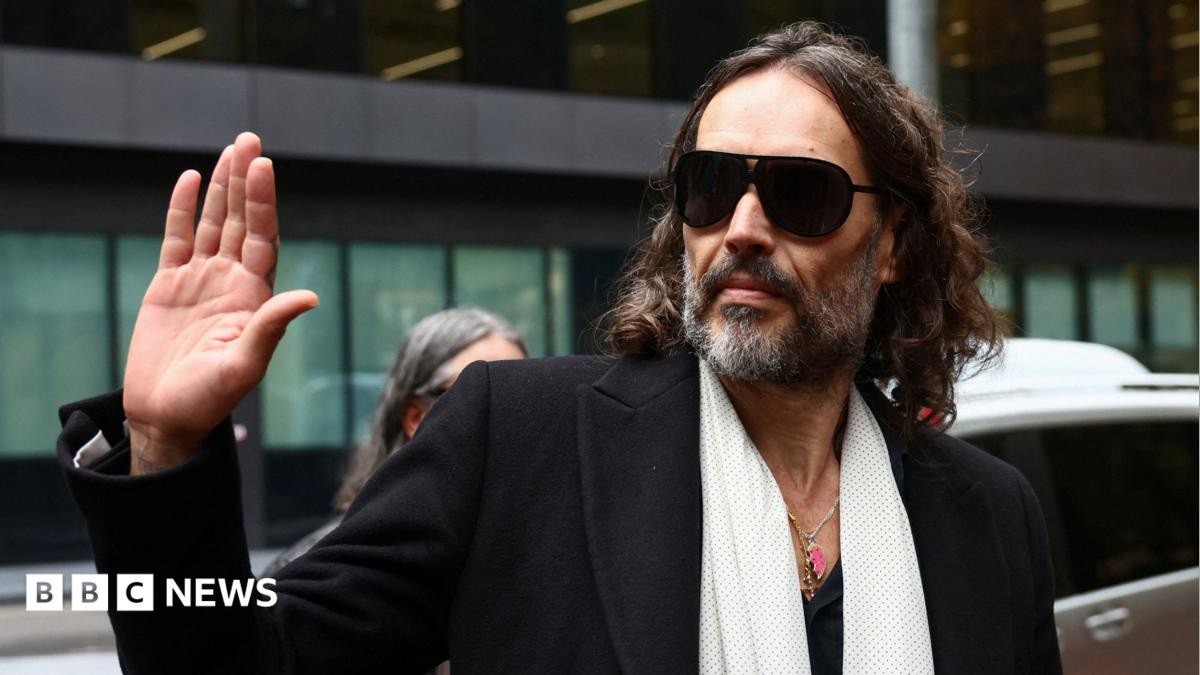
The jury has begun deliberating in the rape and sexual assault trial of Russell Brand, 51, at Southwark Crown Court in London. Brand faces seven charges, three counts of rape, three of sexual assault, and one of attempted indecent assault, all of which he denies. The trial, spanning three weeks, has involved allegations from six women spanning a decade, between 1999 and 2009. Prosecutors have argued Brand displayed a pattern of disregarding consent, while the defense maintains any sexual activity was consensual.
The prosecution presented evidence portraying Brand as viewing women as “disposable commodities” whose consent he did not value, alleging a shift in his behavior “from charming to frightening to nasty” during the alleged assaults. One complainant testified Brand became “monster-like” during an alleged rape following a Labour Party conference in 1999. Another woman alleges Brand grabbed her breasts at a London bar in 2004 and then sexually assaulted her in a toilet. A third woman described a consensual encounter that was followed by an alleged rape involving anal sex, which she did not consent to. Brand testified he had been “obsessed” with sex in the past but insisted all encounters were consensual, admitting he used his fame to “facilitate sexual access” but claiming he now recognizes this was wrong.
Brand’s barrister argued he “had an immense amount of sex” but that none of it was unlawful, and that the allegations only emerged after a 2023 TV and newspaper investigation “poisoned the well of justice.” Judge Mr. Justice Bennathan directed the jury to disregard the 2023 documentary, stating it should not be considered as supporting the prosecution’s case. He also emphasized that the prosecution bears the burden of proof and that Brand is entitled to the benefit of the doubt, and that a unanimous verdict is required for conviction. The jury was told they are not under pressure to reach a swift verdict.
The case hinges on the jury’s assessment of the credibility of the complainants and whether the prosecution has proven beyond a reasonable doubt that Brand committed the alleged offenses. The absence of reports to the police at the time of the alleged incidents is a key point of contention.
Our reading is that the outcome of this trial rests entirely on how the jury interprets the evidence presented, particularly the credibility of the complainants given the time elapsed since the alleged events. The defence appears to be attempting to discredit the testimonies by linking them to recent media coverage, suggesting a contamination of recollection, while the prosecution relies on establishing a pattern of behaviour demonstrating a lack of regard for consent. The judge’s direction to disregard the documentary and emphasis on the burden of proof underscores the high standard required for conviction.
Read the original coverage
💬 Comments
📜 Comment Policy