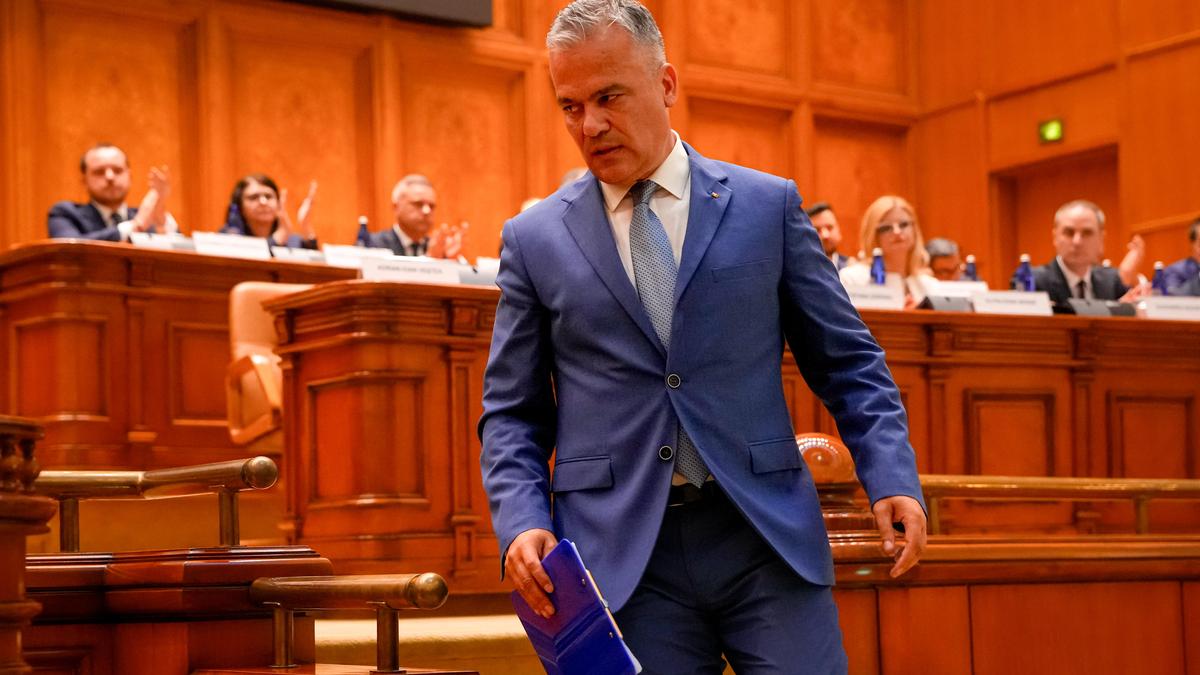
Romanian lawmakers voted late on Monday to reject the new government proposed by Prime Minister-designate Adrian Vestea, a decision that is expected to prolong the country's ongoing political instability. The rejection of the confidence vote against Mr. Vestea’s proposed cabinet marks a significant setback in efforts to resolve the protracted crisis that has affected governance in the European nation.
The failure of this legislative effort highlights the deep divisions within Romania's political landscape. Mr. Vestea had hoped that his appointment and subsequent proposal for a new cabinet would bring an end to the extended period of turmoil. However, the lawmakers' decision to deny confidence to his government indicates that consensus remains elusive among the country's political factions.
This event contributes to a broader context of instability in Romania. The country is currently navigating one of the largest budget deficits in the Eurozone, adding economic pressure to the political challenges. The combination of fiscal constraints and governmental uncertainty complicates the path forward for Romanian leadership. Analysts note that the rejection of the proposed government exacerbates these difficulties, as it leaves the country without a fully functioning executive branch capable of addressing both immediate political needs and long-term economic concerns.
The political crisis in Romania has been characterized by repeated attempts to form stable governments, each facing significant hurdles in securing parliamentary support. The latest attempt, led by Mr. Vestea, followed previous iterations that also failed to gain traction. The rejection underscores the difficulty of forming a coalition that can command a majority in the Romanian parliament.
Observers point out that the current situation reflects broader trends in European politics, where fragmented parliaments and ideological differences often lead to prolonged periods of uncertainty. In Romania, these dynamics are intensified by the specific economic context, including the substantial budget deficit. The inability to form a government quickly has implications for policy implementation, international relations, and domestic confidence.
As the country faces this period of instability, attention turns to what steps will be taken next. Political leaders may engage in further negotiations to propose alternative candidates or restructure existing coalitions. The outcome of these efforts will determine whether Romania can move toward a more stable governance structure or if the crisis will continue to deepen.
The rejection of Mr. Vestea’s government proposal is a pivotal moment in this sequence of events. It demonstrates that while there is a desire to resolve the crisis, the mechanisms for doing so remain complex and contested. The role of individual lawmakers and political parties will be critical in shaping the next phase of Romania's political trajectory.
In summary, the Romanian parliament's rejection of the new government proposed by Prime Minister-designate Adrian Vestea has intensified the country's political crisis. With one of the largest budget deficits in the Eurozone looming, the lack of a confirmed government adds to the uncertainty surrounding Romania's future. The path to resolution requires navigating significant political and economic challenges, with the outcome remaining uncertain as negotiations continue.
Read the original coverage
💬 Comments
📜 Comment Policy