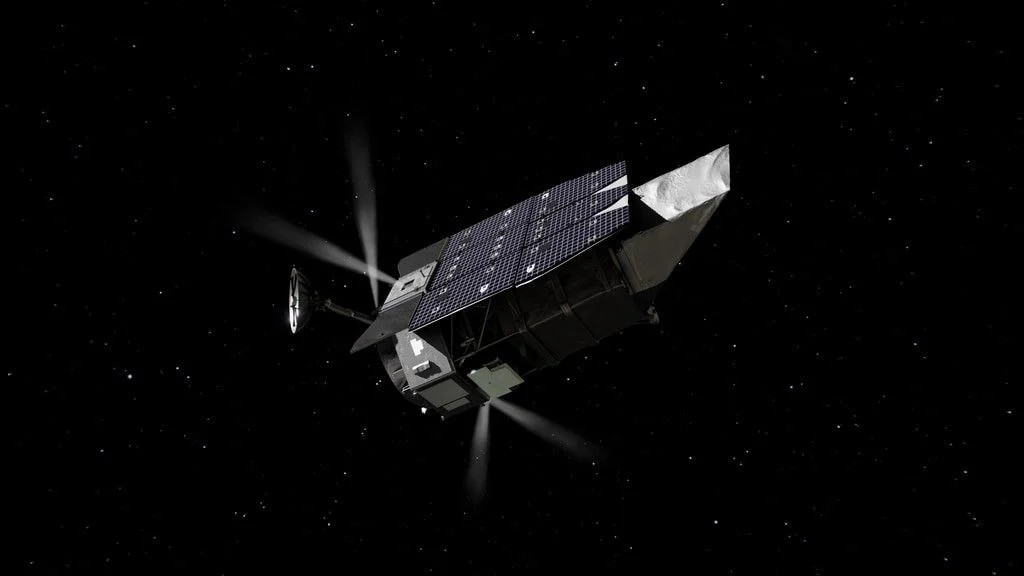
NASA’s Nancy Grace Roman Space Telescope launched successfully on August 30th atop a SpaceX Falcon Heavy rocket. Following launch, teams have been commissioning the telescope, activating communication systems and instruments.
The telescope lifted off at 7:26 AM EDT (11:26 UTC) from Launch Complex 39A (LC-39A) at the Kennedy Space Center in Florida. Launch forecasts initially showed a 50% chance of success, improving to 70% shortly before liftoff. After booster and core separation, the fairings encapsulating Roman detached, exposing the telescope to space. Communications were established at 7:33 AM EDT (11:33 UTC) via NASA’s Tracking and Data Relay Satellite System (TDRSS), with the Near Space Network and Deep Space Network taking over for science data transmission and trajectory tracking. The European Space Agency’s New Norcia ground station and the Japanese Aerospace Exploration Agency’s Misasa ground station will also support communications once the telescope reaches its destination.
At 7:57 AM EDT (11:57 UTC), Roman was deployed and began its 1.5 million km journey to the Sun-Earth Lagrange Point 2 (L2). Approximately 30 minutes later, the Solar Array Sun Shield deployed, providing power and thermal management. Teams confirmed the observatory was quickly power-positive. A mid-course correction burn on August 31st at 12:02 PM EDT (16:02 UTC) ensured the telescope remained on its proper trajectory. Later that day, at 2:03 PM EDT (18:03 UTC), the telescope’s 1.71 m diameter, 11 kg high-gain antenna, constructed from carbon composite material, was successfully deployed. This antenna will allow Roman to downlink the highest volume of data of any NASA astrophysics mission to date.
Read the original coverage
💬 Comments
📜 Comment Policy