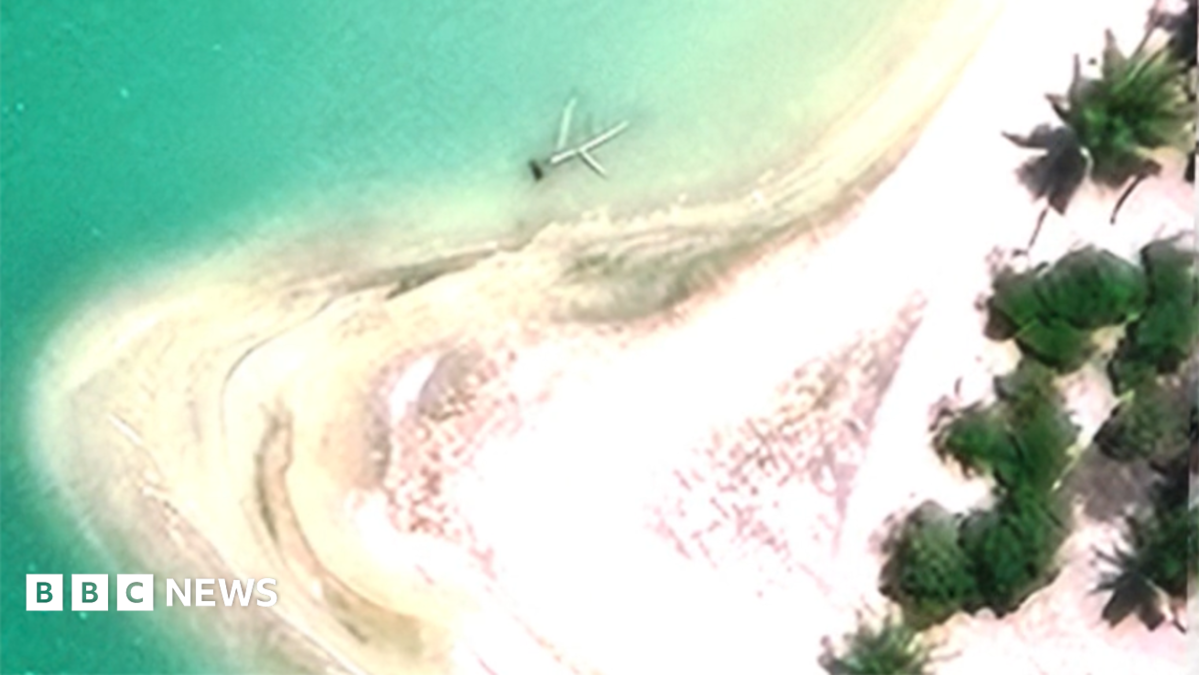
Researchers investigating a potential aircraft wreckage on Nikumaroro Island, Kiribati, have determined the object, first spotted in satellite imagery in 2020, was likely a collection of trees. The team traveled to the remote Pacific island to investigate whether the anomaly could be remnants of Amelia Earhart’s plane, which disappeared in 1937 during her attempt to circumnavigate the globe. Purdue University, leading the study, stated the so-called Taraia Object was “likely a collection of large trees deposited along the peninsula’s sandspit.” By the time the research team arrived, much of the debris had fragmented and washed away, leaving only a Y-shaped segment.
Earhart and navigator Fred Noonan were attempting to reach Howland Island to refuel when their Lockheed Electra vanished. One theory posits that they unintentionally navigated to Nikumaroro, crashing and perishing as castaways. Images of the Taraia Object, visible in photography dating back to 1938, initially sparked hope of a breakthrough. Project director Rick Pettigrew noted the team faced rough seas and strong winds, delaying their four-day onshore investigation. He acknowledged the mystery surrounding Earhart’s disappearance remains unsolved, stating, “This mystery has been ongoing for 90 years and the mystery continues.”
The research team traveled for five days by sea to reach Nikumaroro. Despite the inconclusive findings, Pettigrew expressed optimism that conclusive evidence will eventually be found on the island.
Our reading is that despite renewed investigation, the mystery surrounding Amelia Earhart’s disappearance persists. The initial hope generated by the Taraia Object has diminished, as the research team now believes it was a natural formation rather than aircraft debris. While the team remains optimistic about finding conclusive evidence, the article highlights the long-standing and unresolved nature of this historical puzzle.
Read the original coverage
💬 Comments
📜 Comment Policy