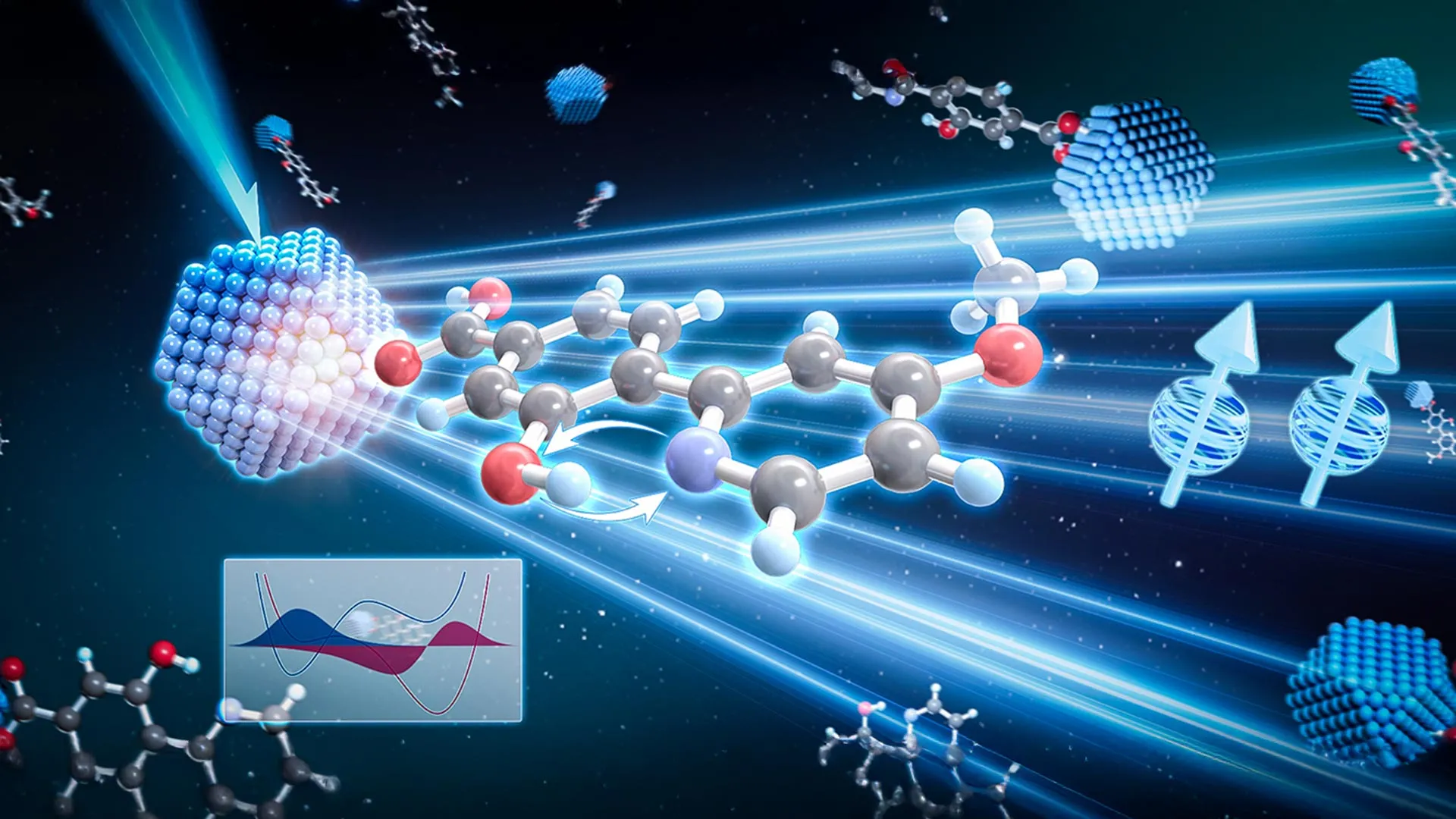
Researchers have discovered a proton-assisted mechanism that significantly improves the transfer of triplet energy between quantum dots and nearby molecules. This process, involving a temporary shift in proton position to coordinate electron movement, could lead to advancements in solar cells, lasers, and catalytic reactions.
The discovery centers around how energy moves at the quantum level. Researchers found that a proton briefly changes its location, facilitating the coordination of electrons during energy transfer. After assisting this process, the proton returns to its original position. This unique mechanism dramatically enhances the efficiency of triplet energy transfer between quantum dots – semiconductor nanocrystals – and molecules in their vicinity.
The implications of this finding are potentially far-reaching. According to the source material, this “quantum-driven shuttle” could offer a powerful new way to tune solar cells, lasers, and catalytic reactions. The precise details of how this tuning would occur were not specified but the improved energy transfer efficiency is expected to be key.
The research highlights a previously unknown aspect of quantum interactions, demonstrating that even subtle shifts in proton position can have a significant impact on energy dynamics at the molecular level. Further investigation into this phenomenon could unlock new possibilities for optimizing various technologies reliant on efficient energy transfer.
We don't rate truth. We strip the spin and show you which perspectives covered the story. You decide.
Read the original coverage
💬 Comments
📜 Comment Policy