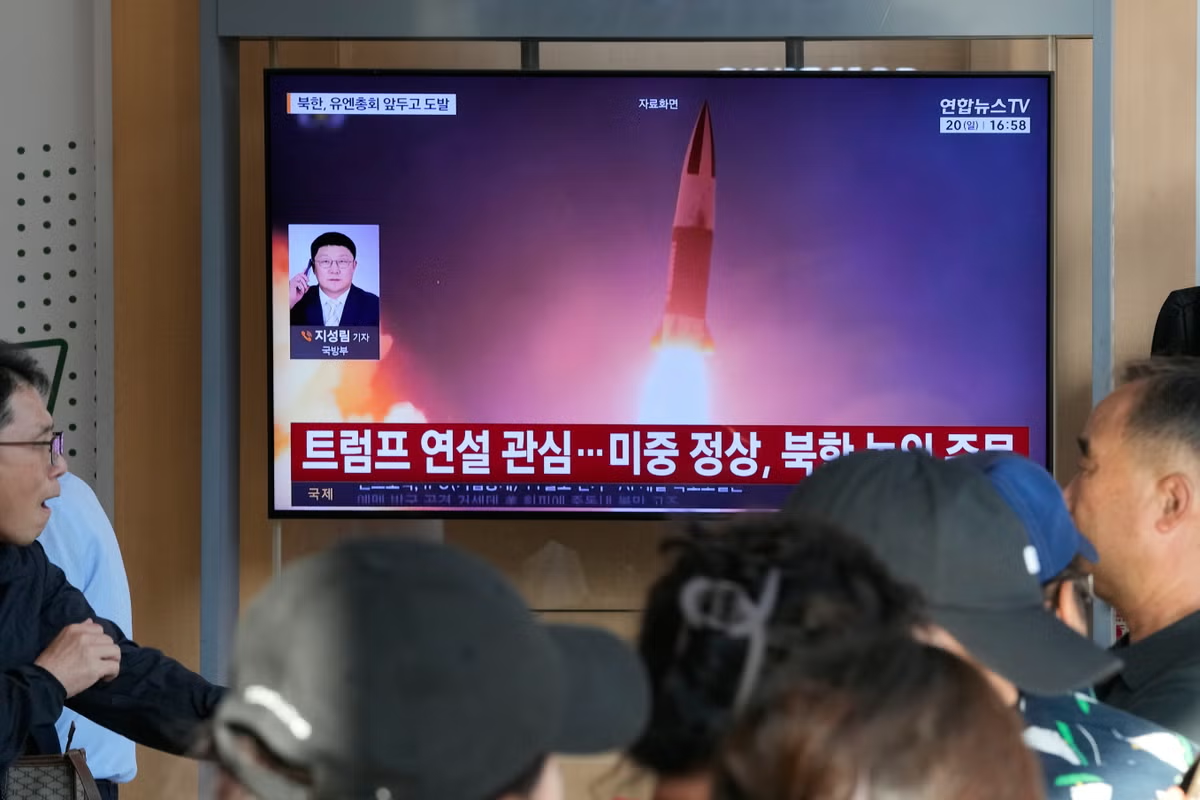
North Korea launched a short-range ballistic missile toward the sea on Sunday, followed by an additional projectile launch off its east coast, according to South Korea’s military. The launches occurred two days after North Korea threatened to bolster its nuclear deterrent capabilities in response to U.S. military activity. The initial missile traveled approximately 450 kilometers (280 miles). South Korea’s presidential office urged North Korea to halt ballistic missile launches, which violate U.N. Security Council resolutions, and convened an emergency national security council meeting. Japan’s Defense Ministry confirmed detecting a suspected North Korean missile but stated it did not land within its territorial waters. These launches follow a series of recent weapons tests by North Korea, even after the U.S. scaled back a military exercise with South Korea in an attempt to resume diplomacy. Kim Yo Jong, Kim Jong Un’s sister, dismissed the scaled-back drill as still provocative and stated North Korea’s commitment to strengthening its nuclear deterrence. She also criticized a recent U.S.-led multilateral maritime exercise involving the U.S., South Korea, Japan, Australia, New Zealand, and Canada, calling it a “frantic military move.”
Our reading is that North Korea is responding to perceived provocations, both the U.S.-South Korea military exercises, even in their reduced form, and the broader U.S.-led maritime exercises, by escalating its own military activity. The stated intention to bolster nuclear capabilities, combined with the launches following the drill scale-back, suggests Kim Yo Jong’s dismissal of the U.S. gesture was not conciliatory but rather a rejection of the premise of negotiation. The pattern of launches demonstrates a clear connection between U.S. military activity and North Korean responses.
Read the original coverage
💬 Comments
📜 Comment Policy