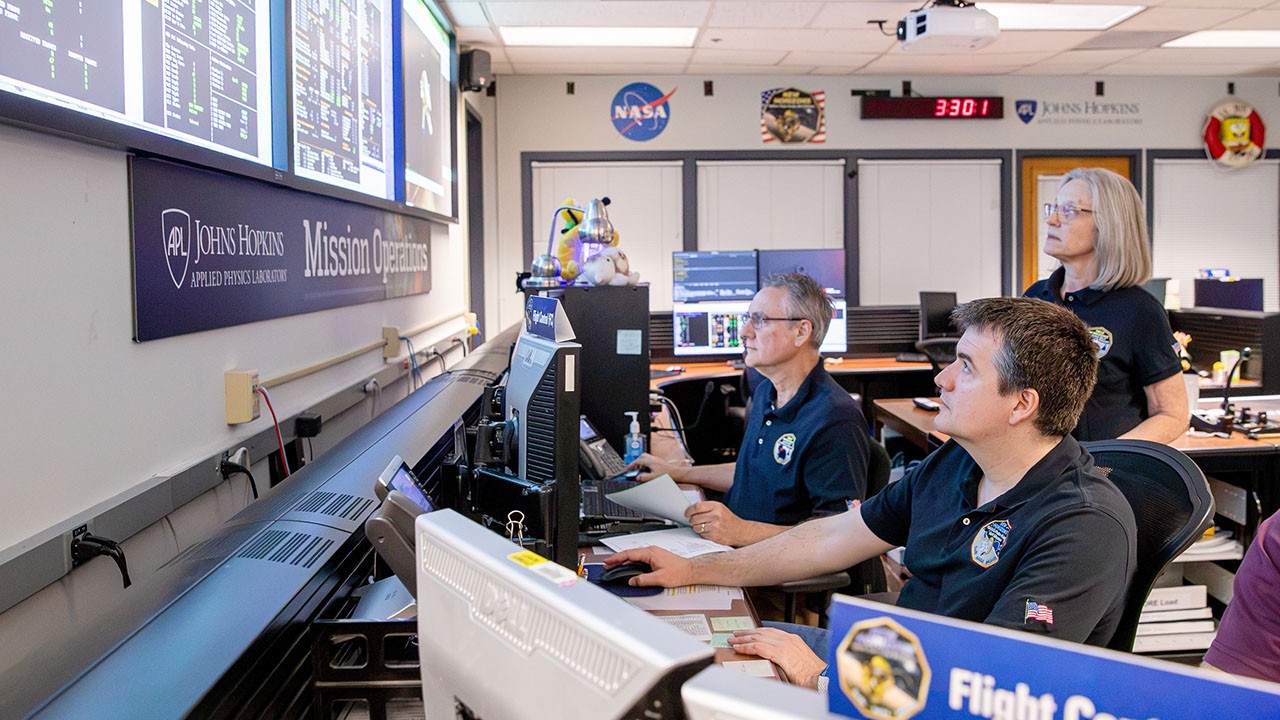
NASA’s New Horizons spacecraft has successfully emerged from its longest hibernation period to date, a nearly year-long sleep. The probe is now prepared to transmit scientific data collected from the distant Kuiper Belt, beyond Pluto.
The Johns Hopkins Applied Physics Laboratory (APL) in Laurel, Maryland confirmed on June 23 that New Horizons had awakened and is in good health. This reactivation follows a hibernation period lasting almost a year – its longest yet. The spacecraft entered this extended sleep to conserve energy and essential resources while traveling through the far reaches of our solar system.
The primary purpose of New Horizons’ continued mission is to gather science data from the Kuiper Belt, a region beyond Neptune populated by icy bodies and remnants from the solar system's formation. This data will help scientists better understand the origins and evolution of our planetary neighborhood. The spacecraft has already made history with its flyby of Pluto in 2015 and the Arrokoth encounter in 2019.
The successful awakening demonstrates the reliability of New Horizons’ systems after years of operation in deep space. Flight controllers at APL will now focus on establishing communication links and initiating the data transfer process, bringing new insights from the Kuiper Belt closer to Earth.
We don't rate truth. We strip the spin and show you which perspectives covered the story. You decide.
Read the original coverage
💬 Comments
📜 Comment Policy