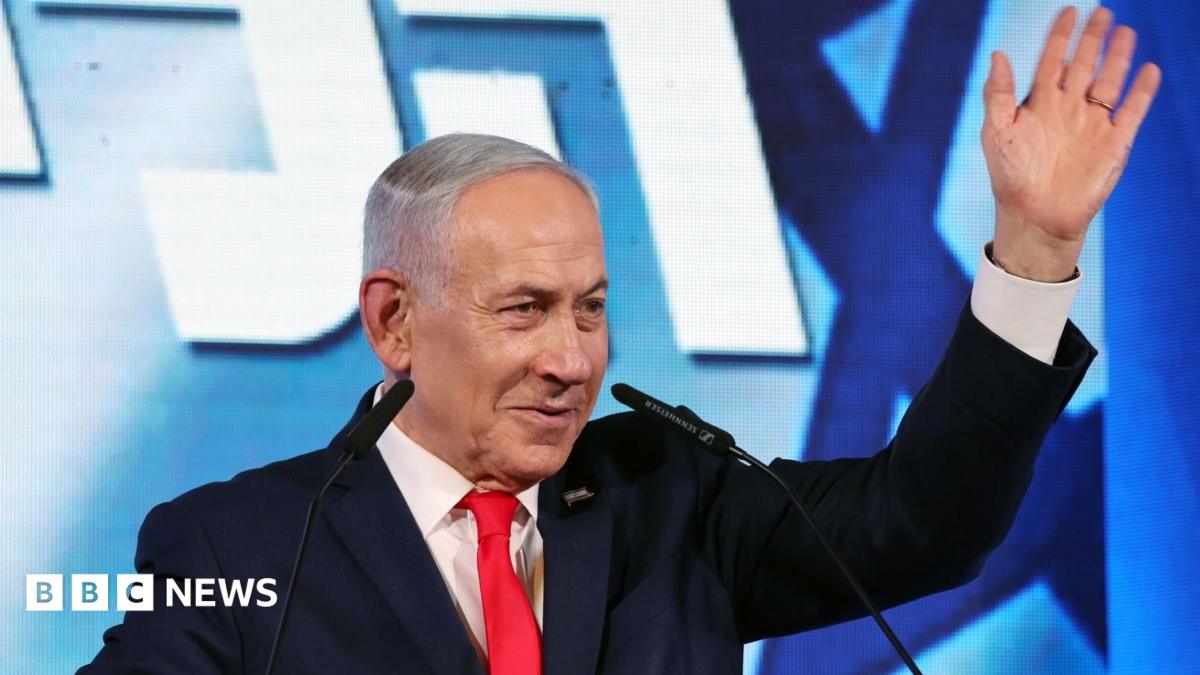
Benjamin Netanyahu’s bloc is leading in Israel’s parliamentary election, but with 85% of ballots counted, the group is still short of the 61 seats needed for a majority in the 120-seat Knesset. Initial exit polls varied, with some projecting a tie between the Netanyahu and opposition blocs, while others gave a narrow lead to Netanyahu. With between 430,000 and 480,000 absentee ballots still to be counted, final results are expected next week. President Isaac Herzog will then begin consultations with political factions to determine who is best positioned to form a government, a process that could take weeks, and potentially lead to another election if an agreement cannot be reached.
According to partial results, Netanyahu’s Likud party and its allies are on track to win 53 seats, while Gadi Eisenkot’s Yashar party and three other opposition parties are set for 48. Arab-led parties are projected to win an unprecedented 19 seats, potentially making them kingmakers, though most Jewish parties have pledged not to work with them. Turnout in Tuesday’s election was 77.7%, the highest in over two decades.
Eisenkot claimed the public “spoke in favour of change,” while Netanyahu declared his bloc had won a “great majority.” The CS Monitor reported a surge in enthusiasm for parties representing Arab citizens, motivated by increased violent crime in Arab communities and a lackluster turnout in the 2022 elections. Yousef Jabareen, head of the Joint List, stated that the results indicate the current government “cannot continue.” Gideon Sa'ar, Israel's foreign minister, rebutted claims of an opposition victory, stating celebrations were premature. The BBC reported President Herzog praised the high turnout, emphasizing the “deep desire for democracy” in Israel.
Our reading is that while Netanyahu’s bloc currently leads, the lack of a clear majority creates significant uncertainty regarding the formation of a government. The potential for Arab-led parties to become kingmakers, coupled with pledges from Jewish parties not to collaborate with them, suggests a complex and potentially prolonged negotiation process. The differing emphasis across news sources on the surge in Arab voter turnout highlights a notable shift in the electorate, though its ultimate impact remains to be seen.
Read the original coverage
💬 Comments
📜 Comment Policy