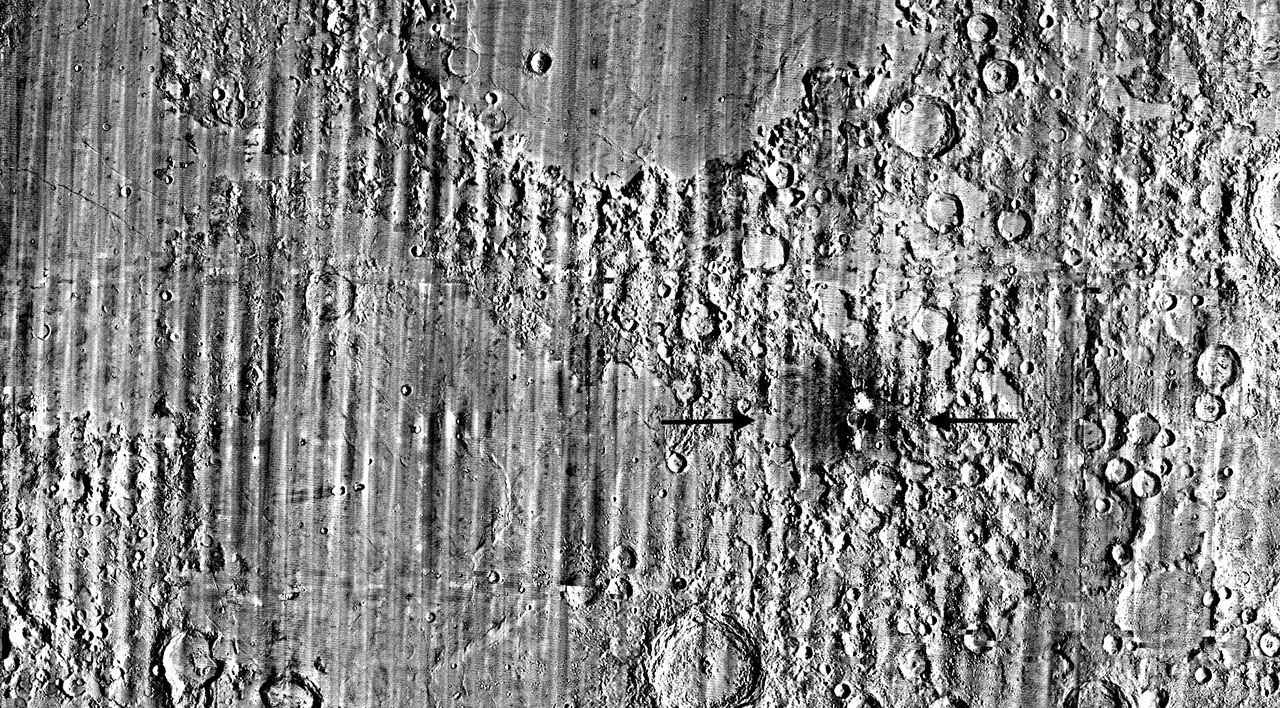
NASA’s Lunar Reconnaissance Orbiter (LRO) has identified the largest newly formed crater in the solar system, created by an asteroid or comet impact on the Moon. The discovery, made by scientist Robert Wagner, highlights the dynamic nature of the lunar surface and the value of NASA’s ongoing lunar observations.
The crater, officially named McGetchin after pioneering lunar scientist Tom McGetchin, formed sometime between April 11 and May 22, 2024. Wagner, an image-processing specialist from Intuitive Machines who works with data from the Lunar Reconnaissance Orbiter Camera (LROC) system, initially noticed an unusually bright spot and dark halo while conducting routine data quality checks. “I just stopped, dropped everything, and started looking into what that spot was,” Wagner said.
The impactor, estimated to be the size of a three- to six-story building, created a crater 728 feet wide and 141 feet deep – large enough to contain three vertically stacked school buses. Scientists reported their findings Wednesday in *Science Advances*, estimating that an impact of this magnitude occurs on the Moon approximately once per century, or even longer.
For over 17 years, LRO has orbited the Moon, utilizing its seven instruments to map its topography, surface composition, temperature, and radiation environment. The spacecraft has identified at least 1,000 new impact craters and flagged 100,000 other surface changes during its mission. The Moon’s lack of atmosphere allows space rocks to reach the surface without being slowed or burned up. While most impacts create craters too small to detect from orbit, LRO can identify craters as small as 30 feet wide, created by rocks roughly 43 inches in diameter.
Following the crater’s discovery, scientists using LRO’s Diviner thermal instrument observed a 4-mile-wide area around McGetchin crater that is approximately 16 degrees Fahrenheit cooler at night than the surrounding lunar surface. This observation was detailed in a second paper published Wednesday in *Science Advances*.
Read the original coverage
💬 Comments
📜 Comment Policy