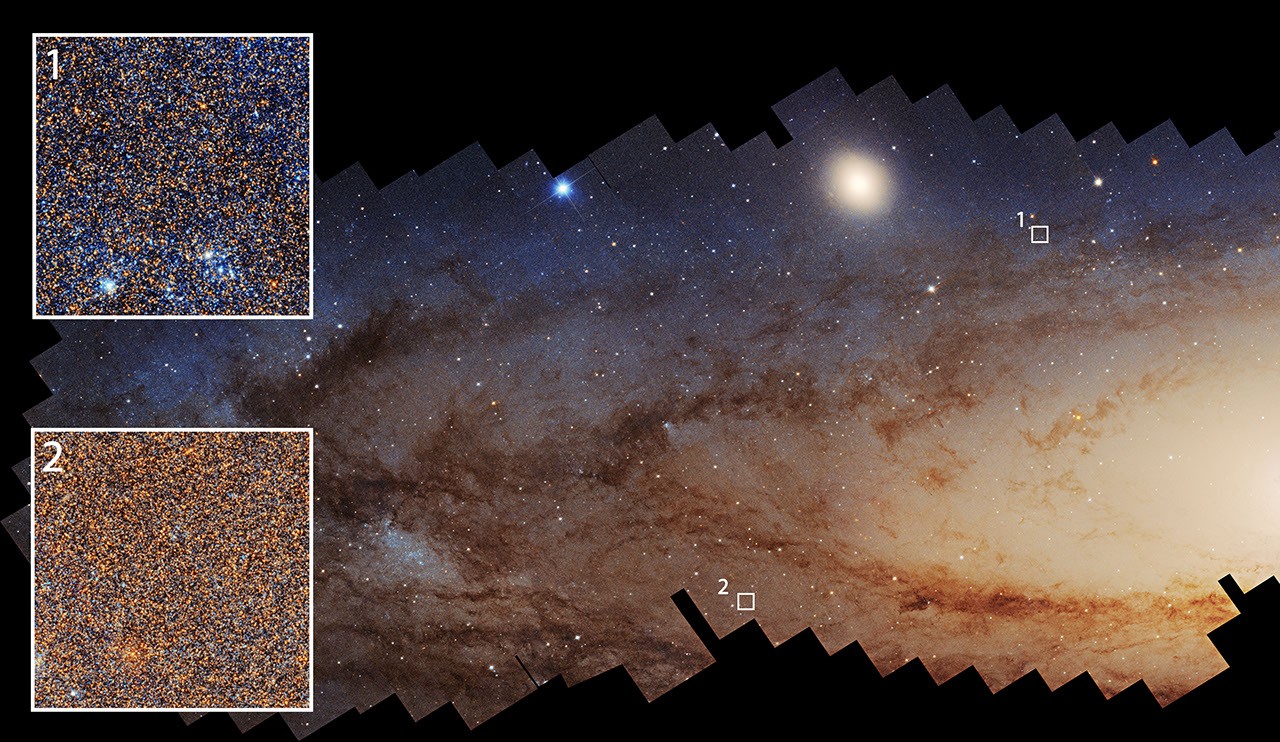
NASA’s Hubble Space Telescope has revealed a significant decline in star formation within the Andromeda galaxy over the past 500 million years. The findings, based on observations from NASA’s Hubble, indicate that the rate at which new stars are born in Andromeda is slowing down.
The research focuses on the Andromeda galaxy, also known as M31, our galactic neighbor. According to NASA, star formation within Andromeda has undergone a 500-million-year decline. This observation provides insights into the evolution of galaxies and the processes that regulate star birth.
The data collected by Hubble allows astronomers to study the stellar populations and gas content of Andromeda in detail. By analyzing the light from stars and gas clouds, researchers can determine the rate of star formation at different points in the galaxy’s history. The observed decline suggests that conditions within Andromeda are becoming less favorable for new star birth.
The implications of this finding extend beyond our understanding of Andromeda itself. It offers clues about the future evolution of our own Milky Way galaxy, as both galaxies share similar characteristics and have undergone periods of intense star formation in the past. Studying these trends helps scientists understand how galaxies evolve over cosmic timescales.
We don't rate truth. We strip the spin and show you which perspectives covered the story. You decide.
Read the original coverage
💬 Comments
📜 Comment Policy