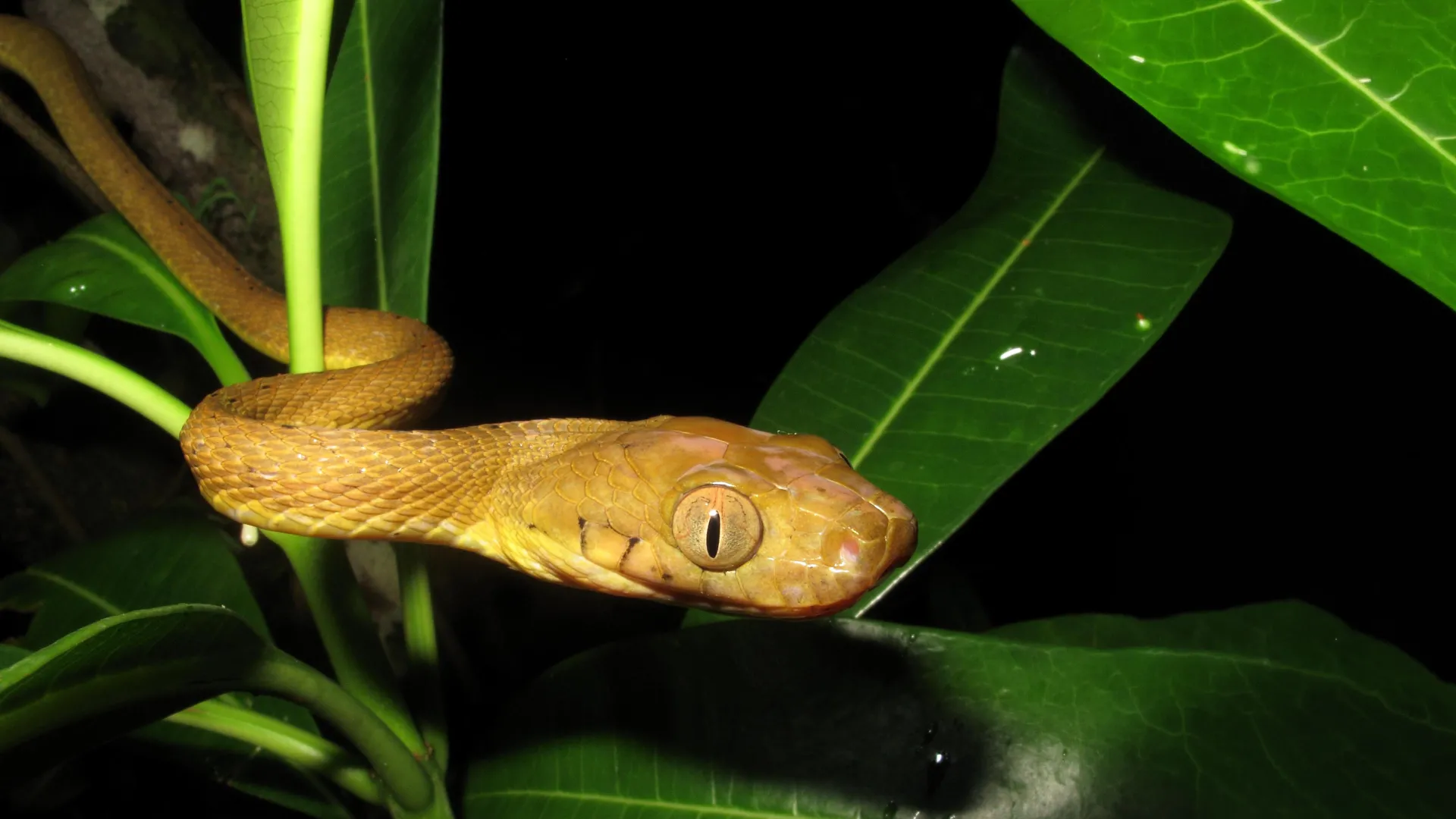
A brown tree snake invasion that devastated Guam’s native birds may have succeeded due to previously unknown genetic advantages within the reptile population. Researchers using advanced DNA sequencing discovered significant genetic differences, potentially explaining how a small founding population thrived despite inbreeding.
The notorious invasion of Guam by brown tree snakes, which decimated the island's native bird populations, might not have been solely attributable to a lack of predators or suitable habitat. According to research, the snakes carried hidden genetic diversity that aided their survival and proliferation. Researchers utilized advanced long-read DNA sequencing to uncover more than 19,000 large genetic differences within the brown tree snake population.
The study revealed that many of these genetic variations were concentrated in genes related to immunity and smell. This overlooked diversity may have been crucial for a population founded by only a few snakes to overcome the negative effects of inbreeding. The researchers suggest this allowed them to adapt to a new environment and multiply to extraordinarily high densities.
The findings indicate that even severely inbred populations can harbor substantial genetic variation, which can be vital for adaptation and survival in novel environments. This challenges previous assumptions about the limitations of small founding populations and highlights the importance of considering hidden genetic diversity when studying invasive species.
We don't rate truth. We strip the spin and show you which perspectives covered the story. You decide.
Read the original coverage
💬 Comments
📜 Comment Policy