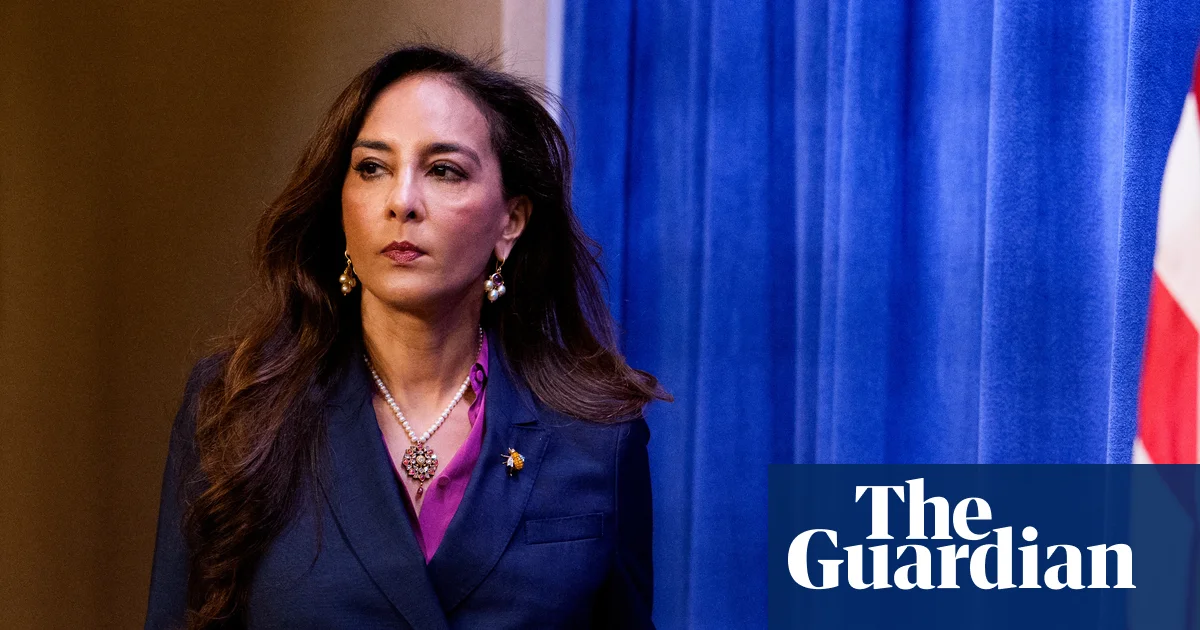
Harmeet Dhillon, assistant attorney general for civil rights at the Justice Department and an ally of Donald Trump, has resigned from her position. Attorney General Todd Blanche stated that he accepted Dhillon’s resignation, praising her dedication to defending civil liberties and enforcing the law without fear or favor. Her departure comes after Democrats gained control of Congress, and is expected to lead to increased scrutiny of executive agencies.
During her 18-month tenure, Dhillon significantly altered the focus of the Civil Rights Division, shifting away from traditional protections for minority groups. The division dropped cases alleging discrimination in voting, housing, employment, and education, and experienced a substantial departure of career lawyers. Dhillon instead prioritized investigations into claims of discrimination at universities, including allegations of unfair advantages for minorities in admissions and antisemitism. A whistleblower alleged these investigations were predetermined, with lawyers directed to find grounds for lawsuits.
The division also oversaw investigations into the deaths of Alex Pretti and Renee Nicole Good, killed by federal agents during immigration enforcement in Minnesota, but no criminal charges have been filed. Critics, including Kristen Clarke, former head of the Civil Rights Division under Joe Biden, accuse Dhillon of abandoning the division’s core mission and weaponizing it for partisan goals. Stacey Young, a former division lawyer, described Dhillon as the “most destructive” head in the department’s history.
Under Dhillon’s leadership, the division lost every case brought against more than two dozen states seeking voter roll information. The resignation marks the first departure of a high-ranking Justice Department official following the midterm elections.
Our reading is that Dhillon’s resignation signals a likely shift in priorities within the Civil Rights Division, given the change in Congressional control and her own documented approach to the role. The article highlights a clear divergence from traditional civil rights enforcement, with a focus on issues like university discrimination claims and a reduction in cases addressing voting and housing discrimination. The accusations of predetermined investigations and the substantial departure of career lawyers suggest a deliberate reshaping of the division’s function.
Read the original coverage
💬 Comments
📜 Comment Policy