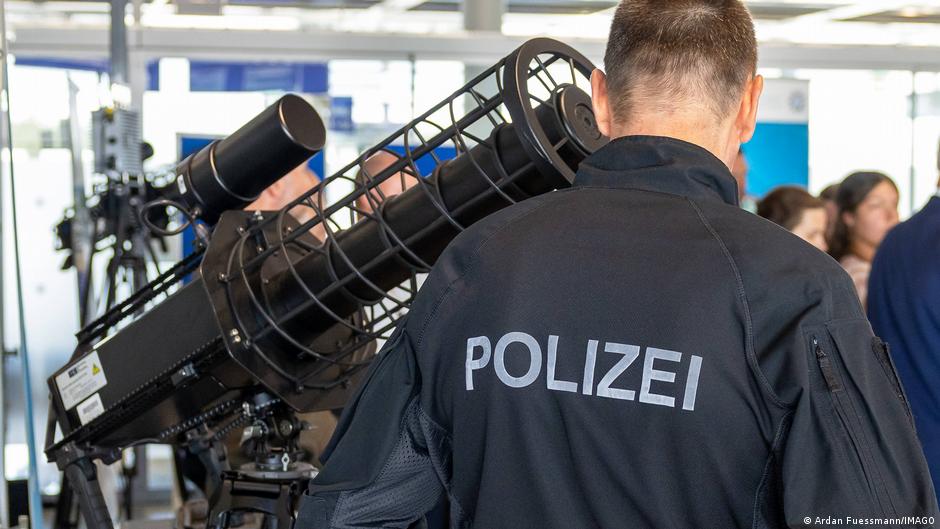
Germany is planning a comprehensive defense system against drone attacks, cyber intrusions, and sabotage following a failed drone attack on Leipzig-Halle Airport last month. Interior Minister Alexander Dobrindt stated that Russia’s hybrid attacks are now a “daily” reality, but that Germany can defend itself. The planned measures include expanding mobile drone-defense units with rapidly deployable capabilities for cities like Frankfurt, Munich, and Berlin, and granting legal authority to critical infrastructure operators to defend against drone sabotage. A “cyberdome” will be established to intercept hacking attempts, with increased use of AI, biometric facial recognition, and video surveillance at transport hubs. German intelligence agencies have blamed Russia for the August 4th attack, in which several drones targeted the airport, with one hitting a parked plane and another potentially striking an inbound cargo jet.
According to Bild am Sonntag, the Federal Criminal Police Office (BKA) recorded over 1,000 suspicious drone flights over Germany in 2025, primarily targeting military sites, airports, ports, and defense firms. The Leipzig airport was previously targeted in July 2024 with a suspected Russian incendiary parcel at its DHL hub, which is also used by Ukraine and NATO for arms transport. The planned “shield” is intended to not only intercept drones but also defuse explosive devices.
While Russia denies involvement in the airport attack and claims it will respond to what it calls “anti-Russian action,” the German government is moving forward with the expanded security measures. The initiative aims to address a growing threat, as evidenced by hundreds of daily cyberattacks attributed to Russia, other states, and criminal gangs.
Read the original coverage
💬 Comments
📜 Comment Policy