WHAT THE RECORD SHOWS
Between 1997 and 2013, in one Yorkshire town of 260,000 people, at least 1,400 children were sexually exploited. That is the "conservative estimate" of Professor Alexis Jay's 2014 inquiry into Rotherham: rape by multiple men, trafficking to other northern towns, beatings, threats, and a council and police force that knew and looked away. Telford's inquiry, published in 2022, put its own figure at more than 1,000 children over thirty years and named the reason the abuse was ignored: a "nervousness about race". Rochdale, Oxford, Huddersfield, Oldham, Bradford, Kirklees and Newcastle each produced their own trials and their own reports.
How many children nationally? Nobody knows, and that is a finding in itself. The 2022 Independent Inquiry into Child Sexual Abuse said it was "simply not possible to know the scale" of exploitation by networks. The figure most often quoted, 250,000, comes from a question asked in the House of Lords by Lord Pearson of Rannoch, extrapolating Rotherham's numbers across the country; no official body has ever confirmed it, and Professor Jay herself said Rotherham could not be used that way. In June 2025 Baroness Casey's national audit found something almost as damning: the ethnicity of perpetrators had not been recorded in two thirds of cases, and where local police data did exist it showed a clear over-representation of Asian and Pakistani-heritage men. A statutory national inquiry, chaired by Baroness Longfield, finally opened on 13 April 2026. It will examine the years 1996 to 2029.
Thirty years, then, from the first victims to the first national inquiry.
WHAT THE ARTS MADE OF IT
Britain is one of the world's great film factories. On the British Film Institute's count, 207 feature films went into production in the UK in 2023 and 191 in 2024, a slow year; the two decades before ran higher. Call it four thousand features since 2005, plus the high-end television that now spends more than film does.
Against that, the grooming scandal produced:
- Three Girls, BBC One, May 2017. Three episodes, about Rochdale, made with the victims' cooperation. It won BAFTAs. It remains, nine years later, the only drama.
- Four Channel 4 documentaries by one filmmaker, Anna Hall: Edge of the City (2004, the first film to name the pattern), The Hunt for Britain's Sex Gangs (2011), Britain's Sex Gangs (2013) and Groomed: A National Scandal (April 2025).
- The Betrayed Girls (BBC, 2017), The Rape of Britain (2022, about Telford) and Grooming Gangs: Britain's Shame (GB News, 2023).
That is the complete list I could find: one drama and a handful of documentaries, most of them by the same woman, in twenty years.
Now compare what British drama can do when it wants to.
- Mr Bates vs The Post Office, ITV, four nights from 1 January 2024. Average 9.8 million viewers an episode. Within a week a million people had signed a petition; the former Post Office chief handed back her CBE on 9 January; the prime minister announced a law to exonerate more than 900 sub-postmasters in a single act. Twenty years of court cases had not managed that. Four evenings of television did.
- Adolescence, Netflix, March 2025. A fictional thirteen-year-old white boy, radicalised online, murders a classmate. 66 million views. The prime minister met the creators in Downing Street, called it "a torch that shines intensely brightly", and Netflix made it free to every secondary school in the country.
The industry knows exactly how to turn a story into a national reckoning. It has done so twice in two years. It chose which stories.
THE CAUSES THAT DID GET THEIR FILMS
The same two decades were not short of films about injustice. Suffragette (2015) and Pride (2014) were British, publicly funded and warmly received. I, Daniel Blake (2016) took the Palme d'Or for a story about the benefits office. Hollywood made Don't Look Up (2021) about climate, She Said (2022) and Bombshell (2019) about harassment in the media, Barbie (2023) about patriarchy, and gave Emilia Pérez thirteen Oscar nominations in 2025. Each of these is a legitimate subject. Together they map what the people who commission films consider urgent.
Here is what did not make the map.
- Christians. Open Doors' 2026 World Watch List counts 388 million Christians facing high levels of persecution, a record, and 4,849 killed for their faith in the year to September 2025; 3,490 of them in Nigeria alone, more than the rest of the world combined. I could not find one wide-release feature about it.
- South Africa. AfriForum's 2025 report records 184 farm attacks and 29 farm murders; the police minister replies that most farm-murder victims are black, and parliament has formally rejected the term "genocide". The dispute is real and unresolved. In the year from October 2025 the United States admitted 6,668 refugees in total, 6,665 of them white South Africans. A country's entire refugee intake, argued over on two continents, and no film.
- Migration. Pew puts the unauthorised population of the United States at a record 14 million in 2023. Frontex counted 178,000 irregular crossings into the EU in 2025, down a quarter, after several years above 300,000. On the vote: about one million Commonwealth citizens who are not British can already vote in UK general elections; Scotland and Wales let all resident foreign nationals vote in their elections; New York City passed a law in 2021 to let up to a million non-citizens vote in city elections, and its highest court struck it down 6 to 1 in March 2025; a bill introduced at Westminster in February 2026 lowers the voting age to 16 nationwide. Whether any of this is intended to change electorates is a matter of opinion. That it changes them is arithmetic. There is no drama about any of it.
ANALYSIS
What follows is the editorial view.
I publish a site devoted to facts, and I want to say something about art, because art is where a society keeps the things it has decided are true.
For twenty years a country that makes two hundred films a year found room for every fashionable injustice and no room for thousands of its own daughters, raped in its own towns, by men whose identity its officials were too nervous to write down. That is not an oversight. An industry that can move Parliament in a week with the story of some postmasters, and put a fictional white schoolboy in front of every child in the land within a month, knows perfectly well how to make a nation look at something. It also knows how to make a nation not look.
That is the method, and it is worth naming, because it is the same method the media machine uses on the news. Loud on the small and the safe; silent on the large and the awkward. The volume is the tell. When every screen carries the same three causes and none carries the persecution of the largest religion on earth, or the farm murders, or what mass migration is quietly doing to who gets to vote, you are not looking at a free culture with a blind spot. You are looking at a curated one.
Art turned into a tool of distraction is a sadder thing than propaganda, because propaganda at least admits it wants something. This is worse: it wants you to feel informed and engaged while the real ledger goes unread.
The war on truth is on. This site is on the small side of it, not the loud one, but the resolved one. We will keep the ledger. Someone has to.
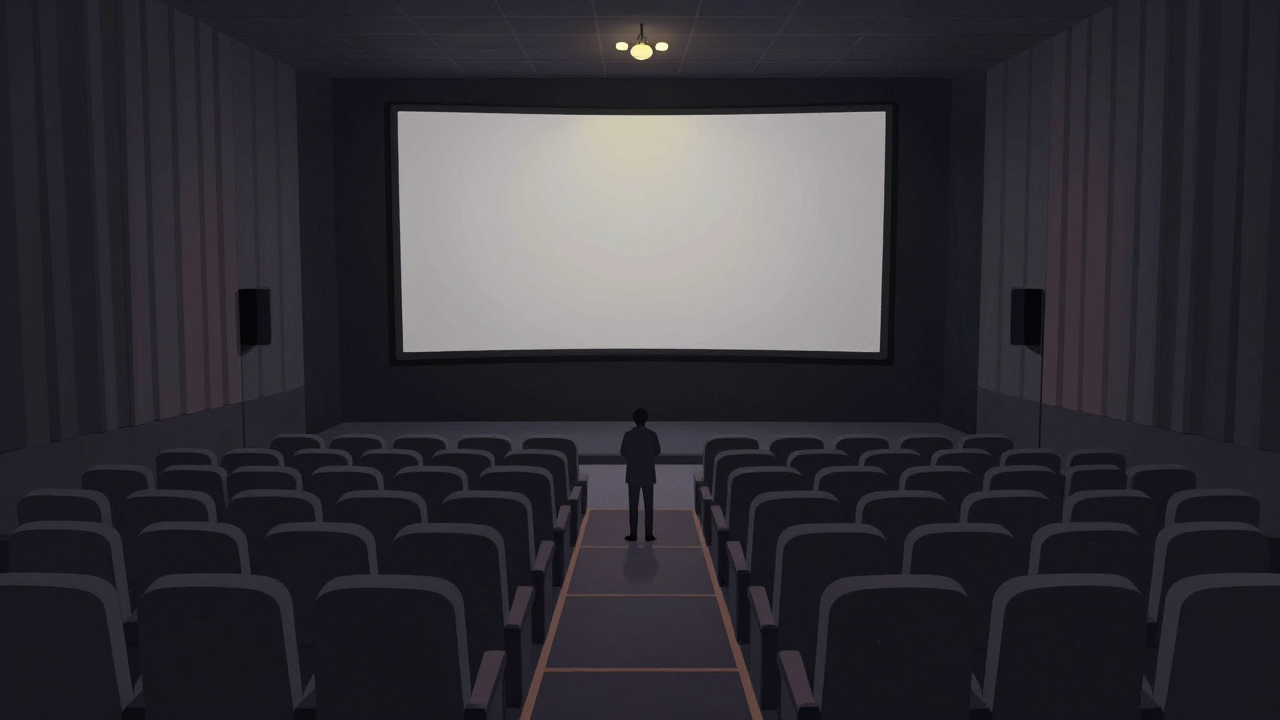
Four thousand films, and one silence.
💬 Comments
📜 Comment Policy