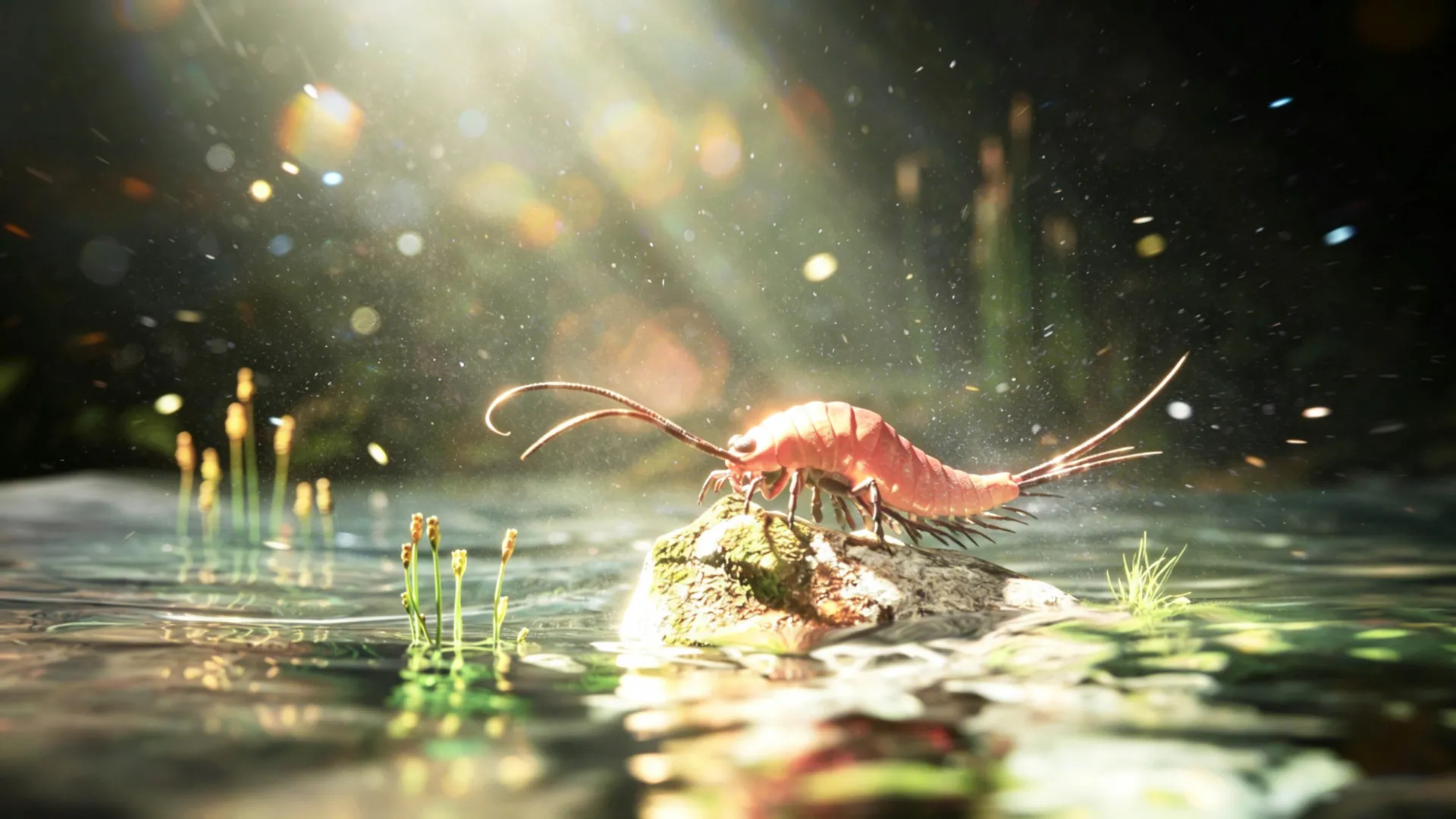
A 324-million-year-old fossil is providing new insights into how insects transitioned from aquatic life to land-based existence. The discovery suggests insects didn't abruptly move to dry land, but instead underwent a prolonged amphibious phase.
A newly identified species, dating back 324 million years, possesses paddle-like abdominal limbs. Researchers say these limbs represent an evolutionary bridge connecting the insects’ aquatic ancestors to modern, six-legged insects. The finding challenges previous assumptions about the speed of this significant evolutionary leap.
The fossil suggests that early insects didn't simply abandon water for land, but rather spent a considerable period navigating both environments. The presence of these paddle-like limbs indicates the species still relied on water for propulsion or other aquatic activities, even as it adapted to terrestrial life. This amphibious phase allowed for a more gradual transition, facilitating the development of the features necessary for fully terrestrial existence.
The research provides a tangible link in understanding how insects, one of the most diverse and successful groups of animals on Earth, first conquered land. The discovery highlights the importance of studying ancient fossils to reconstruct the evolutionary history of life and understand the complex processes that have shaped the natural world.
Read the original coverage
💬 Comments
📜 Comment Policy