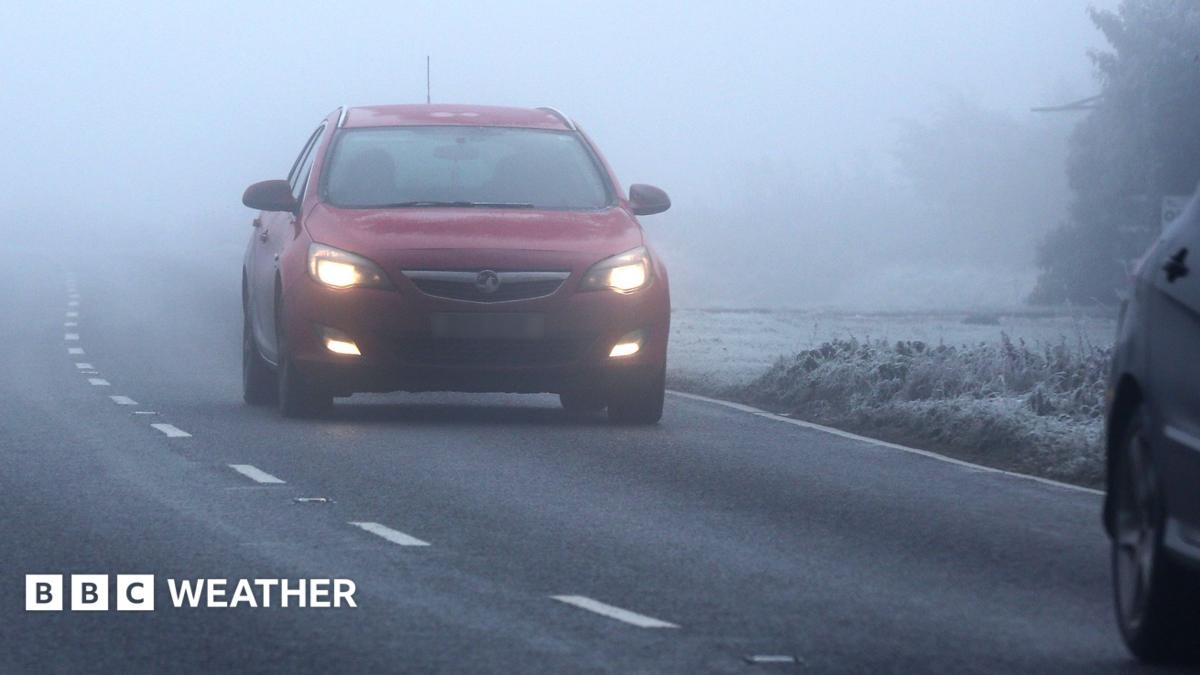
Dense fog has formed across parts of the United Kingdom, leading the Met Office to issue a yellow severe weather warning for areas including Lincolnshire, the East Midlands, and Greater London. Visibility could drop below 100 metres during Friday morning’s rush hour, potentially causing delays to road, rail, and air travel. The fog is expected to clear later in the morning, though rural areas of eastern England may not see full clearing until the afternoon. The Met Office also forecasts the return of fog on Friday evening and throughout the weekend, with more widespread coverage.
Beyond the immediate fog concerns, the UK is entering a period of largely dry weather due to a ‘diffluent blocking pattern’ forming in the Atlantic jet stream. This high-pressure system is a contrast to recent stormy weather, but it raises concerns about the ongoing drought conditions. The Environment Agency reports that 82% of England remains in drought status, and 20% more rain than average is needed over the next six months to end it. Water companies are being urged to address leaks, and the public is encouraged to conserve water. While Storms Austen and Boelo provided some hydrological benefit, substantial rainfall is not anticipated in the near future, meaning the next named storm, Chloe, is not expected soon.
Meteorologist Honor Criswick noted the foggy conditions are “set to continue as we creep our way closer towards Halloween,” with eastern areas of Wales, Lincolnshire, and northeast England also likely to experience fog on Friday. The Met Office advises drivers to check road conditions, allow extra journey time, and ensure fog lights are functioning. Bus, train, and flight services may also be affected.
Our reading is that the UK is facing a complex weather situation: immediate disruption from dense fog is overlaid on a longer-term concern about drought conditions. The contrast between the recent stormy weather and the current high-pressure system highlights the volatility of the UK’s climate. The differing focuses of the Independent and BBC reports suggest a split between immediate impact reporting and broader contextual analysis.
Read the original coverage
💬 Comments
📜 Comment Policy