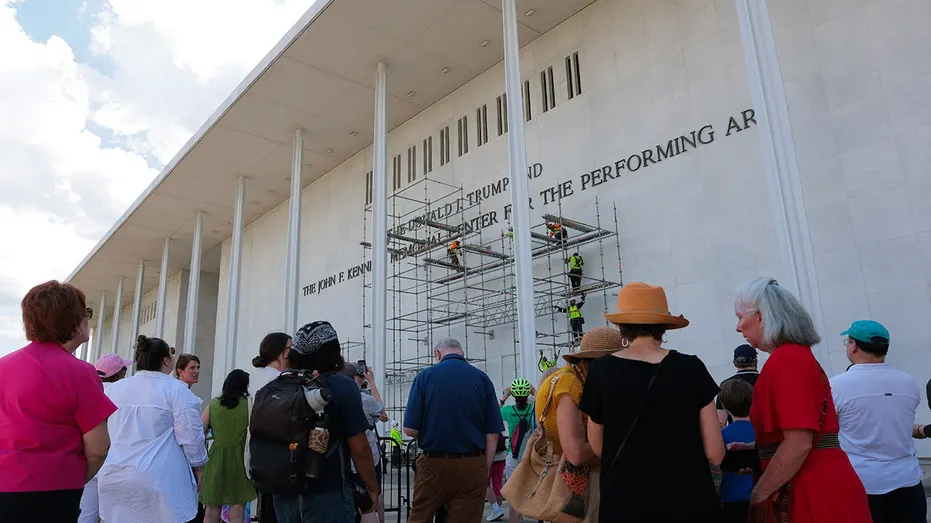
A federal judge has denied an emergency appeal filed by the board of trustees of the John F. Kennedy Center for the Performing Arts, clearing the way for the removal of President Donald Trump’s name from the institution's signage and materials. The ruling comes after U.S. District Judge Christopher Cooper issued an order last month requiring the removal of the president's name from the iconic building in Washington, D.C., by Friday. The Kennedy Center board had sought a stay to halt this process while the appeals court reviews the lower court’s decision.
The board filed an emergency appeal to block Judge Cooper’s order, arguing against the immediate removal of Trump’s name from the venue's official materials. However, the judge rejected this last-ditch effort to stop the removal while the appeals process plays out. In his ruling, Judge Cooper stated that he would not lift the order while a federal appeals court considers his previous determination that only Congress has the authority to rename the venue, which memorializes former President John F. Kennedy. The denial of the stay effectively allows the administration's directive to proceed without further judicial intervention at this stage.
The decision marks a significant administrative action regarding the naming of public institutions during Trump’s second term in the White House. Since returning to office, the president has taken repeated measures to place his name and image in official spaces. This approach represents an abrupt break with American political tradition, which typically avoids honoring sitting presidents with permanent names on federal buildings or institutions. The move is part of a broader series of plans and projects aimed at reshaping the capital city's image and its institutions.
The Kennedy Center, a prominent cultural landmark in the nation's capital, had previously borne Trump’s name due to his contributions to the arts and his administration's support for the institution. The removal order was issued by Judge Cooper, who determined that the executive branch lacked the statutory power to unilaterally rename a facility dedicated to a former president. The board's attempt to seek an administrative stay was intended to pause these changes pending higher court review, but the federal judge found no grounds to grant such relief.
Legal observers note that the case hinges on the separation of powers and the specific statutes governing the Kennedy Center. By denying the stay, the judge has allowed the executive directive to take effect immediately. The removal of the name signifies a shift in how the current administration views its legacy within federal cultural institutions. While the board had hoped for a temporary pause to argue their case in the appeals court, the lower court's stance suggests that the legal threshold for halting such administrative actions is high.
The outcome leaves the Kennedy Center in a position where it must comply with the removal order unless the appeals court issues a different ruling. The president’s efforts to rename or rebrand federal spaces continue to draw attention as part of his broader strategy to influence the physical and symbolic landscape of Washington, D.C. The case highlights the ongoing tension between executive authority and established traditions regarding public memorials and naming rights.
Read the original coverage
💬 Comments
📜 Comment Policy