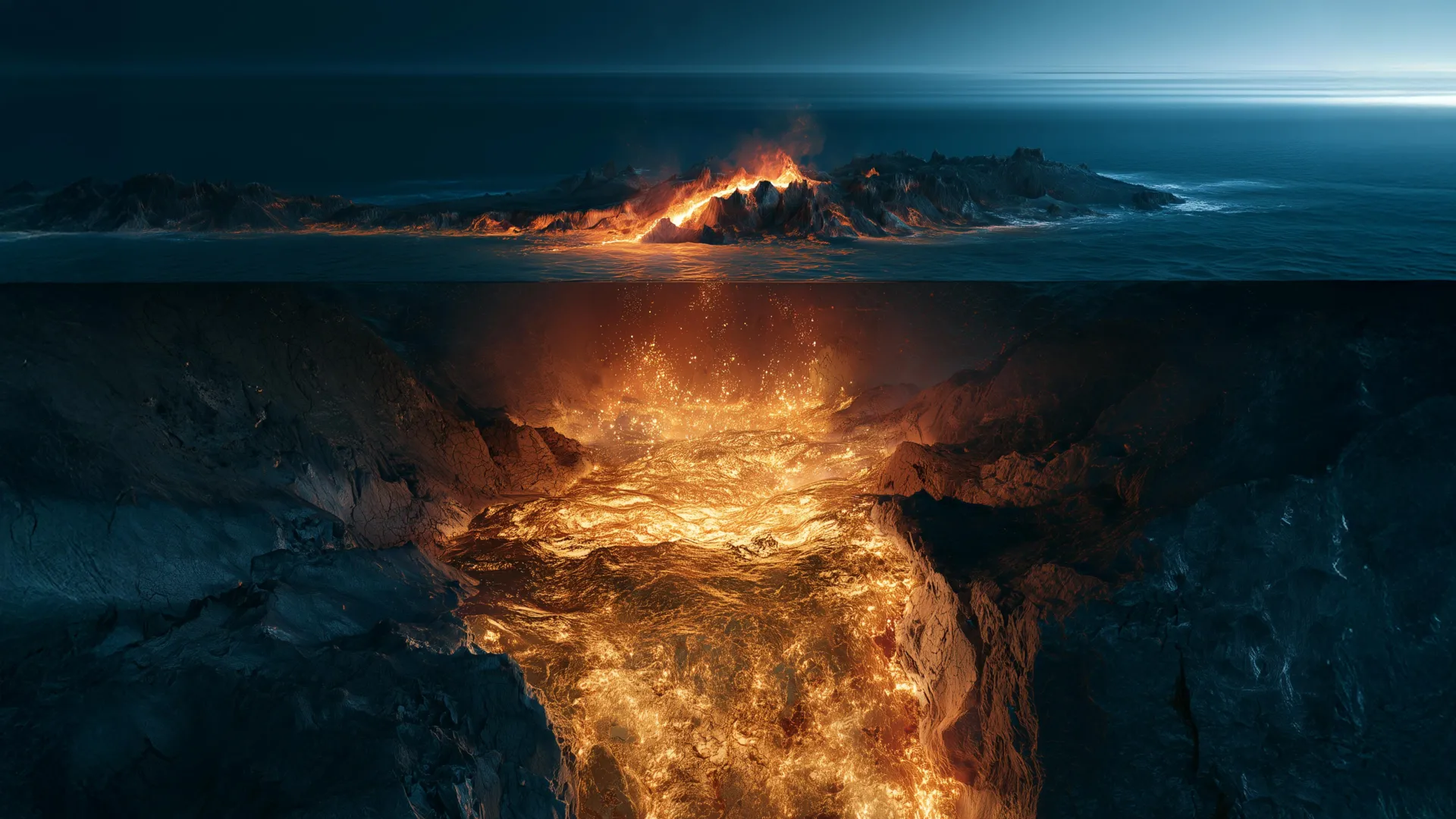
Deep beneath submarine volcanoes, Earth may be naturally concentrating gold. Researchers analyzing volcanic glass from the Kermadec island arc discovered that repeated melting of water-rich mantle beneath subduction zones gradually concentrates gold in rising magma.
The study, focused on the Kermadec island arc north of New Zealand, reveals a process by which intense melting breaks down sulfur-rich minerals that typically trap gold. This releases the metal into the melt, effectively creating a natural “gold kitchen” within the Earth’s mantle. Researchers analyzed volcanic glass to reach this conclusion.
The key to this concentration lies in the conditions present at subduction zones – areas where one tectonic plate slides beneath another. The repeated melting of water-rich mantle in these zones is crucial. According to the source, “water-rich mantle repeatedly melts beneath subduction zones, gradually concentrating gold in rising magma.” This process isn’t about creating new gold, but rather liberating existing gold from minerals that would otherwise keep it locked away.
The research highlights how geological processes can influence the distribution of valuable metals within the Earth. By understanding these mechanisms, scientists may gain insights into the origins of gold deposits and potentially improve exploration strategies.
We don't rate truth. We strip the spin and show you which perspectives covered the story. You decide.
Read the original coverage
💬 Comments
📜 Comment Policy