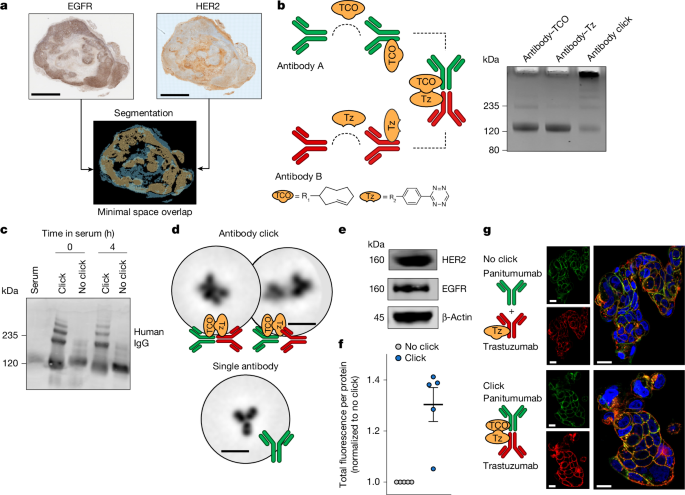
Researchers have demonstrated that linking therapeutic antibodies to antibody–drug conjugates (ADCs) *in vivo* using bioorthogonal click chemistry can enhance anti-tumor activity, even in treatment-resistant cancers. The study, published on July 15, 2026, details a method for overcoming drug resistance in heterogeneous tumors.
The research focuses on improving the effectiveness of antibody-drug conjugates (ADCs), a cancer therapy that delivers cytotoxic drugs directly to tumor cells. A key challenge with ADCs is that tumors often develop resistance mechanisms. This new approach aims to bypass these resistances by assembling the ADC *inside* the body, near the tumor itself.
The method involves using bioorthogonal click chemistry – a highly specific chemical reaction that doesn’t interfere with biological processes – to connect therapeutic antibodies directly to ADCs within the patient. According to the published article in *Nature*, this *in vivo* ligation leads to “enhanced antitumour activity in heterogeneous and treatment-resistant tumours.” The researchers found that by assembling the ADC components at the tumor site, they could overcome limitations associated with pre-formed ADCs and improve drug delivery.
The study’s findings suggest a potential new strategy for treating cancers that have become resistant to conventional therapies. By utilizing click chemistry to create ADCs *in vivo*, scientists hope to achieve more effective and targeted cancer treatment.
We don't rate truth. We strip the spin and show you which perspectives covered the story. You decide.
Read the original coverage
💬 Comments
📜 Comment Policy