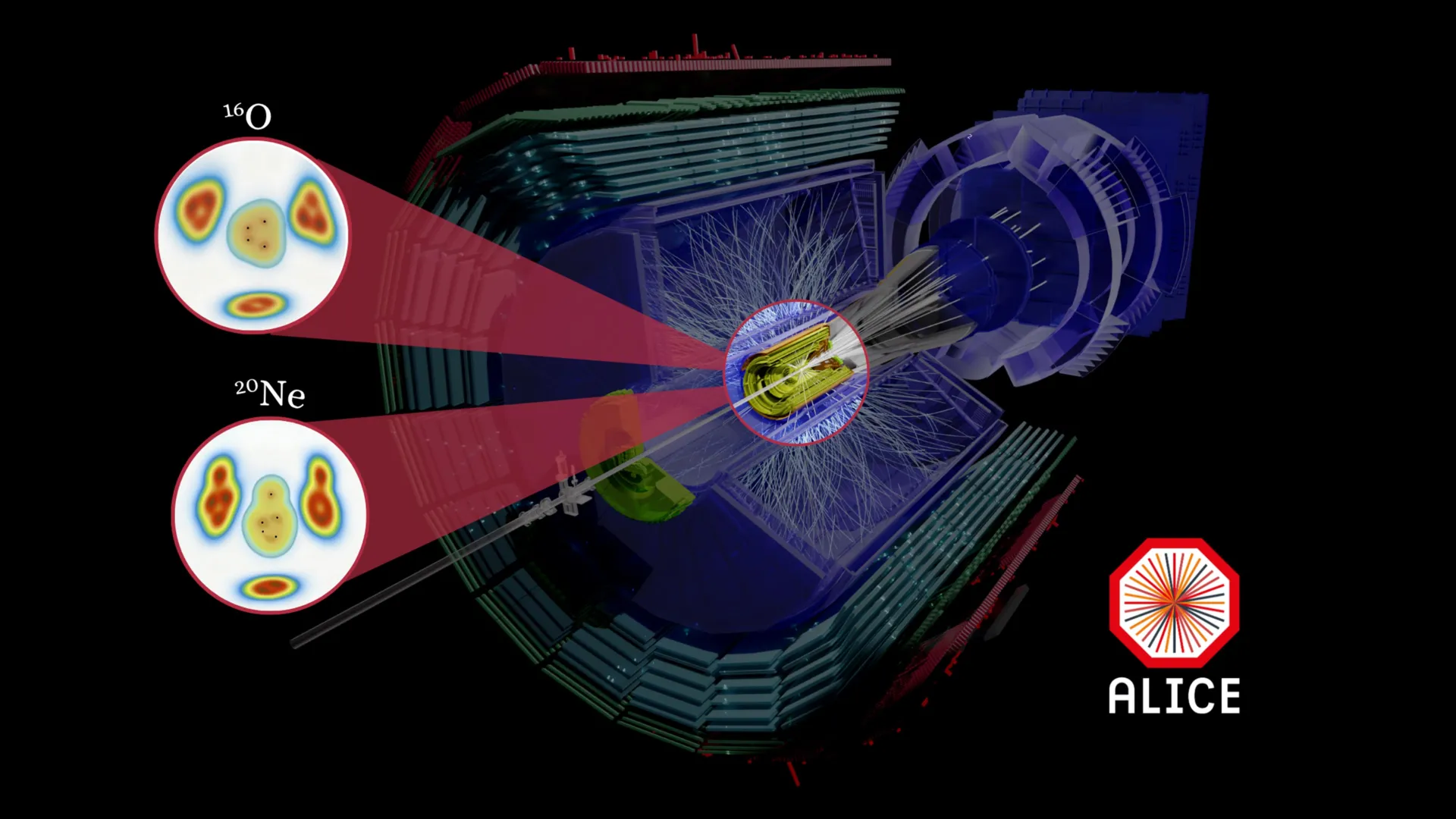
Researchers at CERN have successfully created microscopic simulations of the early Universe by colliding atomic nuclei at nearly the speed of light. The experiment produced quark-gluon plasma, a state of matter believed to have existed immediately after the Big Bang, and revealed insights into the shape of the nuclei involved.
Scientists at CERN conducted experiments involving the collision of surprisingly small atomic nuclei at velocities approaching the speed of light. These collisions generated quark-gluon plasma, described as the ultra-hot matter that filled the cosmos in the moments following the Big Bang. This achievement allows researchers to study the conditions of the early Universe in a controlled laboratory setting.
Beyond recreating these primordial conditions, the experiment yielded an unexpected result. The particles resulting from the collisions exhibited characteristics that reflect the shape of the nuclei that created them. Researchers believe this provides a novel method for investigating both nuclear physics and the Universe’s earliest moments.
This research offers a unique approach to understanding the fundamental forces and particles that governed the Universe shortly after its creation. By analyzing the debris from these high-speed collisions, scientists hope to gain new insights into the nature of matter and the evolution of the cosmos.
Read the original coverage
💬 Comments
📜 Comment Policy