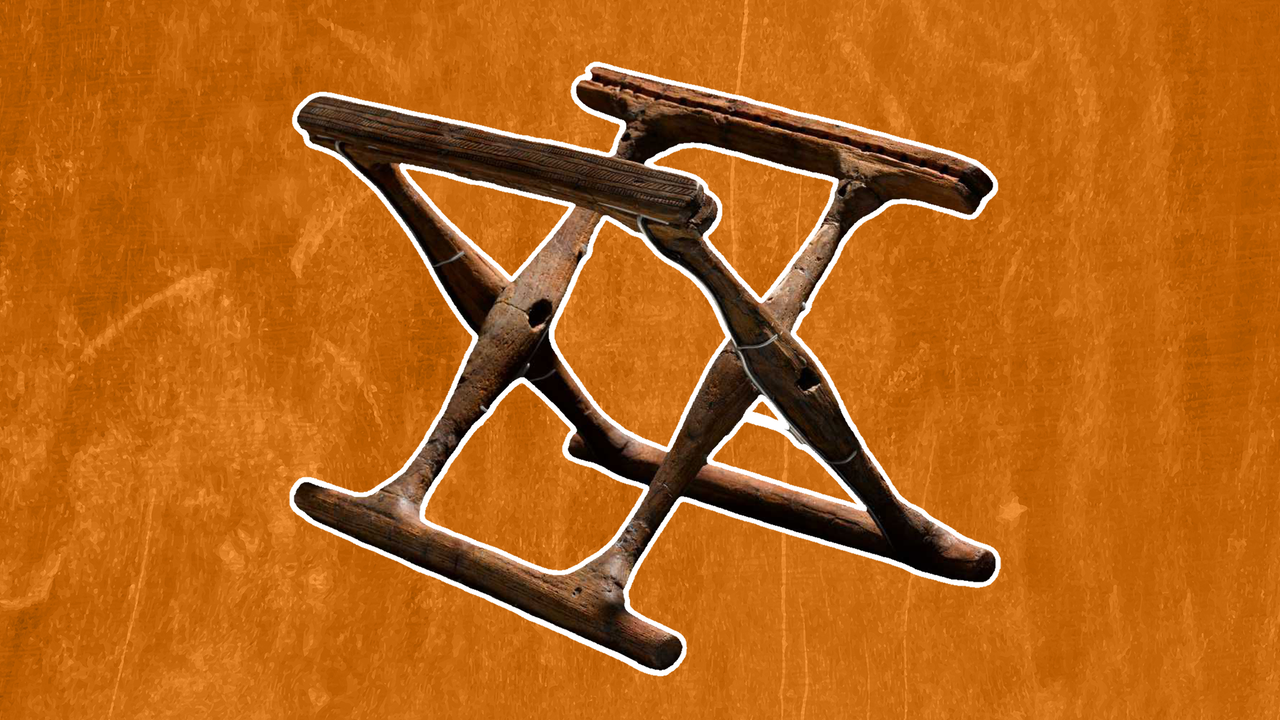
Archaeologists in Denmark unearthed a remarkably preserved wooden folding chair dating back to around 1400 B.C. The chair, found in the grave of a chieftain, is the only completely preserved example of its kind from Bronze Age Europe.
The Guldhøj folding chair was discovered in 1891 during the excavation of a burial mound called Guldhøj (Gold Hill) in southern Jutland. The grave contained a man buried within a hollowed-out oak tree trunk and wrapped in cowhide. He was adorned with a wool cloak secured by a bronze brooch, two wool hats, woolen mittens, and leather shoes. Grave goods included a bronze ax, a bronze dagger, two ornate wooden bowls, and a wooden box.
The chair’s frame is crafted from ash wood, with a seat originally made of otter skin – though only fragments of the skin remain. The wooden frame features incised patterns inlaid with a tar-like substance, creating geometric decorations. Researchers, including archaeologist Kirsten Prangsgaard, determined in a 1999 study that the chair consists of two wooden frames, each approximately 13 inches (33 centimeters) tall. When assembled at a 45-degree angle, the chair would have been about 9.5 inches (24 cm) high.
Originally held together with bronze nails, the chair was likely a status symbol and used in rituals or ceremonies, according to the National Museum of Denmark. Similar folding chairs have been found in ancient Egypt and Greece, but the Guldhøj chair is unique as the only completely preserved wooden example from the Bronze Age in Europe. Pieces of chairs have also been found in other chieftain graves in Denmark and northern Germany, and a metal folding chair was discovered in an early medieval woman’s grave in Germany.
Read the original coverage
💬 Comments
📜 Comment Policy