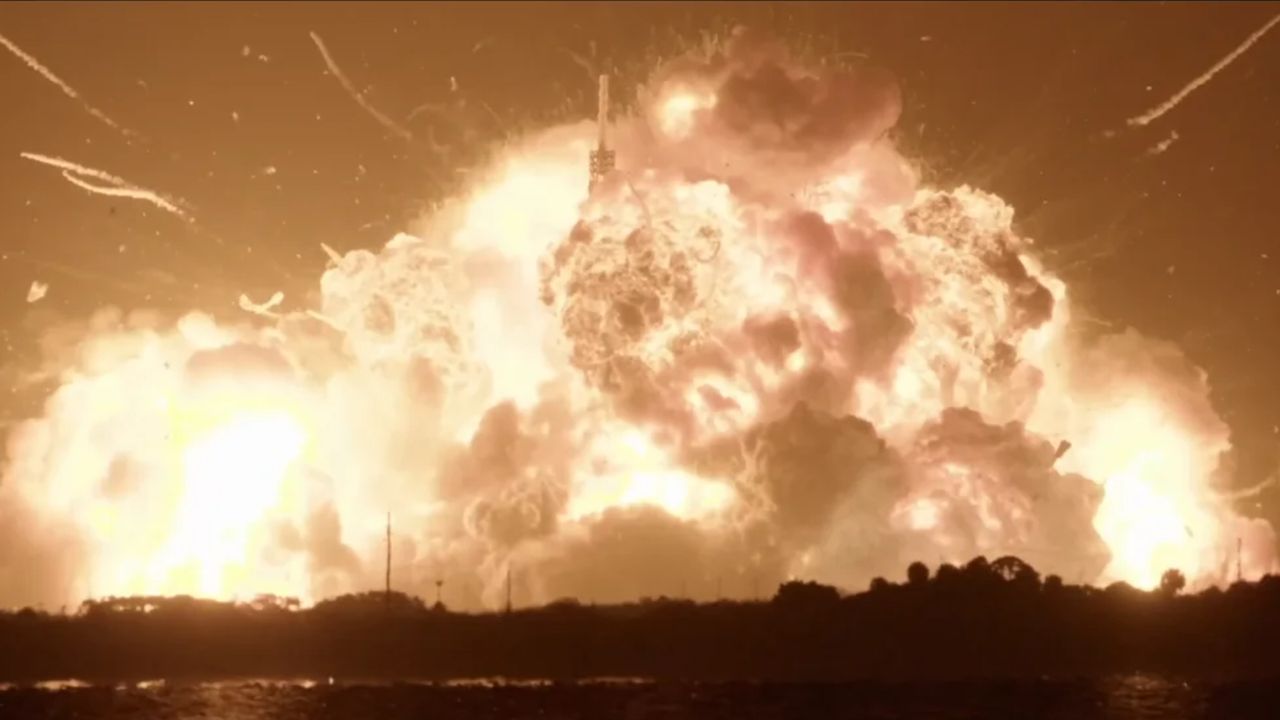
A Blue Origin New Glenn rocket explosion in Florida in May released ultra-low-frequency sound waves that traveled over 1,000 miles across the U.S., reaching as far as Texas. Researchers estimate the blast’s power was comparable to the 1986 Chernobyl reactor explosion.
The New Glenn rocket, standing 320 feet tall, is Blue Origin’s largest and most powerful commercial rocket, designed to compete with SpaceX’s Starship. It had launched into space three times prior to the May incident, including a successful landing of its reusable booster in November 2025. On May 29, during a static “hotfire test” at Cape Canaveral Space Force Station, the rocket’s booster exploded, sending flaming debris and a mushroom cloud into the air. Blue Origin revealed on August 5 that a faulty oxygen valve likely caused the explosion. The company has not attempted another launch since.
The explosion is considered one of the most powerful prelaunch failures ever recorded, with damage to the launchpad expected to take at least a year to repair. This could delay NASA’s proposed moon base, which relies on New Glenn for some component launches. While no injuries occurred, locals up to 135 miles from the launchpad reported hearing a shockwave and a thunderous boom.
A new study, published August 12 in *The Seismic Record*, analyzed data from 36 listening stations across the U.S. These stations detected infrasound – ultra-low-frequency sound imperceptible to humans – originating from the explosion, with the farthest signal detected in northern states over 1,000 miles away.
Read the original coverage
💬 Comments
📜 Comment Policy