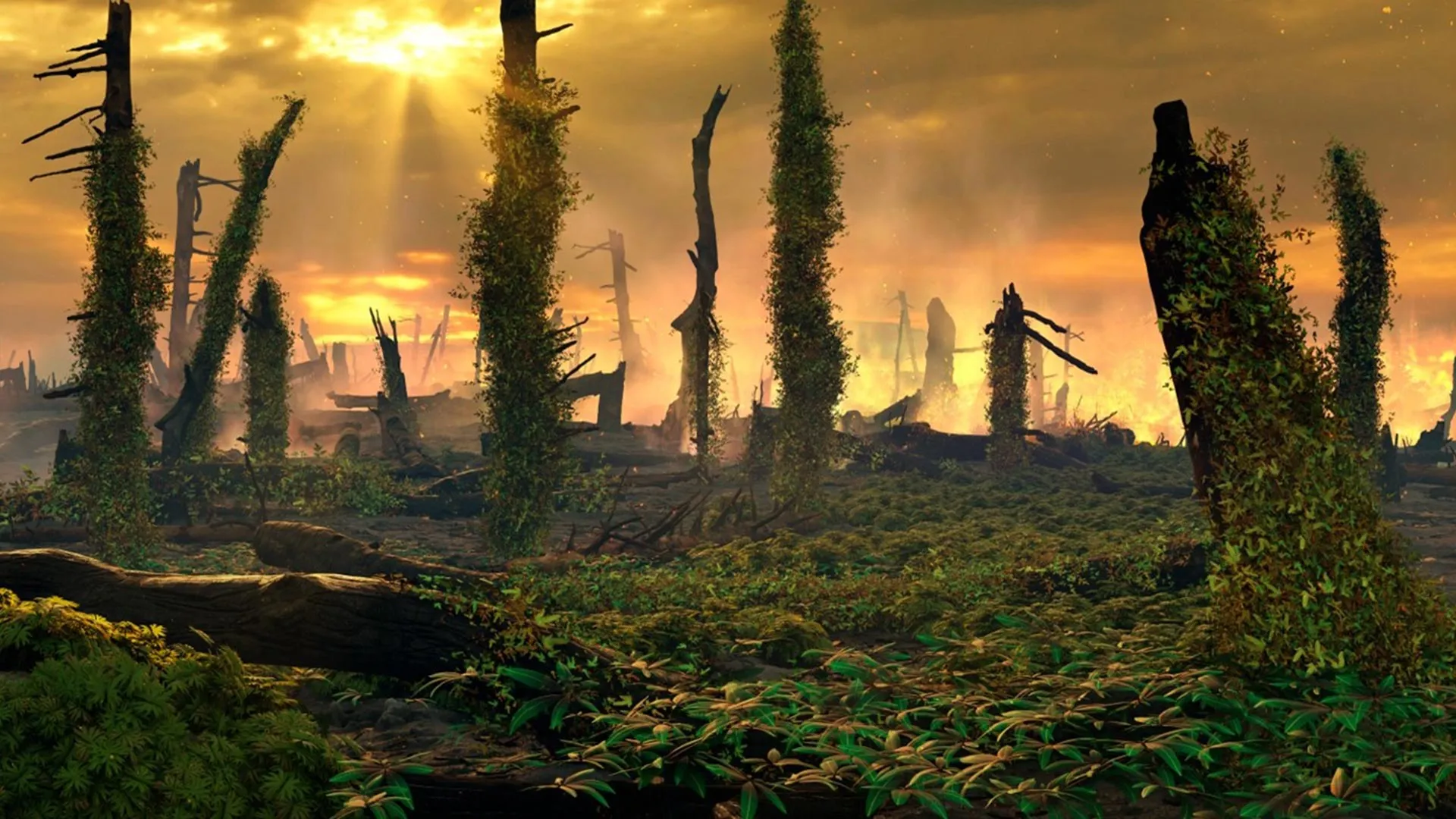
New fossil evidence suggests ancient fern savannahs played a key role in the wildfires that devastated parts of Europe during the end-Triassic mass extinction event. The ferns’ ability to rapidly regrow after fires created a continuous supply of fuel, prolonging the devastation.
A new study indicates that widespread fern savannahs may have transformed areas of Europe into a wildfire inferno at the close of the Triassic period. Researchers discovered fossil evidence demonstrating that these ancient ferns repeatedly recovered following fire events.
The key to understanding this connection lies in the ferns’ regenerative capabilities. According to the source, the repeated regrowth created “fresh fuel” which helped sustain and extend the wildfires. This cycle contributed significantly to the environmental devastation associated with the end-Triassic mass extinction. The research highlights how vegetation itself can exacerbate catastrophic events like large-scale fires, influencing extinction patterns.
The findings shed light on the conditions present during one of Earth’s major extinction events, offering insights into the interplay between plant life, fire regimes, and environmental change in deep time.
We don't rate truth. We strip the spin and show you which perspectives covered the story. You decide.
Read the original coverage
💬 Comments
📜 Comment Policy