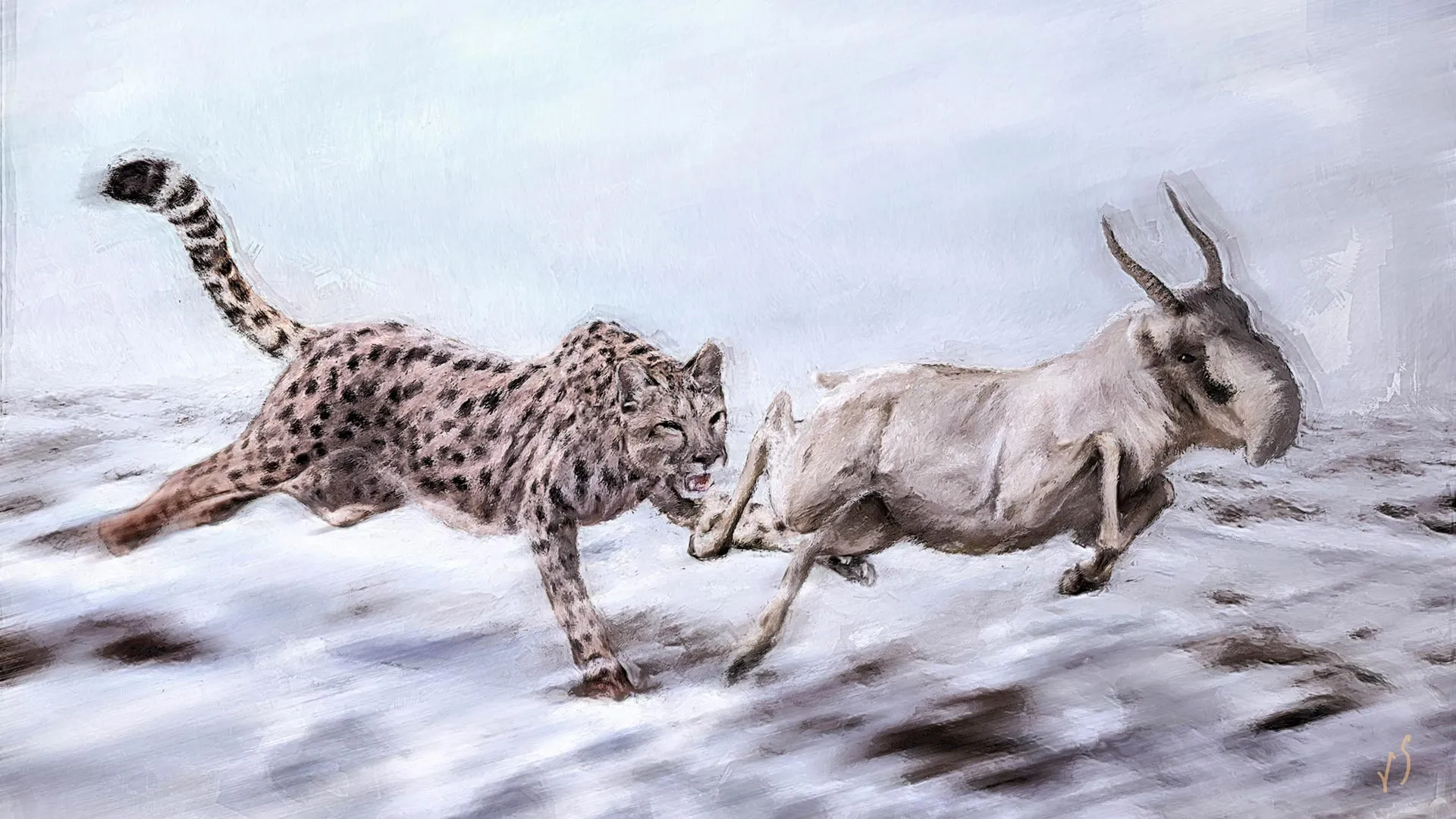
Scientists at the University of California, Santa Cruz, have determined that the extinct North American predator known as the “American cheetah” (Miracinonyx trumani) was not a true cheetah, but a close relative of the puma. New genomic and isotopic evidence reveals a surprisingly adaptable animal that thrived in diverse environments, including the Arctic, where it supplemented its diet with fish.
The research, published September 4 in *Current Biology*, extends the known range of *M. trumani* approximately 20 degrees of latitude further north than previously understood. While the animal lived as a generalist predator in temperate grasslands like those in Wyoming and Florida, northern populations in the Yukon appear to have relied heavily on consuming fish, potentially including salmon. Adults averaged around 150 pounds in weight, stood roughly 3 feet tall, and measured about 8 feet long.
Molly Cassatt-Johnstone, a Ph.D. candidate in the Paleogenomics Lab at UC Santa Cruz and lead author of the study, stated, “These cats were remarkably flexible, much like pumas are across their range today.” The team identified loss-of-function mutations in genes regulating circadian rhythms, suggesting adaptation to the extreme light cycles of northern latitudes.
The findings challenge a long-held theory known as the “ghosts of predators past” hypothesis, which proposed that the American pronghorn evolved its exceptional speed as a defense against a cheetah-like predator. The new genomic evidence indicates that *M. trumani* was a more versatile hunter, capable of both land-based chases and utilizing its powerful forelimbs to capture prey.
Read the original coverage
💬 Comments
📜 Comment Policy