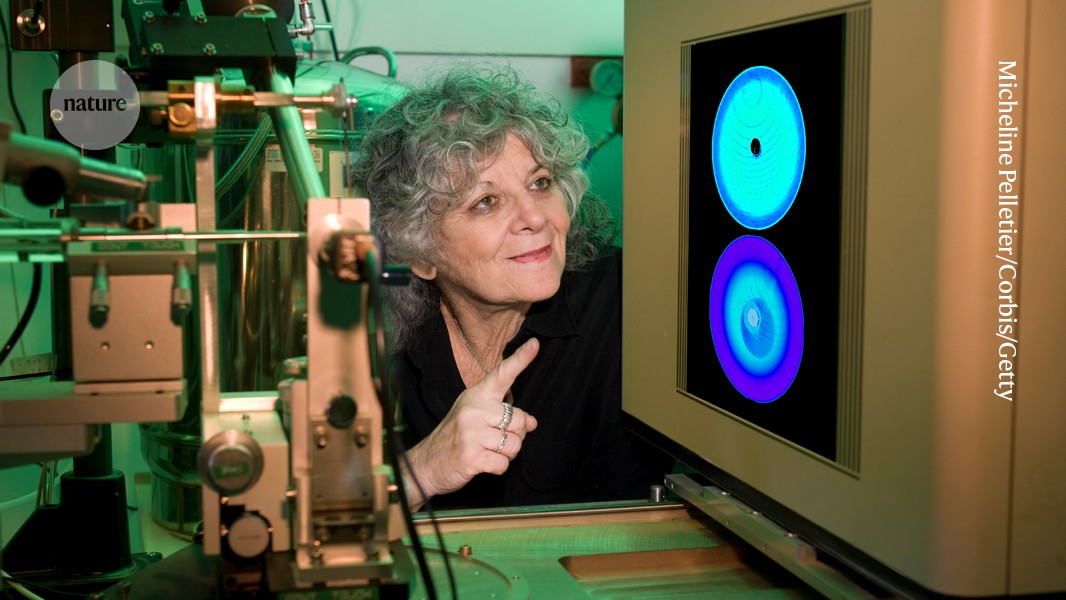
Ada Yonath, an Israeli structural biologist, died at age 87. She was the first scientist to determine the structure of the ribosome, a complex crucial to protein production in living cells. Her work, which involved overcoming significant technological hurdles, earned her a share of the 2009 Nobel Prize in Chemistry.
Born Ada Lifshitz in Jerusalem to an impoverished Orthodox Jewish family, Yonath experienced financial hardship after her father’s death when she was 11. Despite these challenges, she pursued her education, graduating from Beit Hakerem and completing degrees at the Hebrew University of Jerusalem. She earned her doctorate in structural biology at the Weizmann Institute of Science in Tel Aviv, focusing on the protein collagen.
Following postdoctoral work at the Mellon Institute in Pittsburgh, Pennsylvania, and the Massachusetts Institute of Technology in Cambridge, Yonath returned to the Weizmann Institute in 1970. There, she established Israel’s first biological crystallography laboratory. Initially studying individual proteins, she shifted her focus to the ribosome, a task considered “impossible” with existing technology. The ribosome’s size—comprising hundreds of thousands of atoms—and its lack of crystallization presented major obstacles.
Yonath’s research explored how antibiotics bind to bacterial ribosomes, revealing mechanisms of action and antibiotic resistance. This work also opened avenues for designing new drugs. She worked at the Max Planck Institute for Molecular Genetics in West Germany to further her research.
Yonath was the fourth of eight women to win the Nobel Prize in Chemistry and the first since Dorothy Crowfoot Hodgkin 45 years prior. She famously stated, “I am a scientist, not male or female. A scientist.”
Read the original coverage
💬 Comments
📜 Comment Policy