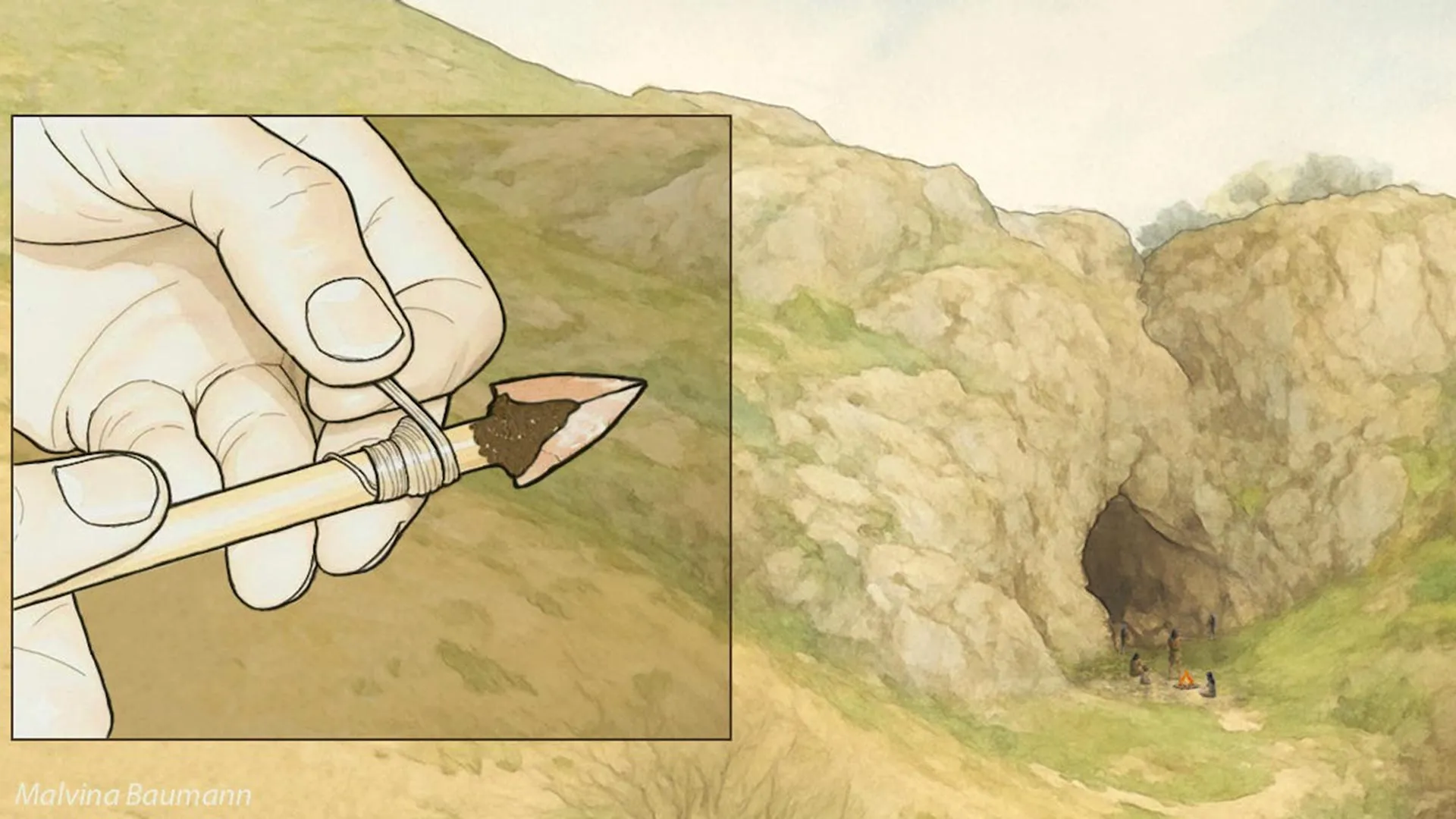
Archaeologists have discovered 80,000-year-old projectile points in Uzbekistan that bear striking similarities to arrowheads created by Homo sapiens in France 25,000 years later. This finding suggests advanced projectile technology existed in Central Asia much earlier than previously thought, potentially altering understandings of human migration patterns into Europe.
The tiny projectile points were identified from impact traces within the oldest layers of the Obi-Rakhmat site in Uzbekistan. Their size and design are directly comparable to arrowheads produced by Homo sapiens during a period of incursion into Neanderthal territory in the Rhône Valley, France. The discovery, published in the journal *PLOS One*, challenges existing chrono-cultural and anthropological frameworks of prehistory, which were initially centered on Western Europe.
Traditionally, these frameworks were Eurocentric, positing that Cro-Magnons—early modern humans in Europe—descended from Neanderthals and established a foundation for perceived civilizational superiority. However, evidence of Homo sapiens in Australia, dating back approximately 65,000 years, predates European settlements by 10,000 years. The precise route and timing of the initial colonization of Western Eurasia around 45,000 years ago remains a subject of debate.
Archaeologist Ludovic Slimak proposed in 2023 the possibility of a Central Asian origin for these early technologies. Central Asia, depending on climate, has historically served as both a corridor for movement between east and west and a refuge zone. The new findings support this hypothesis, suggesting that sophisticated toolmaking may have originated in this region before spreading to other parts of Eurasia.
Read the original coverage
💬 Comments
📜 Comment Policy