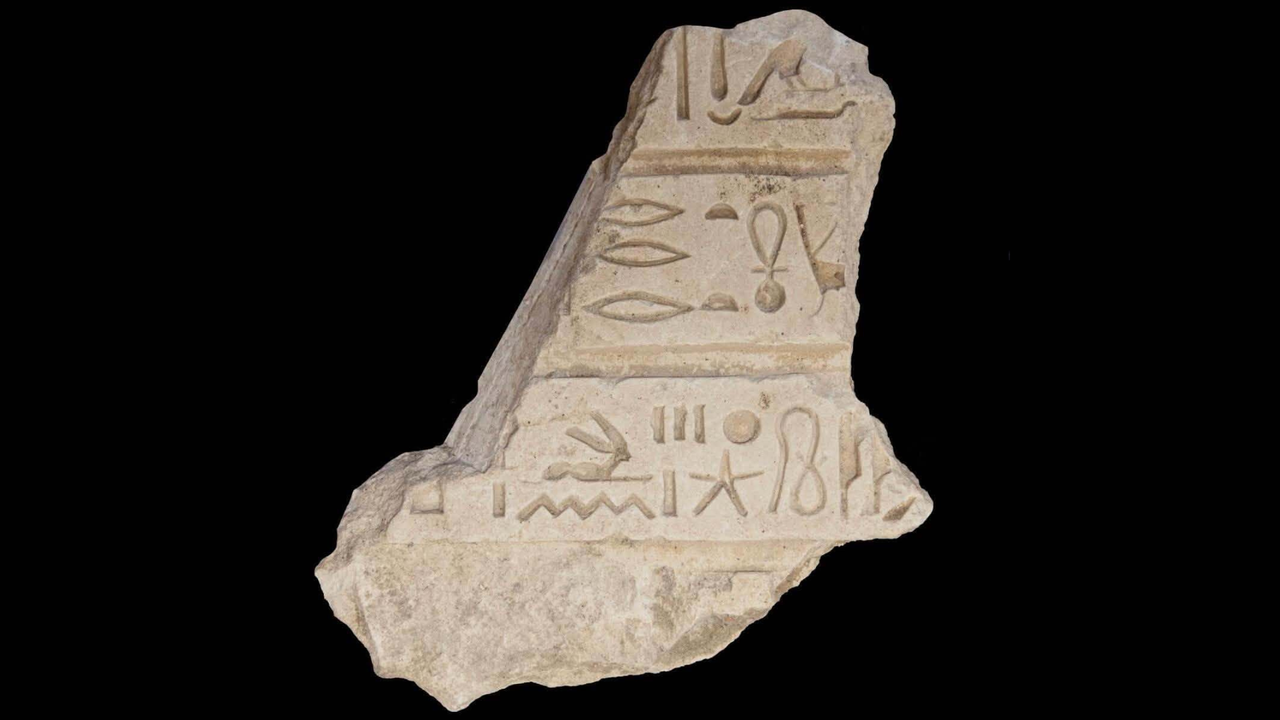
A 3,200-year-old inscription discovered near Tell Abu Seifi in Egypt may indicate the location of a lost ancient city called Mesn, which flourished during the reign of Ramesses II. Archaeologists have found evidence suggesting the site was dedicated to the falcon-headed god Horus.
The inscription, dating back to the time of Ramesses II (reigned approximately 1279 to 1213 B.C.), states that Horus is the “Lord of the City of Mesn,” according to a translated statement from the Egyptian Ministry of Tourism and Antiquities. The discovery was made at the archaeological site of Tell Abu Seifi, located near the Suez Canal, in the north Sinai Desert and the eastern Nile Delta. Alongside the inscription, the remains of a temple dedicated to Horus were also found, though it was “almost completely destroyed,” according to Hesham Hussein, the director general of Delta and Sinai Archaeology at Egypt's Ministry of Tourism and Antiquities.
While the temple’s condition makes detailed analysis difficult, the combination of the inscription referencing Mesn and the presence of a Horus temple strongly suggests Tell Abu Seifi is, in fact, the lost city. A previously discovered bronze seal from the Ptolemaic period (circa 304 to 30 B.C.) found at Tell Abu Seifi also bears the inscription “Horus, Lord of Mesen,” and similar inscriptions were found on coffins also dating to the Ptolemaic period. Hussein noted that this demonstrates the importance of the Horus cult in Mesn, stating, “The title “Horus, Lord of Mesen” directly connects the deity with the place, and the archaeological evidence from Tell Abu Seify supports the importance of this cult.”
Tell Abu Seifi is situated near the ancient “Way of Horus,” a road connecting the eastern Nile Delta with the southern Levant and featuring numerous fortresses. Peter Brand, a professor of history at the University of Memphis in Tennessee, believes the evidence supports the identification of Tell Abu Seifi, near the modern city of Qantara, as Mesn. The exact founding date and size of Mesn remain unknown, as archaeologists have not yet determined the city’s full extent or population. “Because its archaeological identification has remained uncertain, we cannot currently provide a reliable estimate of its total extent or population,” Hussein said.
Read the original coverage
💬 Comments
📜 Comment Policy