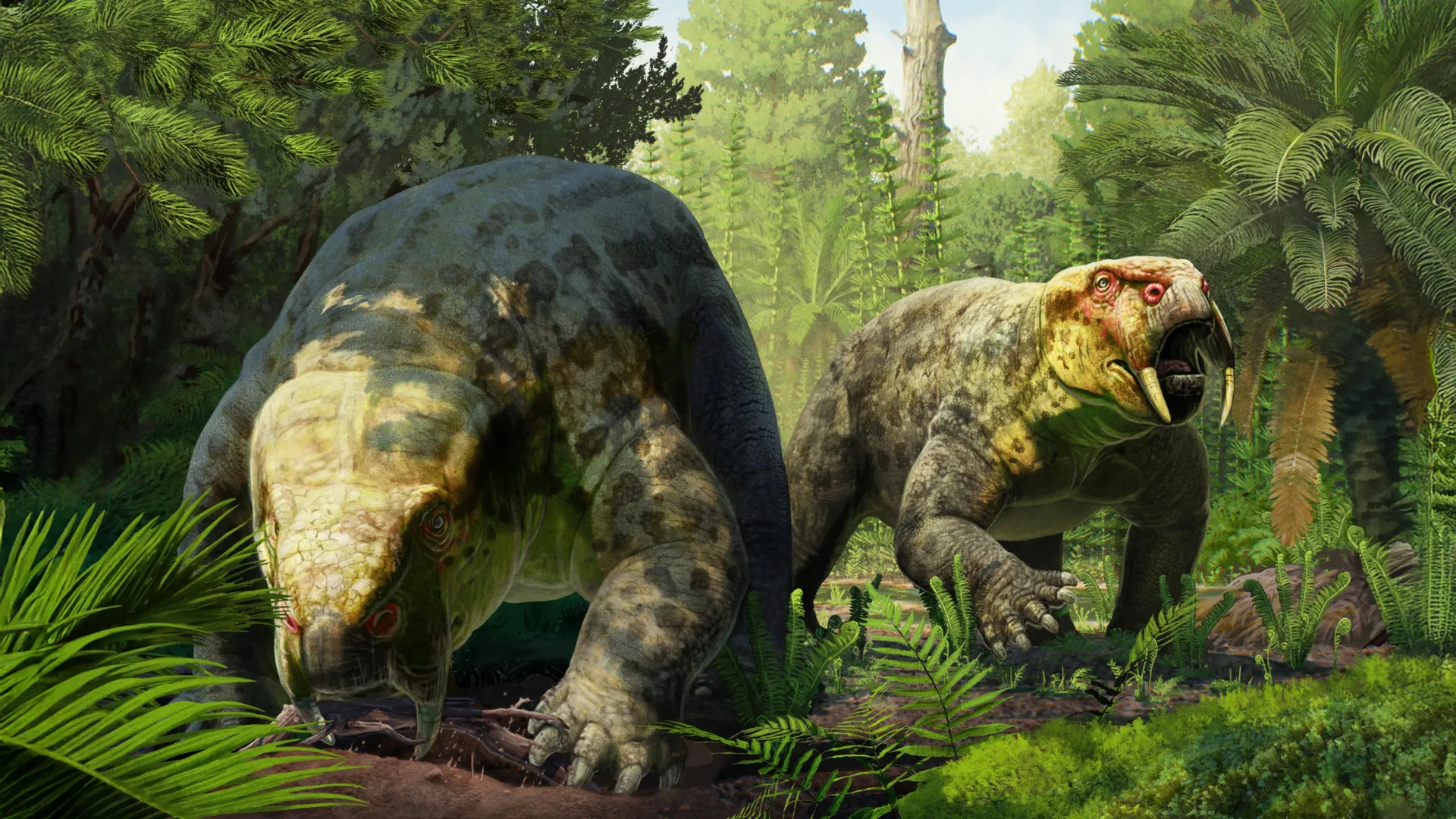
A newly identified fossil from Tanzania, named *Dinodontosaurus isiyavamanda*, is prompting scientists to re-evaluate the timeline of early dinosaur evolution. The discovery, made by an international research team led by the University of Bristol, links fossil deposits in Tanzania and South America.
The 240-million-year-old *Dinodontosaurus isiyavamanda* is a member of the dicynodont group, plant-eating synapsids—vertebrates in the lineage leading to mammals—that predated dinosaurs. Researchers examined an undescribed associated skeleton and a recently discovered fragmentary skull, confirming both belonged to the *Dinodontosaurus* genus. Prior to this discovery, *Dinodontosaurus* fossils had only been found in South America.
The identification of *Dinodontosaurus isiyavamanda* is significant because the rocks containing the fossil are the same geological deposits that have yielded fossils proposed to be among the earliest dinosaurs. Scientists believe this finding suggests that some previously identified Tanzanian dinosaur fossils may actually be millions of years younger than previously estimated. The research, published September 15 in the *Journal of Vertebrate Palaeontology*, began with a British expedition in 1963 that collected synapsid fossils from Tanzania. The species name, *Dinodontosaurus isiyavamanda*, honors the Wamanda people who live in the region where the fossils were found.
Read the original coverage
💬 Comments
📜 Comment Policy