Zelenskyy Questions Trump's Relationship with Putin, Raises Concerns Over US Support
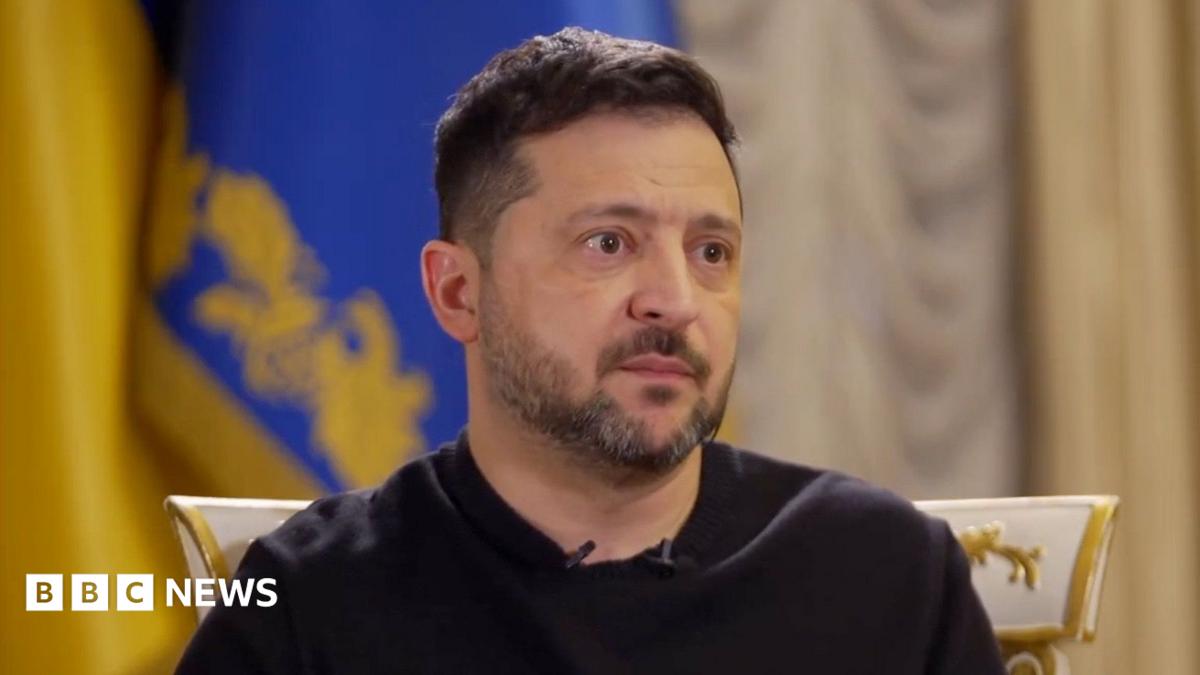
Ukrainian President Volodymyr Zelenskyy has publicly questioned the nature of Donald Trump’s relationship with Russian President Vladimir Putin, describing it as “strange” and asserting that Putin, as an “aggressor and a killer,” cannot be considered a friend. Zelenskyy’s comments, made in a BBC interview, came after Trump shared a picture on Truth Social embracing Putin and referring to him as “my friend.” Zelenskyy also expressed frustration with the pace of US military aid to Ukraine, specifically citing delays in the delivery of Patriot missile systems as costing Ukrainian lives and urging Washington to apply greater pressure on Moscow to end the war.
Zelenskyy drew a parallel between Trump’s view of Putin and historical justifications for appeasement, stating, “It is the same that somebody said about Hitler during the second world war that he is a friend. No, he is not a good friend.” Trump, however, defended his relationship with Putin as personal, stating he considers Putin someone with whom he has a “very good relationship” and that Putin “would love to end the war.” Trump also claimed both Zelenskyy and Putin are struggling to find a way to end the conflict.
Beyond the issue of Trump’s relationship with Putin, Zelenskyy highlighted a critical shortage of interceptors for defending against Russian ballistic missile attacks and criticized the delays in US Patriot missile system deliveries. He also called for “real helpful” allied pressure on Moscow during peace negotiations.
Where they differ
- The Times of India provided the most detailed account of Zelenskyy’s comparison of Putin to Hitler, while BBC and Newsmax reported the statement more briefly.
- Newsmax and BBC both focused on Zelenskyy’s direct quote calling Trump’s friendship with Putin “strange,” while the Times of India framed it within a broader discussion of US support for Ukraine.
- BBC and Times of India included details about the location of the interview (Kyiv), while Newsmax did not.
What is not yet known
- The extent to which delays in Patriot missile system deliveries are impacting the war effort, beyond Zelenskyy’s assertion that they are costing lives.
- Whether Trump’s statements regarding Putin’s desire to end the war are based on any direct communication or evidence.
Background
- Russia launched a full-scale invasion of Ukraine in February 2022 and currently controls approximately 20% of the country, demanding the surrender of Ukraine’s eastern Donbas region [Fact Refinery, 2026-11-22].
- Since the start of 2023, Russia has gained approximately 8,000 square kilometers of Ukrainian territory [Fact Refinery, 2026-11-23].
- Jared Kushner asserted that Russian President Vladimir Putin has “shown restraint” in the war by not using nuclear weapons [Fact Refinery, 2026-11-26].
- Donald Trump pardoned two turkeys, continuing a 79-year-old White House tradition [Fact Refinery, 2026-11-24].
Our reading
We begin with the most likely outcome: continued, albeit strained, US support for Ukraine. Zelenskyy’s public criticism, while pointed, is a calculated risk. He is attempting to leverage domestic US political dynamics, specifically Trump’s influence, to pressure Washington into accelerating aid deliveries. A shift in US policy towards a more accommodating stance on Russia, however, remains a less likely possibility, contingent on Trump successfully negotiating a deal or exerting significant pressure on the Biden administration. Should Trump secure a commitment on healthcare from El-Sayed, as proposed, it could create a reciprocal dynamic, potentially influencing his approach to Ukraine. Beyond the immediate aid question, this exchange highlights a broader aspect: the potential for US domestic politics to directly impact the trajectory of the war. Trump’s continued engagement with Putin, even symbolically, undermines the international coalition against Russia and creates opportunities for Moscow to exploit divisions within the US. The Times of India’s more detailed reporting of Zelenskyy’s Hitler comparison suggests this angle is being amplified internationally, potentially shaping global perceptions of the conflict. Considering the other side, Trump’s insistence that both Zelenskyy and Putin want to end the conflict, and his framing of his relationship with Putin as personal, suggests a desire to present himself as a potential mediator. This could be a genuine belief, or a strategic positioning ahead of a possible return to office. However, Putin’s actions on the ground, the ongoing attacks on Ukrainian infrastructure, contradict his purported desire for peace, potentially weakening Trump’s negotiating position.
What to watch
- A vote on further US aid to Ukraine in Congress [US Congressional records].
- The delivery timeline for Patriot missile systems to Ukraine [Ukrainian Ministry of Defense statements].
- Any direct communication between Trump and Putin [public statements or reports from either side].
Read the original coverage
💬 Comments
📜 Comment Policy