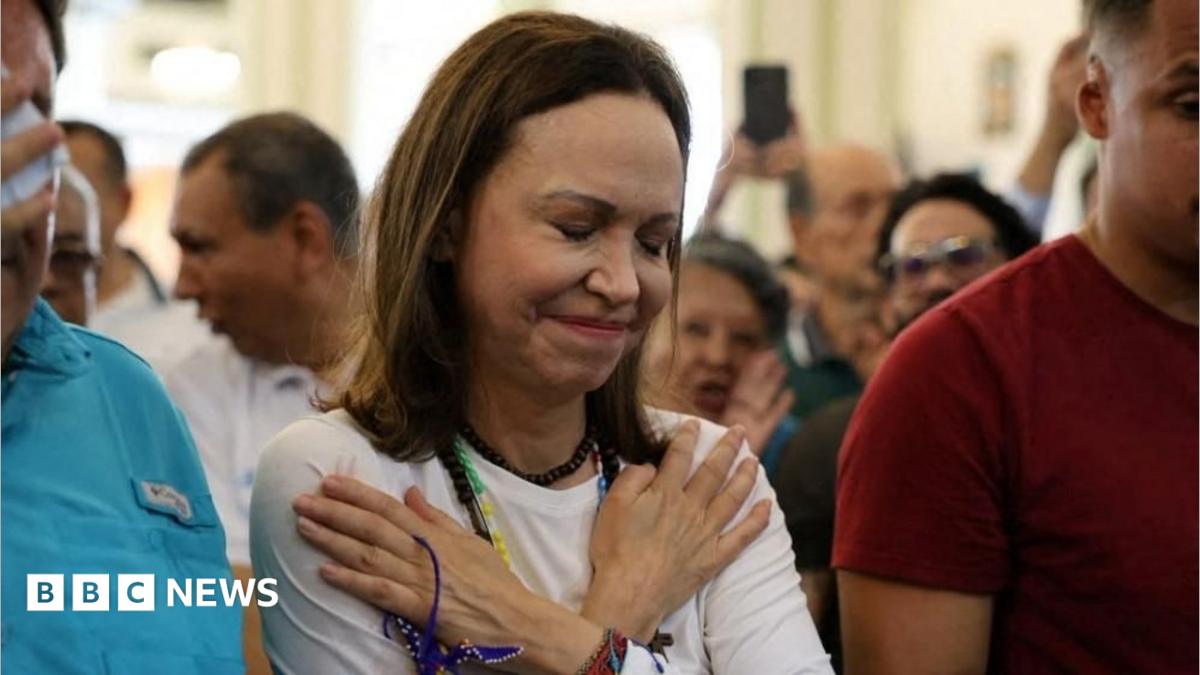
Venezuelan opposition leader María Corina Machado returned to Venezuela on Sunday after nearly ten months in exile, announcing her arrival via social media. Her return follows a period of political upheaval in Venezuela, including the capture of former President Nicolás Maduro by U.S. forces in January, which led to the installation of Delcy Rodríguez as acting president. Machado’s return is seen as a challenge to Rodríguez and a push for free and fair presidential elections, though Washington has prioritized economic stabilization. Machado had been in exile since December, having left Venezuela to accept the Nobel Peace Prize in Norway. Her attempts to return were repeatedly blocked by Venezuelan authorities over the past three months.
Machado’s homecoming complicates the U.S.’s strategy for Venezuela, which has involved supporting Rodríguez while negotiating political changes and securing access to Venezuelan oil reserves. While some opposition figures have engaged in talks with Rodríguez’s government, Machado has remained outside the process, calling for direct elections and criticizing aspects of the U.S. approach. President Trump, while stating he was unaware of Machado’s return, acknowledged receiving her Nobel Prize. Machado’s supporters, including Edmundo González Urrutia, anticipate her leadership in advancing a democratic transition. However, Venezuelan officials have accused Machado of calling for foreign intervention and warned of potential consequences upon her return.
Left-leaning outlets emphasize Machado’s challenge to the current government and her demand for elections, while right-leaning coverage highlights the potential complications her return poses to the U.S.’s existing strategy in Venezuela. Not in dispute is Machado’s return to Venezuela after a prolonged exile and her intention to pursue democratic change. The extent to which she will be able to operate freely, and whether her return will lead to concrete progress toward elections, remains uncertain.
Our reading is that Machado’s return represents a direct challenge to both the current Venezuelan government led by Rodríguez and the U.S.’s strategy of working with that government to secure oil access. The article suggests a tension between prioritizing economic stabilization, as Washington appears to be doing, and supporting a push for democratic change, which Machado advocates. The differing coverage across outlets confirms this tension; some emphasize the potential disruption to U.S. plans, while others focus on Machado’s democratic aspirations.
Read the original coverage
💬 Comments
📜 Comment Policy