Van Hollen Claims ‘North of 15’ Senate Majority Leader Votes
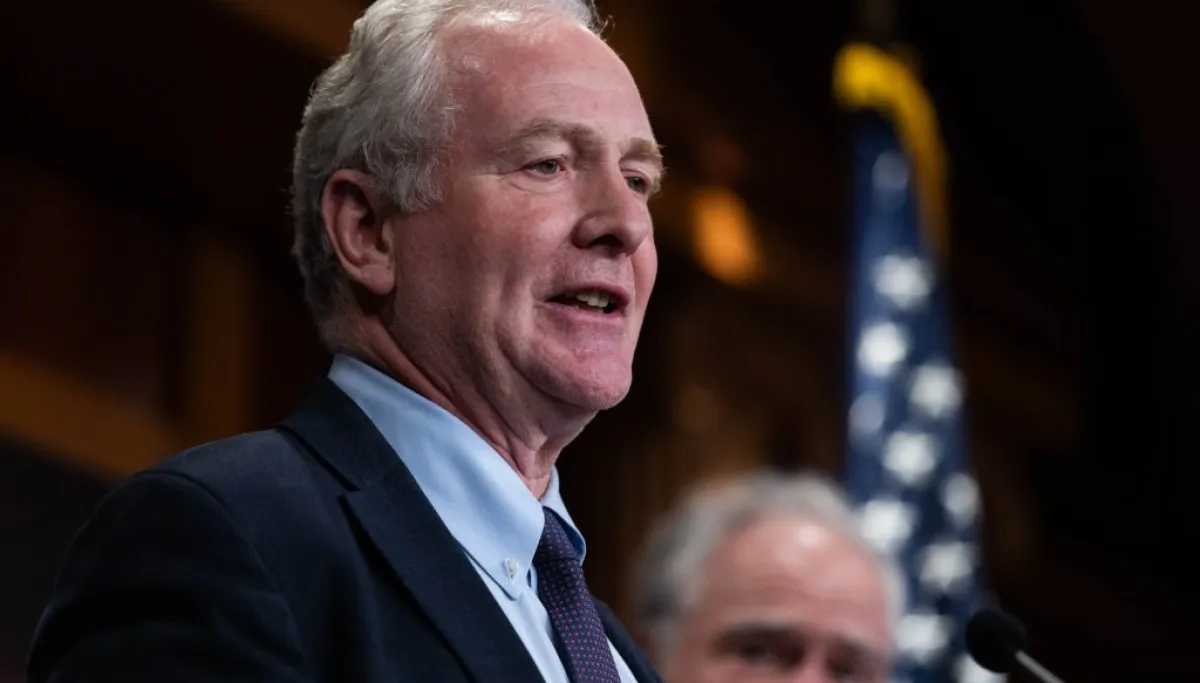
Senator Chris Van Hollen is seeking to unseat Chuck Schumer as Senate majority leader, stating he has “north of 15” votes as of Sunday. He needs 28 votes to win the Tuesday election. The Washington Examiner reported Van Hollen attributed the push for change to a broader desire for new leadership following recent elections, while The Guardian focused on the gap between his current support and the 28 votes needed. Van Hollen stated there is a “hunger for change” both nationally and within the Senate, and that voters did not fully endorse Democratic policies in the recent election.
Where they differ
- The Washington Examiner emphasized Van Hollen’s framing of the election as an indictment of Trump’s policies, but also a signal that voters haven’t fully embraced the Democratic party.
- The Guardian focused on the numerical gap between Van Hollen’s current vote count and the 28 needed to defeat Schumer.
Background
- Chris Van Hollen is challenging Chuck Schumer for Senate Majority Leader, advocating for more aggressive AI regulation [Fact Refinery, 2026-11-20].
- The Senate Democratic majority currently stands at 56-44 following Mary Peltola’s victory in Alaska [Fact Refinery, 2026-11-18].
- Van Hollen previously criticized Jensen Huang’s reinstatement as Nvidia CEO, calling it an example of corruption [Fact Refinery, 2026-11-24].
- Democrats recently gained control of Congress following midterm elections and are considering raising the federal minimum wage [Fact Refinery, 2026-11-17].
- President Trump has defied election results by recommitting to policies voters rejected [Fact Refinery, 2026-11-28].
Our reading
We begin by assessing the likelihood of Van Hollen’s success. While he claims “north of 15” votes, he needs 28 to unseat Schumer. The most likely outcome is Schumer retaining the leadership, given his decade-long tenure, fundraising prowess, and established network within the Senate. A key factor tipping the balance would be a significant defection of moderate Democrats concerned about the party’s direction after the recent elections, as highlighted by both the *Washington Examiner* and *The Guardian*. A less likely outcome is a compromise, perhaps involving a power-sharing arrangement or a commitment from Schumer to prioritize AI regulation. The challenge to Schumer coincides with a broader moment of recalibration for the Democratic party. The recent midterm gains, coupled with the push for policies like a higher minimum wage, suggest a desire to move beyond the status quo. However, Trump’s continued adherence to unpopular policies demonstrates a parallel resistance to acknowledging voter sentiment. This dynamic creates tension within both parties, potentially hindering effective governance. Schumer’s position is not merely about securing votes; it’s about maintaining the existing power structure and catering to individual senators’ needs, as noted in a prior article. Van Hollen’s challenge, therefore, represents a disruption to that system, forcing senators to choose between loyalty to the established leader and a potential shift towards a more progressive agenda.
What to watch
- The Senate leadership vote on Tuesday, December 1, to confirm whether Van Hollen can reach the 28 votes needed [The Hill, 2026-11-23].
- Any public statements from key Democratic senators regarding their voting intentions [NBC News, 2026-11-23].
- Whether Schumer responds to Van Hollen’s call for greater emphasis on AI regulation [The New Yorker, 2026-11-27].
Read the original coverage
💬 Comments
📜 Comment Policy