US Navy Shipbuilding Plan Faces Cost Increases, Strain from Iran Conflict
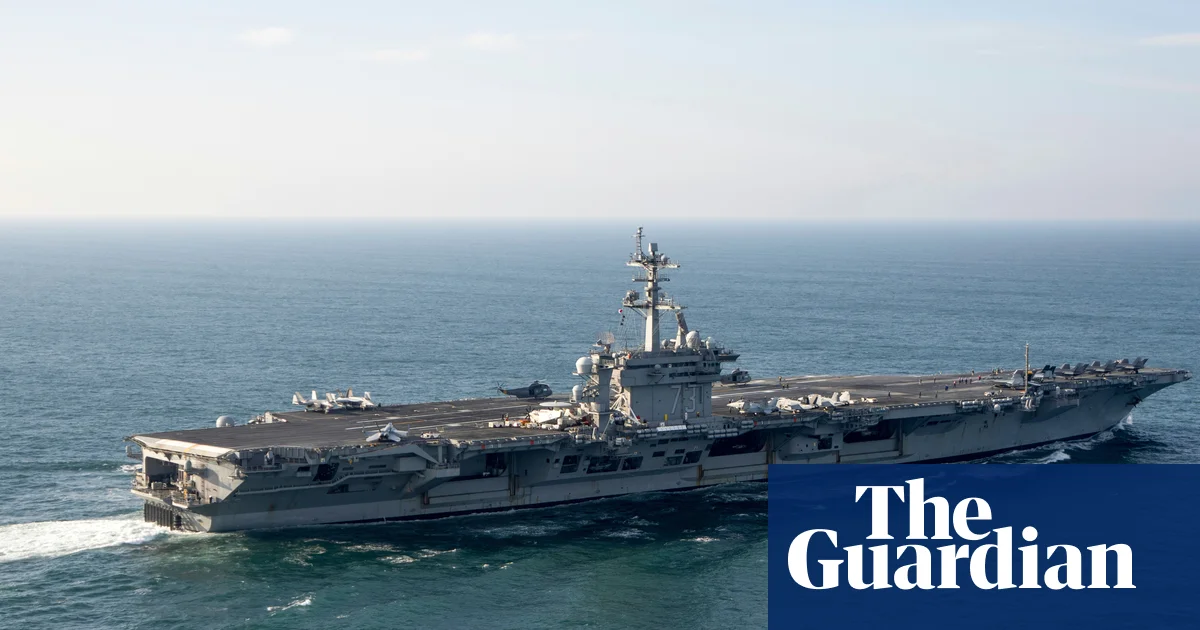
The US Navy’s plan to expand its fleet is projected to cost $54 billion annually over the next 30 years, 18% more than the Navy estimates, largely due to the expense of 15 proposed “Trump-class” battleships, according to a Congressional Budget Office analysis. The increased costs come as the Navy faces capacity strains, with deployments regularly exceeding 300 days and maintenance deferred, and as Acting Secretary of the Navy Hung Cao acknowledged the Iran conflict is “stretching” the fleet. The USS George Washington’s recent return from the Middle East marked a rare three-month period without a US aircraft carrier in the Pacific. While the Navy aims to increase its fleet from 286 to 381 ships, the CBO report found that earlier cost estimates for new ships were “unrealistically low.” Senate appropriators are proposing to cut $1 billion in advanced procurement funding for the Trump-class ships. The conflict in Iran has already cost the US an estimated $260 billion, according to Senator Elissa Slotkin. The US is being outpaced in shipbuilding by China.
Cao conceded before a Senate confirmation hearing that the Iran war was “stretching” the fleet’s capacity, drawing criticism from Democratic senators like Richard Blumenthal, who argued the conflict has worsened the fleet’s condition and strained resources.
President Trump has stated the proposed Trump-class warships will be 100-times more powerful than any previous US warship and “inspire fear in America’s enemies all over the world.”
Where they differ
- Newsmax focused solely on the CBO report and the cost increases, presenting it as a straightforward financial issue.
- The Guardian provided broader context, including the strain on the fleet due to deployments, the impact of the Iran conflict, and criticism of the acting secretary of the Navy.
- The Guardian included direct quotes from senators criticizing the war in Iran and the condition of the fleet, while Newsmax did not.
What is not yet known
- The specific reasons for the “unrealistically low” earlier shipbuilding cost estimates are not detailed.
- The extent to which deferred maintenance will impact the long-term readiness of the fleet remains unclear.
Background
- The US Navy aims to expand its fleet from 286 to 381 ships [Fact Refinery, 2026-11-04].
- A six-month-old U.S. war with Iran had already cost approximately $38 billion as of August 1, 2026, with projections of $2 to $3 billion per month as long as the conflict continues [Fact Refinery, 2026-09-15].
- The US military spent at least $47 billion on the conflict with Iran since February, with approximately $29 billion attributed to replacing expended munitions [Fact Refinery, 2026-10-28].
- The Jones Act requires goods shipped between U.S. ports to be carried by American-built and -crewed vessels, and waivers are occasionally granted [Fact Refinery, 2026-07-01].
- Roman shipbuilding relied on pine tar and beeswax for waterproofing, as evidenced by a 2,200-year-old shipwreck [Fact Refinery, 2026-08-21].
Our reading
We begin by assessing the most likely outcome: continued cost overruns and potential scaling back of the “Trump-class” battleship program. The CBO analysis, coupled with the Senate appropriators’ proposed funding cut, suggests a realistic assessment of the Navy’s financial constraints. A significant escalation of the Iran conflict, requiring even greater munitions expenditure as seen in prior months, would likely exacerbate these issues. A less likely scenario involves a swift resolution to the Iran conflict, freeing up resources and allowing the Navy to adhere more closely to its original plan, but this hinges on unpredictable diplomatic developments. Beyond the immediate budgetary concerns, the strain on the fleet’s capacity, highlighted by the USS George Washington’s deployment and Acting Secretary Cao’s admission, points to a broader systemic issue. The US is being outpaced in shipbuilding by China, and the need to replenish munitions after the Iran conflict further depletes resources. This creates a vulnerability that extends beyond the immediate conflict, potentially impacting the US’s ability to respond to other global crises. The situation with Iran is not merely a financial drain; it also appears to be creating internal friction within the US government. Senator Blumenthal’s criticism of the war’s impact on the fleet, combined with Senator Slotkin’s estimate of $260 billion in costs, suggests a growing opposition to the conflict, even within the President’s own party. This internal division could hinder the administration’s ability to formulate a coherent long-term strategy.
What to watch
- The Senate vote on the proposed $1 billion cut to advanced procurement funding for the Trump-class ships [Senate Appropriations Committee website].
- Monthly updates on the cost of the Iran conflict from U.S. Central Command [U.S. Central Command press releases].
- The release of the Pentagon’s assessment of “strategic inventory shortfalls” and plans to address munitions resupply [Pentagon website].
Read the original coverage
💬 Comments
📜 Comment Policy