U.S. Military Disables Commercial Ship Attempting to Breach Iran Blockade; Tehran Vows to Confront Embargo
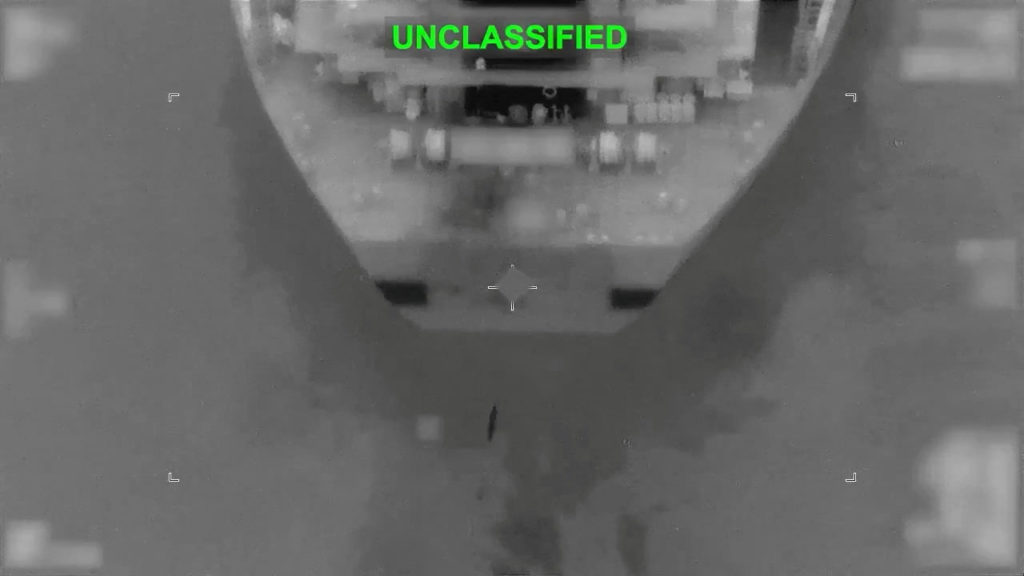
The U.S. military disabled the Palau-flagged M/V Pacific Archer on Thursday after it departed from the Iranian port of Bandar Abbas and attempted to run the American naval blockade of Iran, U.S. Central Command said Friday. Precision munitions struck the ship’s stern in the Gulf of Oman, but the civilian crew was unharmed. This action follows the reimposition of a U.S. naval blockade on Iranian ports in July and the recent announcement of Task Force Iron Gate to restrict the movement of weapons and sanctioned materials. Simultaneously, an advisor to Iran’s Supreme Leader, Mohammad Mokhber, stated that the Strait of Hormuz would remain closed and Iran would not accept the blockade, though he provided no details on how Iran intends to break the embargo.
This incident marks another escalation in tensions between the U.S. and Iran. The U.S. military issued multiple warnings to the ship before disabling its propulsion. President Trump stated Thursday that victory in a potential conflict with Iran would be achieved “whenever I want it,” while also suggesting Iran be “smart.”
Beyond the naval action, Pakistan and Turkey have pledged support to Saudi Arabia against attacks by Iran-backed Houthi rebels in Yemen, under a trilateral defense pact. The U.N. Secretary-General Antonio Guterres condemned a drone attack blamed on Iran that killed two Italians in Kuwait, calling on all parties to exercise restraint. Iran has denied responsibility for the Kuwait attack. The situation remains fluid, with Iran vowing to challenge the blockade and the U.S. maintaining its naval presence in the region. The long-term implications of Iran’s response to the blockade, and the potential for broader regional conflict, remain uncertain.
Where they differ
- CBS News highlighted President Trump’s comments about achieving victory over Iran ‘whenever I want it’ and downplaying intelligence sharing between Iran and Russia/China.
- The Straits Times emphasized the statement from Iranian advisor Mohammad Mokhber regarding the closure of the Strait of Hormuz and rejection of the blockade.
- Washington Times and NDTV provided concise reports focusing primarily on the U.S. military’s action.
- PBS Newshour and CBS News both reported on the U.N. chief’s call for restraint following the drone attack in Kuwait, while other sources did not emphasize this aspect.
What is not yet known
- The specific details of Iran’s plans to break the embargo remain unclear.
- The extent to which Russia and China are sharing intelligence with Iran, and the impact of that intelligence on U.S. assets, is not fully detailed.
Background
- The U.S. reimposed a naval blockade on Iranian ports in July following the collapse of a memorandum of understanding between the U.S. and Iran [Fact Refinery, 2026-07-15].
- Prior to the reimposition of the blockade, the U.S. conducted strikes against locations in Iran, including Bandar Abbas, Qeshm Island, and Ahvaz [Fact Refinery, 2026-07-15].
- Iran retaliated to those U.S. strikes, though the specifics of that retaliation remain unclear [Fact Refinery, 2026-07-15].
- The Strait of Hormuz is a strategically vital waterway, and any closure would significantly disrupt global oil supplies [background knowledge].
Our reading
We begin by assessing the most likely outcome: continued escalation, but contained to naval posturing and disabling actions like the *Pacific Archer* incident. Iran’s vow to challenge the blockade, coupled with the statement about the Strait of Hormuz, suggests a willingness to risk further confrontation. However, the lack of specific details regarding how Iran intends to break the embargo indicates a possible strategy of delaying tactics and limited provocations. A less likely scenario involves a direct military clash, which would be triggered by a miscalculation or a more aggressive act from either side. The key factor tipping the balance towards open conflict would be an attack on U.S. naval assets or a significant escalation of the conflict in Yemen. Beyond the immediate naval tensions, the trilateral defense pact between Pakistan, Turkey, and Saudi Arabia highlights the broader regional implications. This alliance, aimed at countering Iran-backed Houthi rebels in Yemen, suggests a growing coalition seeking to contain Iranian influence. The U.N. Secretary-General’s condemnation of the Kuwait attack, though not directly linked to the blockade, underscores the potential for Iran’s actions to destabilize the wider region. Considering Iran’s position, the internal pressure to respond to the blockade is likely substantial. The Supreme Leader’s advisor’s statement, while defiant, may be intended to project strength domestically while avoiding a full-scale conflict. The reported intelligence sharing with Russia and China, if confirmed, could provide Iran with crucial support in circumventing the blockade and challenging U.S. surveillance capabilities.
What to watch
- A statement from Iran detailing its plans to challenge the blockade, specifically regarding the Strait of Hormuz [Iranian state media].
- Any further incidents involving commercial vessels attempting to breach the blockade, and the U.S. response [U.S. Central Command statements].
- Developments in the Yemen conflict, particularly any increased activity by Houthi rebels or the deployment of forces under the Pakistan-Turkey-Saudi Arabia pact [regional news outlets].
Read the original coverage
💬 Comments
📜 Comment Policy