US Loses Measles Elimination Status Amid Resurgence of the Virus
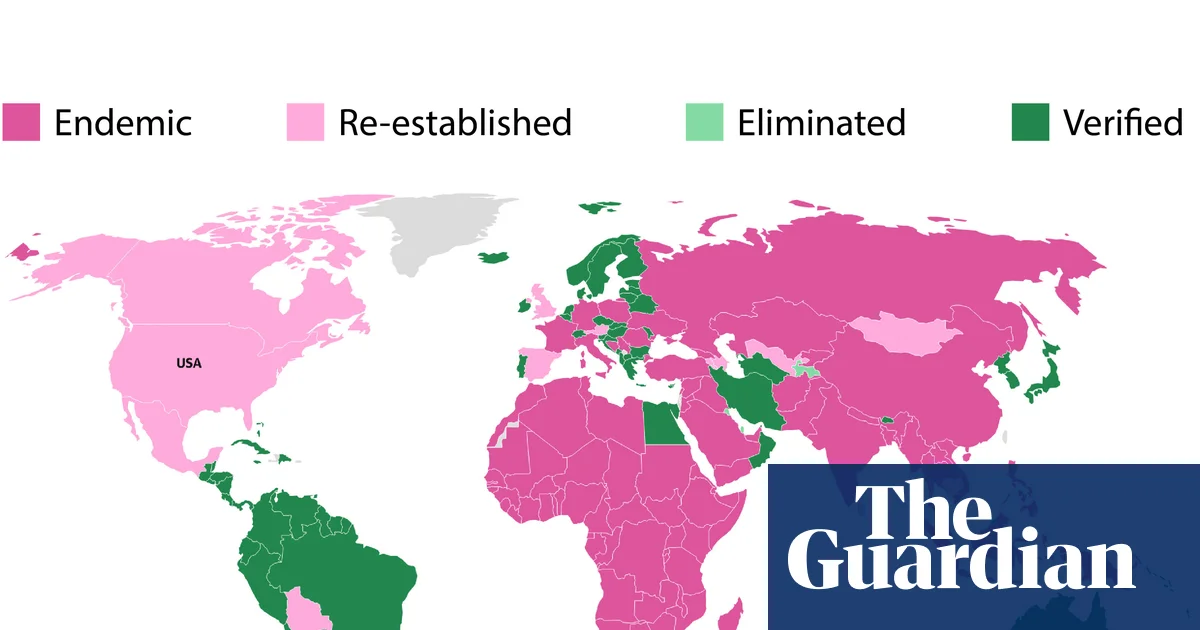
The United States has lost its measles elimination status, a designation it held for 26 years, as the country experiences its largest outbreak since 1991. The Pan American Health Organization (PAHO) made the decision after determining that measles has been continuously circulating within the US for over a year, with over 5,400 cases and at least 10 deaths reported in 2026. Mexico and Bolivia have also lost their measles elimination status. The resurgence is linked to declining vaccination rates and the spread of misinformation, a problem experts say extends beyond the US, with similar losses of elimination status in the UK and several European nations.
PAHO Director Dr. Jarbas Barbosa announced the decision, citing persistent gaps in vaccination coverage across the Americas. The Centers for Disease Control and Prevention (CDC) reports that approximately 90% of measles cases occur in unvaccinated or those with unknown vaccination status. Pennsylvania has been particularly hard hit, reporting seven deaths and over 1,500 cases. New York and Wisconsin have also reported fatalities, including New York’s first measles-related death in over 30 years.
While the US lost its elimination status, CDC Director Dr. Erica Schwartz stated the agency remains committed to stopping outbreaks and will continue to invest in state and local health departments to reach vulnerable communities. Some experts, like Noel Brewer at the University of North Carolina at Chapel Hill, emphasize that the problem is not unique to the US, noting that outbreaks in the US have contributed to cases in Canada and Mexico. The role of Health and Human Services Secretary Robert F. Kennedy Jr., who has previously questioned the safety of vaccines, has drawn scrutiny, though experts caution against solely blaming the current administration, as vaccine misinformation has been circulating for decades.
Where they differ
- The New York Post and Newsmax emphasized the historical context of the US previously eliminating measles in 2000, framing the loss of status as a reversal of decades of progress.
- Vox and the Guardian highlighted the role of vaccine skepticism and misinformation, specifically mentioning Robert F. Kennedy Jr.’s past statements, while other sources presented this information more neutrally.
- CBS News and ABC News provided specific data on the number of hospitalizations and deaths, offering a more detailed picture of the outbreak’s severity.
- The Times of India focused on the global implications, noting the resurgence of measles in other countries and the need for international cooperation.
What is not yet known
- The long-term impact of the loss of elimination status on public health infrastructure and funding remains unclear.
- The effectiveness of the CDC’s ongoing efforts and the corrective action plan the US will present to PAHO are yet to be determined.
Background
- The United States held measles elimination status for 26 years, achieving this in 2000, before losing it in 2026 due to a resurgence of the virus [Fact Refinery, 2026-11-06].
- In 2026, the US recorded over 5,400 measles cases and at least 10 deaths, marking the largest outbreak since 1991 [Fact Refinery, 2026-11-06].
- Declining vaccination rates are a primary driver of the measles resurgence, with approximately 90% of cases occurring in unvaccinated or those with unknown vaccination status [Fact Refinery, 2026-11-06].
- Robert F. Kennedy Jr., the current Health and Human Services Secretary, has previously questioned the safety of vaccines and faced scrutiny for his stance [Fact Refinery, 2026-11-12].
- Pennsylvania has been particularly affected, reporting over 1,500 cases and seven deaths as of late 2026 [Fact Refinery, 2026-11-03].
Our reading
We begin by considering the most likely outcome: a continued, albeit potentially manageable, increase in measles cases. The loss of elimination status signals a fundamental shift, and simply “investing in state and local health departments” as Dr. Schwartz proposes may not be enough to reverse the trend quickly. A less likely scenario involves a rapid, coordinated national effort to boost vaccination rates, perhaps spurred by further tragic deaths, that could stabilize the situation, but this would require overcoming deeply entrenched vaccine skepticism. The balance could tip either way depending on the severity of future outbreaks and the public’s response. Beyond the immediate health crisis, this loss of status has implications for international travel and trade. The US outbreaks have already contributed to cases in Canada and Mexico, and a sustained resurgence could lead to travel advisories and restrictions, impacting tourism and economic exchange. The fact that Mexico and Bolivia have also lost their elimination status suggests a broader regional vulnerability, requiring coordinated public health responses across the Americas. The situation is complicated by the scrutiny surrounding Secretary Kennedy Jr.’s past statements. While experts caution against solely blaming the current administration, the allegations of false testimony regarding his 2019 Samoa trip [Fact Refinery, 2026-11-12] raise questions about the administration’s commitment to evidence-based public health policies. The ongoing investigation by Democratic senators adds another layer of political tension to an already sensitive issue.
What to watch
- The corrective action plan the US will present to PAHO and PAHO’s assessment of its feasibility [Fact Refinery, 2026-11-17].
- Vaccination rates for the 2026-27 school year, due in early 2027, to gauge the impact of current efforts [Fact Refinery, 2026-11-06].
- Any further developments in the Senate investigation into Robert F. Kennedy Jr.’s testimony [Fact Refinery, 2026-11-12].
Read the original coverage
💬 Comments
📜 Comment Policy