US Intelligence Chief Clarifies Trump's Description of Putin Amid Ukraine War
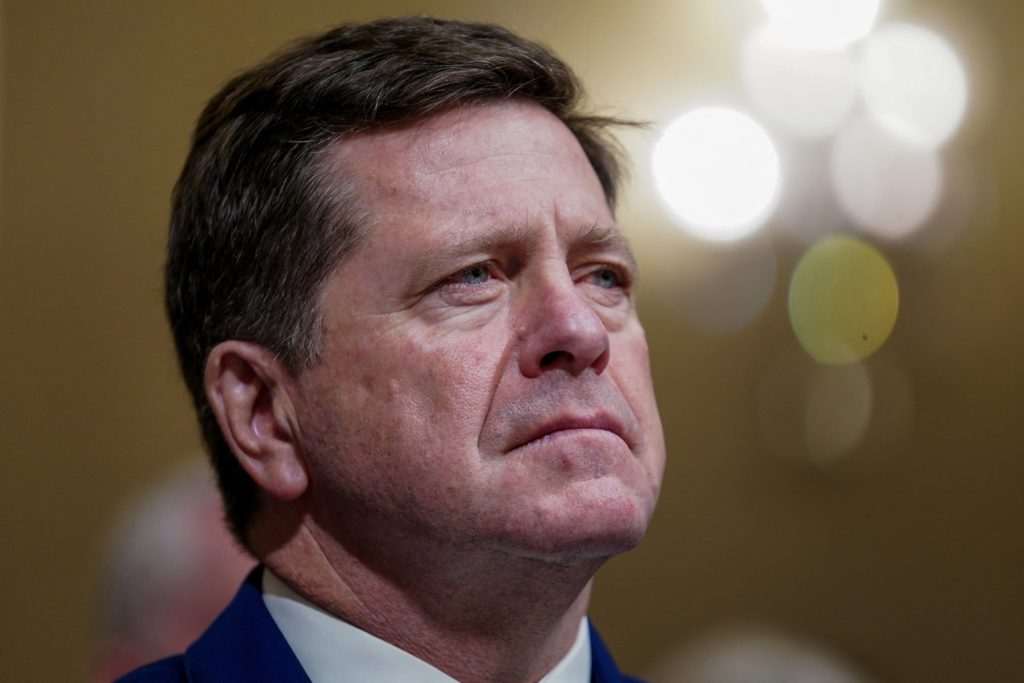
US Director of National Intelligence Jay Clayton stated that Russian President Vladimir Putin is “not America’s friend in Ukraine,” days after former President Donald Trump described Putin as a friend. Clayton qualified that Trump’s description of Putin as a friend was “entirely appropriate” when considering discussions between the leaders of the United States, Russia, and China, the world’s three leading nuclear powers, during a recent summit in China. Trump had defended calling Putin a friend, citing the importance of having a positive relationship with a country possessing 4,000 nuclear weapons, but declined to state whether Putin is a friend to the United States as a whole.
Clayton’s comments followed criticism from European allies of Ukraine regarding Trump’s description of Putin. Polish Prime Minister Donald Tusk stated, “Mr Putin is not our friend and will never be,” and Ukrainian President Volodymyr Zelenskyy dismissed the question with a shrug. Russia launched a full-scale invasion of Ukraine in 2022 and currently controls approximately 20% of the country, with Putin demanding the surrender of Ukraine’s eastern Donbas region in exchange for peace. The divergence in views highlights differing perspectives on how to approach relations with Russia while Ukraine remains at war.
Where they differ
- NDTV and PBS NewsHour both emphasized the criticism Trump’s comments drew from European allies of Ukraine.
- The Straits Times provided the most detailed account of Clayton’s specific comments to ABC News, including the full quote about Putin not being America’s friend in Ukraine.
- PBS NewsHour focused on the context of the three-way talks between Trump, Putin, and Xi Jinping, while other outlets gave this less prominence.
What is not yet known
- The extent to which Clayton’s comments reflect the Biden administration’s broader policy towards Russia remains unclear.
- Whether Trump’s statements represent a genuine shift in his views on Putin or are simply a continuation of his past rhetoric is not established.
Background
- Donald Trump served as President of the United States prior to the current administration [Fact Refinery, 2026-10-26].
- Russia launched a full-scale invasion of Ukraine in 2022 and currently occupies approximately 20% of the country [Fact Refinery, 2026-11-22].
- The New START treaty, governing nuclear arms limitations between the US and Russia, expired in February 2026, prompting calls for new negotiations [Fact Refinery, 2026-11-21].
- Director of National Intelligence Jay Clayton has previously commented on technical outages affecting US systems, attributing them to security upgrades [Fact Refinery, 2026-11-18].
Our reading
We begin with the most likely outcome: continued public divergence on Russia. Clayton’s statement, while acknowledging Trump’s phrasing was “appropriate” in the context of nuclear power negotiations, explicitly states Putin is “not America’s friend in Ukraine.” This allows the current administration to maintain support with European allies, as evidenced by the reporting from NDTV and PBS NewsHour, while simultaneously leaving open a channel for potential future dialogue with Russia, a position Trump seems to favor. A less likely scenario would be a rapid shift in US policy towards Russia, requiring a significant concession from either side. This would likely hinge on a breakthrough in nuclear arms talks, but the joint declaration from the Shenzhen summit offered no such indication. The emphasis on the trilateral summit and nuclear arms reduction is noteworthy. Given recent tensions in multiple regions, Iran, Ukraine, and the ongoing threat of Iranian attacks on US personnel as detailed in several prior articles, the administration appears to be prioritizing strategic stability, even if it means accommodating differing views on Russia. This suggests a broader attempt to compartmentalize issues, pursuing cooperation on nuclear matters while maintaining a firm stance against Russian aggression in Ukraine. The Ukrainian and Polish responses highlight a potential source of friction. Zelenskyy’s dismissal and Tusk’s strong rebuke demonstrate a clear expectation of unwavering support from the US, and a sensitivity to any perceived softening of the line against Putin. This tension could escalate if Trump were to regain power, potentially creating a rift within the transatlantic alliance.
What to watch
- The release of any further statements from the Biden administration clarifying its policy towards Russia [White House Press Briefings].
- Progress, or lack thereof, in upcoming nuclear arms reduction talks between the US, Russia, and China [State Department website].
- Any shifts in military aid or diplomatic support provided to Ukraine by the United States [Department of Defense press releases].
Read the original coverage
💬 Comments
📜 Comment Policy