UN Climate Talks Extend into Overtime Amid Fossil Fuel Disputes
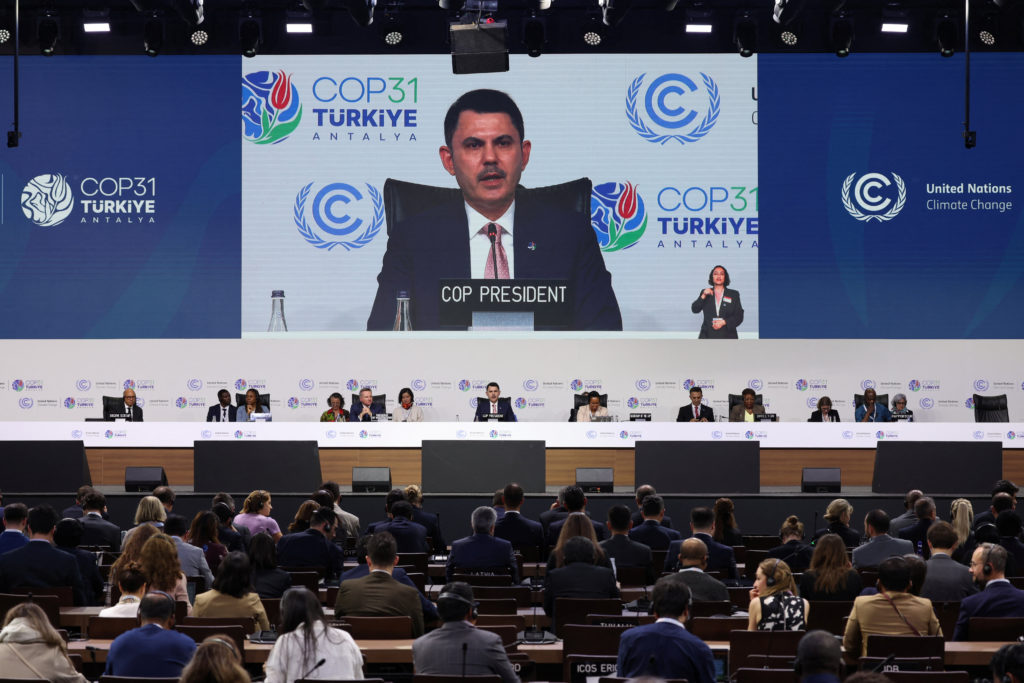
UN climate talks in Turkey have extended past their scheduled closing date as nearly 200 countries struggle to reach an agreement on addressing global warming. A key point of contention is the omission of fossil fuels from a draft of the final agreement, drawing strong condemnation. Deep divisions also persist regarding financial support for poorer nations.
The added day of negotiations came as countries clashed over commitments to reduce reliance on fossil fuels, and over how to fund climate adaptation measures in developing countries. The summit, known as COP31, has been marked by disagreements over the pace and scope of emissions reductions. No right-leaning outlet reported this story.
The failure to explicitly mention fossil fuels in the initial draft agreement has been a significant sticking point, with many nations advocating for stronger language to phase out their use. The issue of financial assistance for vulnerable countries remains unresolved, as developing nations seek greater commitments from wealthier countries to help them cope with the impacts of climate change.
Background
- The UN Climate Change Conference, known as COP, is an annual summit where nearly 200 countries convene to address global warming [background knowledge]. COP31 is the current iteration of these talks, taking place in Turkey [Business Standard, 2026-11-21]. A key point of contention at COP31 is the omission of fossil fuels from a draft agreement, sparking disagreement among participating nations [CGTN, 2026-11-21]. Prior to this, President Trump held a trilateral summit with the leaders of China and Russia focusing on nuclear arms reduction, following the expiration of the New START treaty [Fact Refinery, 2026-11-21]. Discussions regarding financial aid to developing nations for climate adaptation are also ongoing [Arab News, 2026-11-21].
Our reading
We begin by considering the most likely outcome: a compromised agreement that acknowledges the need to transition away from fossil fuels, but lacks concrete timelines or binding commitments. This would allow all parties to claim progress while avoiding difficult concessions. A less likely scenario is a complete breakdown of talks, resulting in no final agreement, which would signal a significant setback for international climate efforts. This could occur if developing nations refuse to accept insufficient financial pledges from wealthier countries, or if major fossil fuel producers remain steadfast in their opposition to stronger language. The balance could tip toward a stronger agreement if a few key nations, perhaps led by a coalition of vulnerable states, publicly demand more ambitious targets. The extended negotiations highlight the growing tension between nations prioritizing economic interests and those facing the most severe impacts of climate change. The fact that no right-leaning outlet reported this story suggests a potential domestic political dimension, with resistance to climate action potentially stronger in certain countries. The Shenzhen summit, while focused on nuclear arms, demonstrated a willingness among major powers to engage on international systemic issues, a dynamic that could, if leveraged, unlock progress at COP31. The position of fossil fuel-producing nations is crucial. While the article does not detail their internal pressures, their resistance suggests a prioritization of short-term economic gains over long-term climate goals, and potentially a belief that they can mitigate the impacts of climate change through technological solutions or adaptation measures.
What to watch
- Publication of the final COP31 agreement, noting whether it includes specific language on phasing out fossil fuels [UN website, date TBD]. The total amount of financial aid pledged by developed nations to support climate adaptation in developing countries [UN website, date TBD]. Statements from key negotiating blocs, such as the G77 and China, regarding their satisfaction with the final agreement [respective government websites, date TBD].
Read the original coverage
💬 Comments
📜 Comment Policy