Ukraine Claims Strikes on Russian Vessels Off Libyan Coast
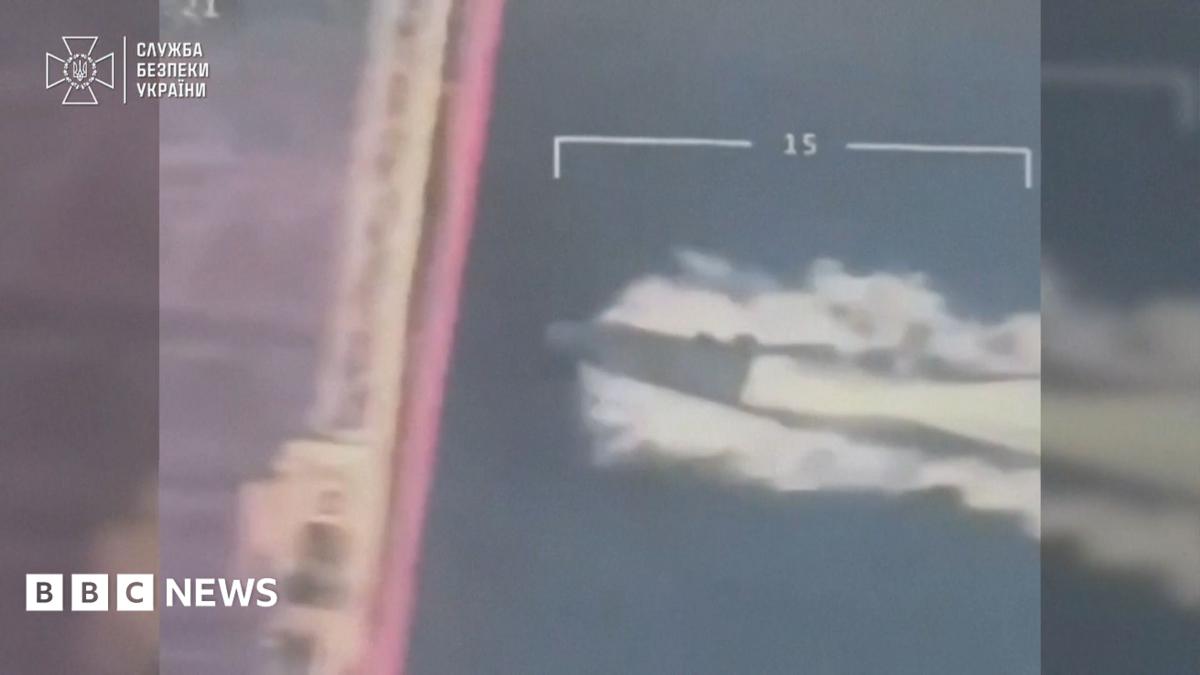
Ukraine claimed Sunday to have struck two Russian vessels off the coast of Libya, sinking one and damaging another. President Volodymyr Zelenskyy shared footage he said shows the attacks, identifying the sunk vessel as the Russian corvette Merkury, commissioned in 2023, and the damaged ship as the MV ANGARA, a cargo vessel allegedly used to transport weapons. A Ka-27 combat helicopter was also reportedly destroyed. The attacks occurred near the Libyan port of Benghazi, and the local health ministry reported receiving injured individuals from a commercial ship targeted in the area, though The Ukrainian military deployed seven naval drones in the operation, despite Russian attempts to counter the attack. This follows a similar drone strike on a Russian cargo ship in the Baltic Sea on Saturday. The United Nations mission in Libya expressed “serious concern” over the attacks, warning against turning Libya into a “battleground for foreign conflicts,” and called for an independent investigation. The Tripoli government also rejected any use of Libyan territory for military activities that could jeopardize national security.
In March, a Russian liquefied natural gas carrier sank off the Libyan coast following an attack that Russia blamed on Ukraine. Ukraine has previously admitted to attacking Russia’s “shadow fleet” of tankers used to circumvent Western sanctions. The attacks come as Ukraine has increased strikes against Russia beyond the immediate front lines. Moscow has not yet commented on the latest incident.
Where they differ
- The Japan Times detailed the UN’s specific call for an ‘immediate, independent and transparent investigation’ while the BBC did not.
- The Japan Times provided more context on Libya’s internal division between rival governments, while the BBC did not.
- The Japan Times noted that the Merkury was ‘one of their newest ships’ according to Zelenskyy, while the BBC did not include that detail.
What is not yet known
- Whether the commercial ship receiving injured people reported by the Libyan health ministry is the same vessel Ukraine claimed to have damaged.
- Whether the attacks will escalate the conflict beyond Ukraine and Russia, or further destabilize Libya.
Background
- In March, a Russian liquefied natural gas carrier sank off the Libyan coast following an attack that Russia blamed on Ukraine [Fact Refinery, 2026-11-23].
- Ukraine has previously admitted to attacking Russia’s “shadow fleet” of tankers used to circumvent Western sanctions [Fact Refinery, 2026-11-23].
- The UN mission in Libya expressed “serious concern” over the attacks, warning against turning Libya into a “battleground for foreign conflicts” [Fact Refinery, 2026-11-23].
- Libya is experiencing internal division between rival governments [The Japan Times, 2026-11-23].
Our reading
We begin by assessing the most likely outcome: continued Ukrainian strikes against Russian maritime assets, potentially extending beyond the Black Sea. The sinking of the Merkury, described as one of Russia’s newest ships, and the damage to the MV ANGARA demonstrate Ukraine’s expanding reach and willingness to target Russia’s logistical network. A less likely scenario is a direct Russian military response within Libya itself, which would risk further destabilizing the country and drawing in other actors. This would depend on Moscow perceiving a significant threat to its interests or a loss of prestige. The attacks on vessels off Libya, following the incident in the Baltic Sea, suggest a shift in Ukraine’s strategy to disrupt Russian supply lines wherever possible. This could have a broader impact on Russia’s ability to sustain its war effort, particularly if it can consistently target vessels involved in transporting weapons or essential goods. The Tripoli government’s rejection of military activity on its territory highlights the potential for Libya to become a proxy battleground, complicating the existing regional dynamics. Considering Russia’s silence, it is possible Moscow is attempting to downplay the significance of these attacks to avoid demonstrating vulnerability or escalating the conflict. However, the repeated targeting of its vessels will likely force a reassessment of its maritime security measures and potentially lead to increased tensions in the Mediterranean.
What to watch
- A statement from the Russian government acknowledging or denying the attacks, and outlining any planned response [various outlets, immediate].
- The findings of the independent investigation called for by the UN mission in Libya, specifically regarding the origin and responsibility for the attacks [UN, timeframe unspecified].
- Any changes in Russian naval deployments or security protocols in the Mediterranean Sea [open-source intelligence, ongoing].
Read the original coverage
💬 Comments
📜 Comment Policy