UK Sanctions Myanmar Military Leaders Following ICJ Genocide Ruling
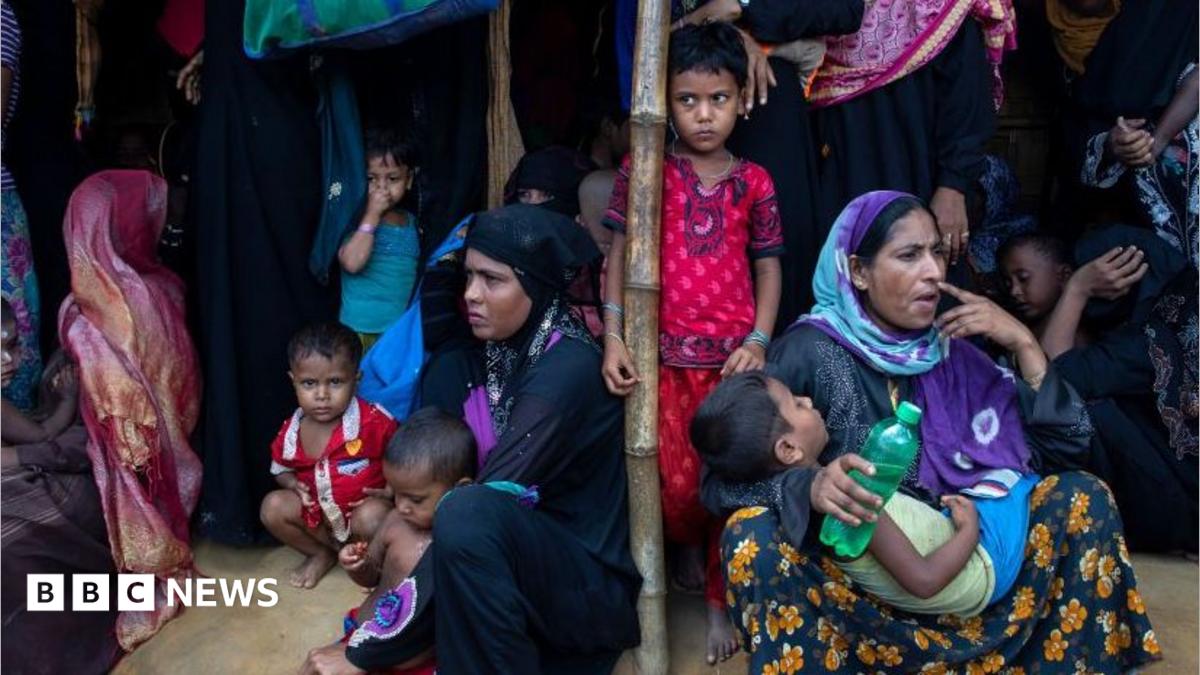
The UK has sanctioned five senior Myanmar military leaders and President Min Aung Hlaing after the International Court of Justice (ICJ) ruled that Myanmar committed genocide against the Rohingya minority in 2017. The ICJ found that approximately 10,000 Rohingya were murdered during a military clearance operation in Rakhine state. The UK, alongside Australia, Belgium, Portugal, Spain, and Canada, acknowledges the ICJ ruling and is responding with sanctions and a commitment to halt aviation fuel supplies to Myanmar.
The sanctioned leaders are Myo Htut Hlaing, Myo Min Tun, Myat Thet Oo, Kyaw Soe, and Kyaw Swar Oo. Foreign Secretary Ed Miliband stated that Myanmar must stop ongoing violations, investigate perpetrators, and prevent future atrocities. He also called for a pause in hostilities to allow humanitarian aid access, a stop to airstrikes on civilians, and the release of political prisoners, as well as dialogue towards a political settlement. The UK expelled Myanmar’s defence attaché last week and plans to raise the issue at the UN Security Council.
The ICJ determined, by a majority of nine to six judges, that “genocidal intent is the only reasonable inference” from the evidence presented. The court also found Myanmar violated several parts of the 1948 Genocide Convention. Reports indicate entire villages were burned and women and girls were raped, leading to over 1.2 million Rohingya refugees fleeing to Bangladesh. Aung San Suu Kyi, Myanmar’s leader during the genocide, was deposed by the military in 2021. Air strikes and violence from the Arakan army continue to occur.
Where they differ
- The South China Morning Post focused on the specific individuals sanctioned, listing all five alongside Min Aung Hlaing, while the BBC initially highlighted the broader significance of the ICJ ruling and Miliband's statement.
- BBC included details about upcoming actions at the UN Security Council, including a dedicated meeting in a fortnight, which were not mentioned by the SCMP.
What is not yet known
- The long-term impact of the sanctions on Myanmar's military and political situation remains unclear.
- The extent to which the ICJ ruling will lead to accountability for those responsible for the genocide is not yet established.
Background
- The International Court of Justice (ICJ) ruled Myanmar committed genocide against the Rohingya minority during a 2017 military crackdown, with at least 10,000 Rohingya killed and over one million fleeing to Bangladesh [Fact Refinery, 2026-11-19].
- Gambia brought the case before the ICJ, backed by the Organisation of Islamic Cooperation, detailing acts of mass murder, rape, torture, and village destruction [Fact Refinery, 2026-11-19].
- The ICJ determined that establishing genocidal intent was the most challenging aspect of the case, but found “genocidal intent is the only reasonable inference” from the evidence presented [Fact Refinery, 2026-11-19].
- Aung San Suu Kyi, Myanmar’s leader during the genocide, was deposed by the military in 2021 [article].
- Air strikes and violence from the Arakan army continue to occur [article].
Our reading
We begin by assessing the most likely outcome: continued, albeit limited, international pressure on Myanmar. The UK’s sanctions, coupled with those from Australia, Belgium, Portugal, Spain, and Canada, signal a coordinated effort, but their practical effect will depend on broader regional and global buy-in. A pause in hostilities, as called for by the UK, seems less likely given the ongoing conflict with the Arakan army and the military’s demonstrated unwillingness to compromise. The key factor tipping the balance towards more substantial action would be a unified response from major powers like China and India, which currently maintain economic and political ties with Myanmar. The ICJ ruling and subsequent sanctions highlight the increasing international focus on accountability for atrocities. This case sets a precedent for other ongoing investigations, notably South Africa’s claim against Israel before the ICJ, and could encourage further legal challenges against states accused of genocide. The ruling also underscores the limitations of international law enforcement; while the ICJ can establish legal responsibility, it lacks the power to compel compliance or enforce its judgments. The internal dynamics within the Myanmar military are crucial. The sanctions target senior leaders, including Min Aung Hlaing, but may not significantly alter the military’s behavior if it perceives the cost of continued repression as lower than the cost of political concessions. The deposed Aung San Suu Kyi’s role, though diminished, remains a potential factor, as her continued imprisonment could either fuel further resistance or solidify the military’s grip on power.
What to watch
- The UN Security Council meeting in a fortnight, to see if a stronger resolution is proposed and if it gains support from key members [BBC].
- Whether other nations, particularly China and India, follow the UK’s lead and impose additional sanctions on Myanmar [article].
- Reports of aviation fuel supplies to Myanmar, to assess the effectiveness of the commitment to halt those supplies [article].
Read the original coverage
💬 Comments
📜 Comment Policy