UK Sanctions Israeli Firms Over West Bank Settlement Expansion
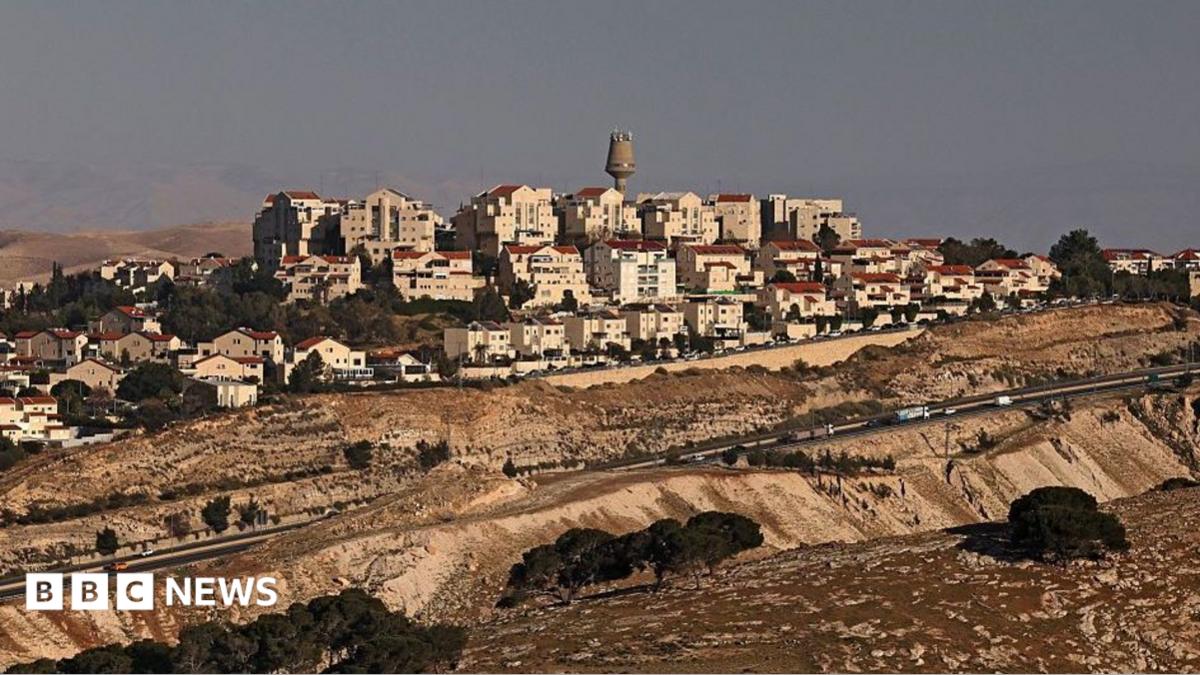
The UK has imposed sanctions on eight Israeli construction and property development firms and the activist group Tzav 9, citing their involvement in building settlements in the occupied West Bank. The move, announced by Foreign Secretary Ed Miliband, marks the first concrete step in a toughened approach to Israeli actions in the territory and aims to disrupt the financing of settlement construction. The sanctions target companies including Har Hevron Development Co., Hemdat Shomron, and Ami Gvirtzman Architects 2021, subjecting them to asset freezes and barring associated individuals from serving as UK company directors.
The UK government views the expansion of settlements as a threat to the viability of a two-state solution, particularly the proposed E1 project east of Jerusalem, which would effectively divide the West Bank. Miliband stated that the E1 development would render a two-state solution “unviable” by “cutting through the heart of Palestine.” The sanctions also target Tzav 9 for blocking humanitarian aid convoys from entering Gaza.
The UK expanded its human rights sanctions regime last month, enabling the government to sanction individuals and companies involved in violations of international humanitarian law globally. Alongside the sanctions, the UK is developing legislation to ban the import of settlement goods and advertising for settlement properties. Miliband emphasized a commitment to working with a new Israeli government and the Palestinian Authority to advance peace and security. The decision follows Israel’s recent move to seek bids for the construction of 1,200 homes in the E1 area and a reported increase in settler attacks on Palestinians in the West Bank. There was no immediate comment from Israel. The UK has long been one of Israel's staunchest allies, and Miliband recently described himself as a “proud British Jew” whose grandmother survived the Holocaust, but the government has grown increasingly critical of Israel's government as protests have grown in London and other cities.
Background
- The UK expanded its human rights sanctions regime last month, allowing it to sanction entities involved in international humanitarian law violations globally. [Fact Refinery, 2026-11-17]
- The UK government views the expansion of settlements in the West Bank as a threat to the viability of a two-state solution, specifically citing the E1 project as particularly damaging. [Fact Refinery, 2026-11-17]
- Ed Miliband, the UK Foreign Secretary, recently described himself as a “proud British Jew” whose grandmother survived the Holocaust, while also acknowledging growing criticism of Israel’s government. [Fact Refinery, 2026-11-17]
- The UK has historically been one of Israel’s staunchest allies. [Fact Refinery, 2026-11-17]
- The UK considered a formal apology for its role in the transatlantic slave trade, but without financial reparations. [Fact Refinery, 2026-11-04]
Our reading
We begin by assessing the most likely outcome: continued, if limited, escalation. The UK’s sanctions are a clear signal of growing frustration with Israeli settlement policy, and the stated intention to ban settlement goods suggests further measures will follow. However, Israel’s silence indicates a willingness to absorb the sanctions without immediate reciprocal action, perhaps calculating that the political cost of escalating the dispute with a key ally outweighs the economic impact. A less likely outcome would be a significant shift in Israeli policy, prompted by international pressure, but this would require a change in the current Israeli government’s approach. The balance could tip if other European nations follow the UK’s lead, or if settler violence in the West Bank increases significantly. Beyond the immediate bilateral relationship, this move highlights a broader trend of Western governments increasingly willing to publicly challenge Israeli actions. This is occurring against a backdrop of heightened tensions in the region, as evidenced by the recent strike on the Nasser Hospital in Gaza [Fact Refinery, 2026-11-12]. The UK’s actions, while focused on settlements, could embolden other actors to take a firmer stance on other issues, potentially complicating efforts to de-escalate regional conflicts. Considering the other side, the Israeli government faces internal pressures from hard-right factions who strongly oppose any concessions on settlement policy. These groups likely view the UK sanctions as a hostile act and will push for a strong response. The lack of immediate comment suggests a calculation of how to manage this internal dynamic while minimizing damage to the UK-Israel relationship.
What to watch
- A response from the Israeli government, either through official statements or policy changes, regarding the sanctions. [Israeli government press releases]
- The introduction of legislation in the UK parliament to ban the import of settlement goods and advertising for settlement properties. [UK Parliament website]
- The level of support for the UK’s actions from other European Union member states. [EU official statements/press conferences]
Read the original coverage
💬 Comments
📜 Comment Policy