UK and EU Reach Brexit Reset Deal, With Re-Entry Debate Revived
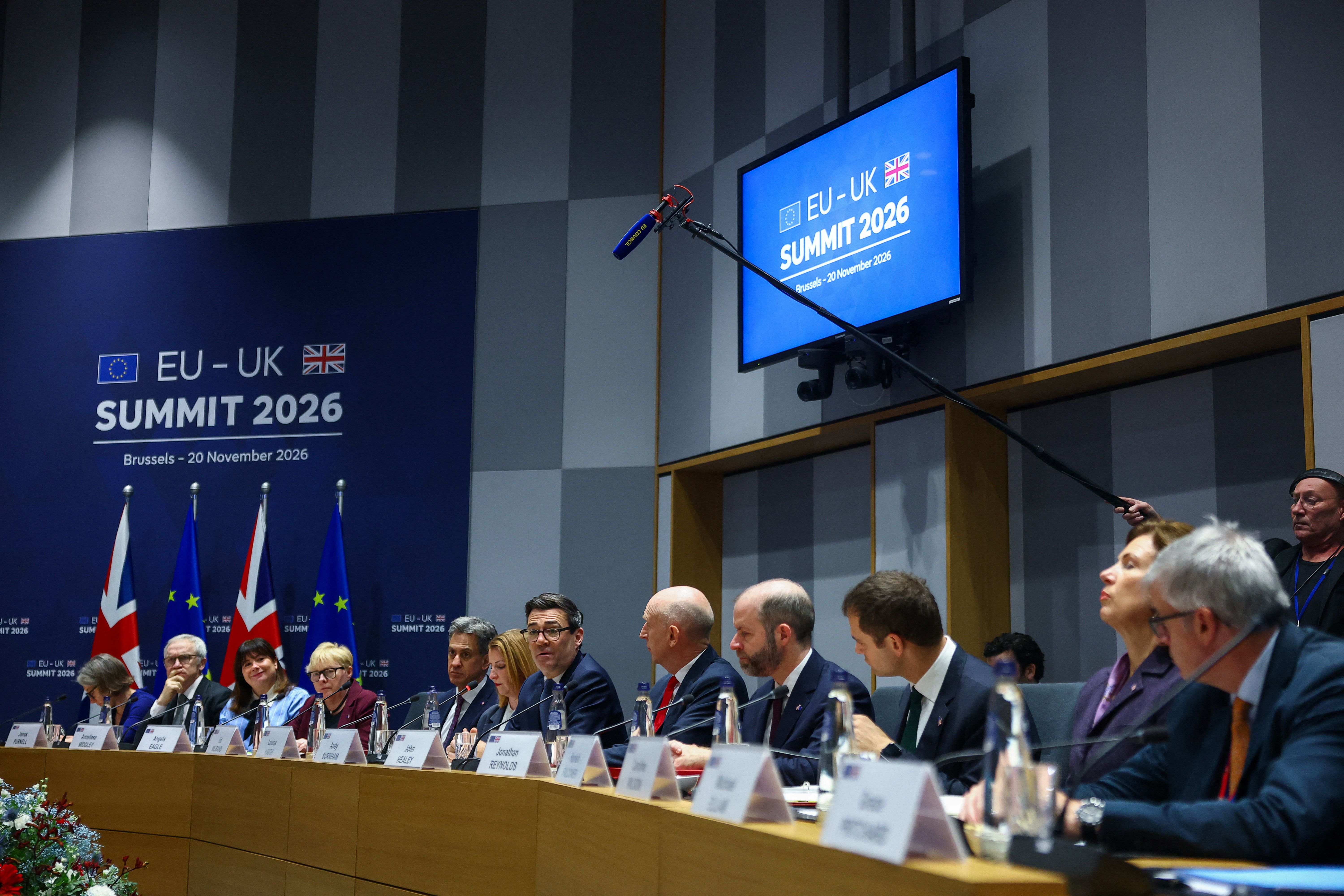
The United Kingdom and the European Union are poised to sign a deal intended to reset relations strained since the UK’s 2016 exit. The agreement will facilitate increased food and drink trade, reconnect carbon markets, and enhance migration cooperation. UK Prime Minister Andy Burnham has expressed hope that Britain could rejoin the EU within his lifetime, a sentiment reflected in a revived national debate over the benefits and costs of EU membership. While Brussels appears open to the UK’s potential return, it is unwilling to offer significant concessions, with one European diplomat stating, “We didn’t want them to leave. They broke up with us. Now we are over them.”
European Council President António Costa affirmed the EU’s willingness to pursue the “closest possible relationship” with the UK, while reiterating the importance of upholding the “indivisibility of all of our four freedoms of the single market.” The deal, described by Burnham as a “win-win,” does not yet resolve the issue of tuition fees for EU students studying at UK universities. Nigel Farage, leader of Reform UK, criticized the agreement, arguing it contradicted the Labour Party’s 2024 manifesto and Burnham’s prior pledges to voters. Farage acknowledged that a majority (73%) of the public desires closer ties with Europe but cautioned against interpreting this as support for rejoining the single market.
Alongside the Brexit agreement, Denmark announced it will expel Russia’s defence attache in Copenhagen following suspicions of Russian involvement in an attempted assassination of a Ukrainian rapper, and is considering suspending Schengen visas for Russian citizens. Simultaneously, coordinated protests took place across more than 20 European countries, including the UK, as young people demonstrated against the rising cost of living, deteriorating learning conditions, and increased military spending. Activists lit flares, burned models of tanks, and carried placards reading “fight for our future,” marking what organizers called Europe’s largest protest of its kind.
Where they differ
- The Guardian emphasized Denmark’s expulsion of a Russian defence attache and potential suspension of Schengen visas, while Semafor did not report on this.
- Semafor highlighted Andy Burnham’s long-term ambition for the UK to rejoin the EU, a detail not prominently featured in The Guardian’s coverage.
- The Guardian included details about the youth protests across Europe, which were only briefly mentioned in Semafor.
What is not yet known
- The final resolution regarding tuition fees for EU students studying at UK universities remains unresolved.
- The extent to which Burnham’s actions will influence the broader debate on the UK’s long-term relationship with the EU is still uncertain.
Background
- The United Kingdom officially exited the European Union in 2016 following a referendum [background knowledge].
- Andy Burnham is currently the UK’s Prime Minister [Fact Refinery, 2026-11-12].
- In November 2026, the UK economy experienced its fastest growth in over two years, driven by the services sector and AI investment [Fact Refinery, 2026-11-12].
- Prior to this agreement, relations between the UK and EU had been strained since the UK’s exit [Fact Refinery, 2026-11-20].
Our reading
We begin by assessing the likely trajectory of UK-EU relations. Most likely, the current agreement will lead to a gradual warming of ties, with increased cooperation in areas like trade and migration. A key factor will be whether Burnham can successfully navigate opposition from within his own party, as evidenced by Nigel Farage’s criticism. Less likely, but possible, is a return to more confrontational relations if domestic political pressures force Burnham to backtrack on the deal or if the EU remains inflexible on key issues like tuition fees. The agreement’s focus on trade and migration has broader implications for European stability. The coordinated protests across Europe, linked to cost of living and learning conditions, suggest a growing discontent among young people. Increased economic cooperation between the UK and EU could potentially alleviate some of these pressures, though it will not address the underlying causes. The EU’s stated position, that the UK “broke up with them” and is now being “got over”, reveals a degree of resentment. This suggests that while the EU is willing to engage, it is unlikely to offer significant concessions, potentially limiting the scope of any future reintegration. The EU’s insistence on upholding the four freedoms of the single market also highlights a fundamental difference in approach, as any return to the single market would require the UK to accept these freedoms fully.
What to watch
- A vote on the Brexit reset deal in the UK Parliament, to gauge the level of support for the agreement [UK Parliament website].
- Figures on UK-EU trade volume in the first quarter of 2027, to assess the impact of the deal on economic activity [Office for National Statistics].
- Statements from EU leaders regarding the possibility of future negotiations on closer integration, to determine the EU’s long-term vision for its relationship with the UK [European Council website].
Read the original coverage
💬 Comments
📜 Comment Policy